Last March, I booked a Delta Basic Economy fare from JFK to LAX for $129. I thought I was being clever. By the time I'd paid $35 to pick a seat that wasn't a middle seat in the last row next to the lavatory, I was not being clever. I was just paying for a worse version of the regular fare.
Basic economy fares exist because airlines discovered that a meaningful chunk of travelers will click the lowest number on the screen without reading what it actually includes. That's not an insult — it's just human behavior, and airlines have optimized ruthlessly for it.
But not all basic economy products are created equal. JetBlue's Blue Basic and Delta's Basic Economy are two of the most commonly booked stripped fares on the East Coast and transcontinental routes, and they have meaningfully different rules, fees, and pain points. If you're choosing between them, or trying to decide whether to upgrade, here's what actually matters.
What you're actually buying with each fare
Delta Basic Economy (fare class E or N, typically) is Delta's floor product — the thing they built specifically to compete with Spirit and Frontier without technically being Spirit or Frontier. It launched in 2017 and has been quietly getting worse ever since. You get one personal item, no seat selection until check-in (and even then it's whatever's left), no changes, no upgrades, and you board last. Group 9, if you're counting.
JetBlue Blue Basic is a slightly different animal. JetBlue introduced it in 2019, and the framing was always "we had to do this to compete" — which, fair enough. Blue Basic gives you one personal item, no carry-on, no advance seat selection, no changes, and you board last. On paper, nearly identical to Delta.
The differences are in the details, and the details matter a lot when you're sitting in 34E.
The carry-on bag situation (this is where it gets ugly)
Here's the single biggest practical difference between these two fares: Delta Basic Economy technically allows a carry-on bag. JetBlue Blue Basic does not.
With Delta, you can bring a full-size carry-on and put it in the overhead bin. You'll board last, so if the bins are full you'll gate-check it for free, but you're not paying extra for the bag itself. For a lot of travelers — especially on short trips — this is the whole ballgame.
JetBlue Blue Basic restricts you to a personal item only (think: under-seat bag, 17" x 13" x 8" or smaller). Want to bring a carry-on? That's $35-$65 each way depending on the route and when you pay. On a BOS-FLL round trip, that's potentially $130 in bag fees on a fare you bought because it was cheap.
I've watched people at Logan Airport discover this at the gate. It's not a fun scene.
Pro Tip: If you're packing anything larger than a backpack, Blue Basic's effective price is almost always higher than it looks. Run the real math before you book — or set a FlightKitten hunt for JetBlue's regular Blue fare on the same route and see if the gap is actually that wide.
Seat selection: who gets the worst seats
Both airlines will assign you a seat at check-in if you don't pay to pick one. In practice, this means middle seats, back-of-plane seats, or — if you're very lucky and the flight isn't full — an aisle near the front that nobody else wanted.
Delta's seat selection fees for Basic Economy passengers start around $15-$30 for standard seats and climb to $50+ for preferred seats near the front. On a busy JFK-ATL route, Delta will often charge $29-$44 to sit in rows 15-20. You can't select Comfort+ or exit rows regardless of what you pay.
JetBlue's seat selection fees on Blue Basic run $10-$50 for standard seats, with Even More Space seats (their version of extra legroom) running $55-$95 depending on route length. On a JFK-MCO flight, a standard aisle in row 12 might cost you $25 to select in advance.
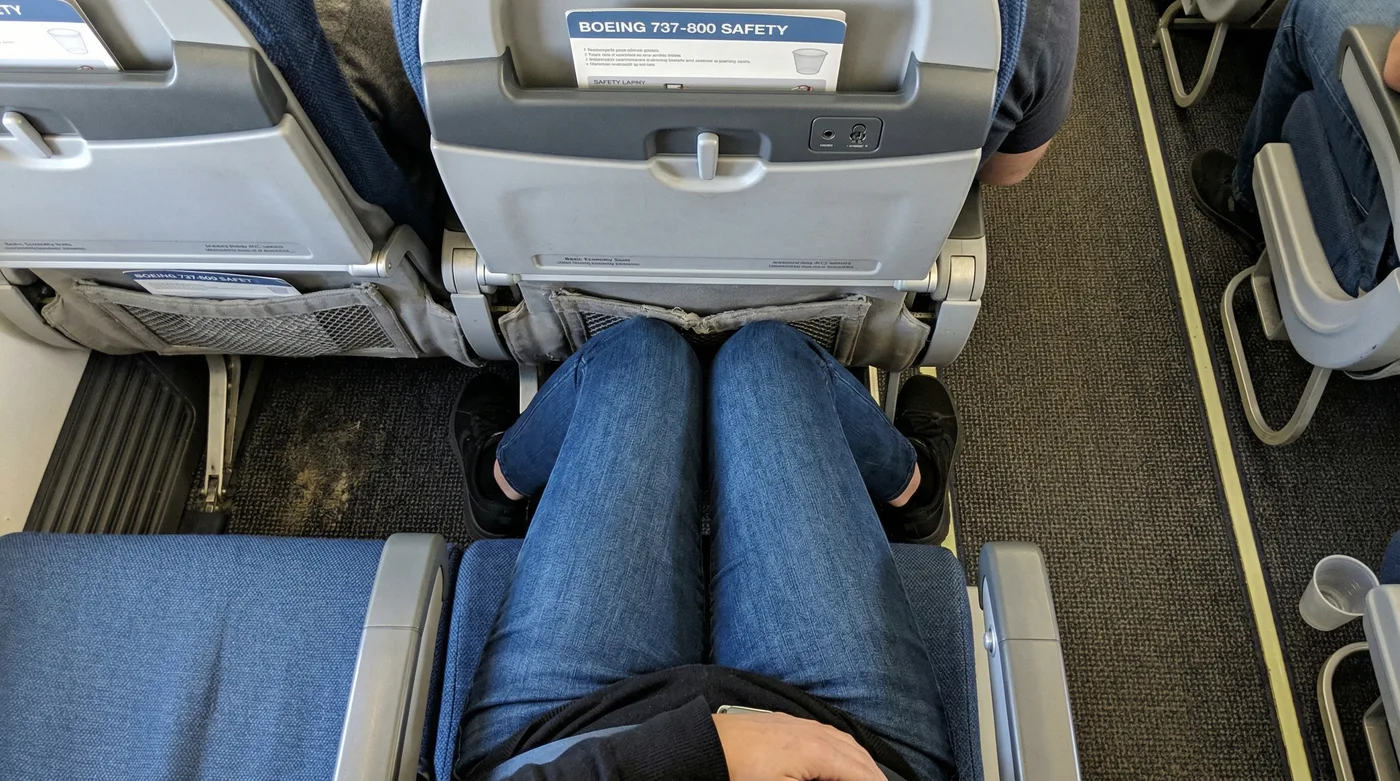
Neither airline is generous here. But JetBlue's floor seats are, on average, slightly more legroom than Delta's — JetBlue has maintained a 32-33" pitch standard on most aircraft while Delta has squeezed some configurations down to 30-31". Small comfort when you're in the last row, but comfort nonetheless.
| Feature | Delta Basic Economy | JetBlue Blue Basic |
|---|---|---|
| Carry-on bag | Allowed (board last) | Not allowed ($35-$65 fee) |
| Personal item | Yes | Yes |
| Advance seat selection | No (fee to unlock) | No (fee to unlock) |
| Seat selection fee range | $15-$50 | $10-$50 |
| Changes allowed | No | No |
| Cancellation | No (credit in rare cases) | No |
| Boarding group | Last | Last |
| Avg legroom (economy) | 30-31" | 32-33" |
| Frequent flyer miles earned | Yes (reduced) | Yes (TrueBlue points) |
Changes and cancellations: both are brutal, but differently
Neither fare lets you change your ticket. That's the baseline. But the edge cases differ.
Delta Basic Economy is essentially a wall. No changes, no cancellations, no future travel credit in most circumstances. If your plans change, you lose the money. Delta did briefly soften this during COVID but has since returned to the original terms. The only exception is if Delta itself cancels or significantly delays the flight — then you're entitled to a refund regardless of fare class, per DOT rules.
JetBlue Blue Basic is similarly rigid, but JetBlue's overall cancellation culture has historically been slightly more consumer-friendly — they've been quicker to issue credits during irregular operations and their customer service, while not perfect, tends to be less of a bureaucratic maze than Delta's for economy passengers. That said, don't book Blue Basic expecting flexibility. You're not getting it.
If there's any chance your plans might change, neither of these fares is the right call. A regular Blue or Delta Main Cabin fare with a same-day change option is worth the extra $30-60 on most domestic routes.
Real price comparison: what routes actually look like
Let's get specific, because "basic economy is cheap" is meaningless without numbers.
On JFK to LAX (one of the most competitive transcontinental routes), I pulled fares in a typical booking window:
| Fare type | Airline | Base fare | + carry-on | + seat selection | Real cost |
|---|---|---|---|---|---|
| Basic Economy | Delta | $129 | $0 | $35 | $164 |
| Blue Basic | JetBlue | $119 | $45 | $25 | $189 |
| Main Cabin | Delta | $189 | $0 | $0 | $189 |
| Blue (regular) | JetBlue | $179 | $0 | $0 | $179 |
On shorter routes like BOS to DCA or LGA to ORD, the math shifts. Base fares compress to $59-$89, and the fees become proportionally more painful. A $65 carry-on fee on a $69 Blue Basic fare is genuinely absurd, and yet people pay it every day.
Pro Tip: FlightKitten's pounce alerts work on specific fare classes on some routes — if you're watching a JetBlue route, set your target price to account for the bag fee. A $99 Blue Basic catch is not the same as a $99 Blue catch.
The Mint distraction and what it means for basic passengers
JetBlue's Mint business class product gets a lot of press, and it's genuinely excellent for the price — transcon Mint seats regularly appear around $599-$799 one-way when there's availability, which is a fraction of what Delta One costs. But here's the thing: Mint's existence has a weird downstream effect on Blue Basic passengers.
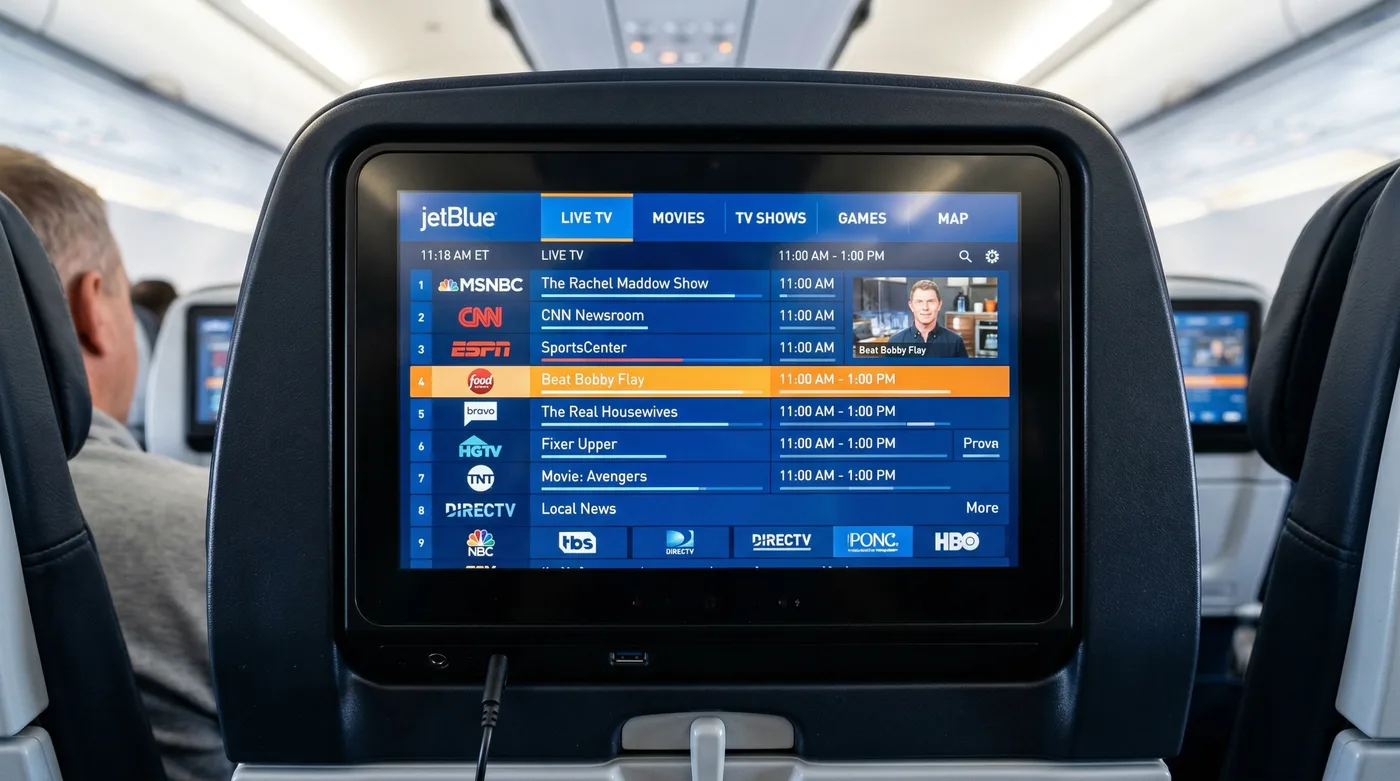
JetBlue has been prioritizing Mint expansion and premium revenue, which means the back of the plane has gotten less attention. Older A320 aircraft that haven't been refreshed have seat-back screens that may or may not work, and the product consistency on Blue Basic is lower than it was five years ago. You're subsidizing someone else's lie-flat bed.
Delta's basic economy passengers, meanwhile, are on a more consistently modern fleet — the A321neo and A220 interiors are genuinely nice even in row 34. The seat-back entertainment on Delta domestic is reliable, and the Wi-Fi (while not free) works. Small things, but they matter on a 5-hour flight.
Frequent flyer miles: does it matter in basic economy?
Slightly, yes. Delta Basic Economy earns SkyMiles at a reduced rate — typically 50% of the base miles you'd earn in Main Cabin. On a JFK-LAX flight, that might be 1,100 miles instead of 2,200. Not nothing, but not exciting either.
JetBlue's TrueBlue program earns points on Blue Basic fares, though at a reduced multiplier. JetBlue's points structure is simpler (3 points per dollar on base fare, 1 point per dollar on taxes and fees for Blue Basic), and TrueBlue points don't expire, which is a genuine advantage if you're a casual JetBlue flyer.
Neither program is going to make you rich from basic economy bookings. But if you're choosing between two otherwise identical fares and you have status with one airline, that's a tiebreaker worth using.
So which one is actually worse?
For most travelers, most of the time: JetBlue Blue Basic is the worse deal.
The carry-on restriction is the dealbreaker. Delta lets you bring your bag on the plane — you just board last and hope there's bin space. JetBlue charges you $35-$65 per flight to do the same thing. On any trip longer than a weekend with a backpack, Blue Basic's real cost is higher than it appears, and often higher than the regular Blue fare.
Delta Basic Economy wins on the carry-on question, loses slightly on legroom, and is roughly equivalent on everything else. It's a bad product, but it's a more honestly bad product — you know what you're not getting, and what you are getting (your bag, your miles, a functional entertainment system) is clearer.
The one scenario where Blue Basic makes sense: you're flying carry-on-free, you don't care about seat selection, the fare is meaningfully cheaper than Delta on the same route, and you've already checked that the price gap covers the flexibility difference. On a BOS-FLL run where Blue Basic is $79 and Delta Basic is $109, that math can work.
Every other scenario? Pay the extra $20-40 for the regular fare. Your future self, standing at the gate being told the overhead bins are full, will thank you.
How to actually find the best deal on these routes
The honest answer is that the best fare on any given route changes week to week, and the airline that's cheaper today won't be cheaper next month. Loyalty to a single airline in economy class is a habit that costs money.
Set up FlightKitten hunts on both JetBlue and Delta for your regular routes, but set your target price to the all-in number — base fare plus whatever fees you'll realistically pay. A $99 Blue Basic catch from FlightKitten is worth pouncing on if you're a one-bag traveler. It's worth ignoring if you're checking a bag and need a real seat.
The airlines are counting on you to compare base fares and ignore the fees. Don't do that. The total cost is the only number that matters.
And if you're still not sure which fare to book on your next trip — run the bag math first. It'll tell you everything you need to know.