


Route Briefing: Atlanta to Berlin
Flying from Atlanta to Berlin is one of those routes that rewards patient planners. The journey runs around ten and a half hours with one stop, and while that's a full day of travel, Berlin has a way of making you forget the flight the moment you step outside. Lufthansa, Delta, and United all serve this route year-round, and connecting through Frankfurt or Munich on Lufthansa frequently turns up sharper pricing than routing through domestic U.S. hubs — worth checking when you're comparing options. A genuinely good deal lands under $600 roundtrip, while standard fares push past $900, so booking three to six months out is the move if you want to keep money in your pocket for the city itself.
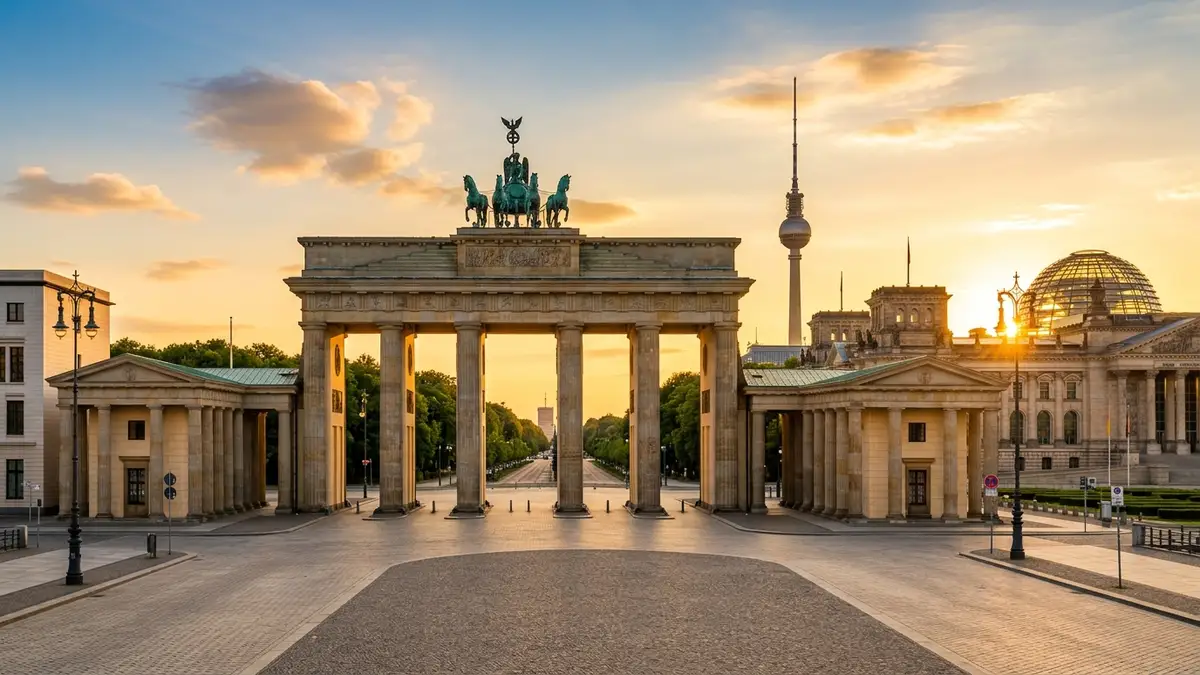
And Berlin will absolutely spend that money for you, in the best possible way. This is a city that wears its history openly — the remnants of the Berlin Wall, the Brandenburg Gate, the haunting Memorial to the Murdered Jews of Europe — but it pairs that weight with an energy that's relentlessly forward-looking. The museum scene is extraordinary, with Museum Island alone housing five world-class institutions on a single stretch of the Spree River. Neighborhoods like Prenzlauer Berg and Kreuzberg have their own distinct personalities, full of independent cafés, street art, and the kind of unhurried street life that makes you want to slow down and stay longer.
Berlin's nightlife has a global reputation that's entirely earned. The city's club culture runs deep, and even if late nights aren't your thing, the bar and restaurant scene across the city reflects decades of creative immigration and cultural mixing — Turkish, Vietnamese, and Middle Eastern food traditions are woven into everyday Berlin eating in a way that feels completely natural.
For getting into the city from Brandenburg Airport, the S-Bahn train connects directly to central Berlin and is the most straightforward option for most travelers — reliable, affordable, and easy to navigate even with luggage.
Peak season runs June through August when the long summer days fill the parks and outdoor spaces with locals and visitors alike. That said, Berlin in shoulder season — particularly spring and early autumn — offers a more relaxed version of the city with fewer crowds and often softer accommodation prices. If you can be flexible, late September still carries warmth and the city's cultural calendar stays packed well into autumn. Whenever you go, give yourself at least five days. Berlin is not a city that reveals itself in a weekend.