


Route Briefing: Boston to Costa Rica
Five and a half hours from Boston's Logan Airport and you're stepping off the plane into a country that has quietly become one of the world's great travel destinations — not because of luxury resorts or nightlife, but because of something far harder to manufacture: genuine natural wonder. Costa Rica earns its reputation every single time.
San José's Juan Santamaría International Airport is well-organized and straightforward to navigate, and official taxis and pre-booked shuttle services are readily available outside arrivals to get you into the city or onward to your destination. Many travelers use San José purely as a transit point, heading directly toward the coast or the highlands — and honestly, that's a perfectly reasonable strategy given how much the country has to offer beyond the capital.
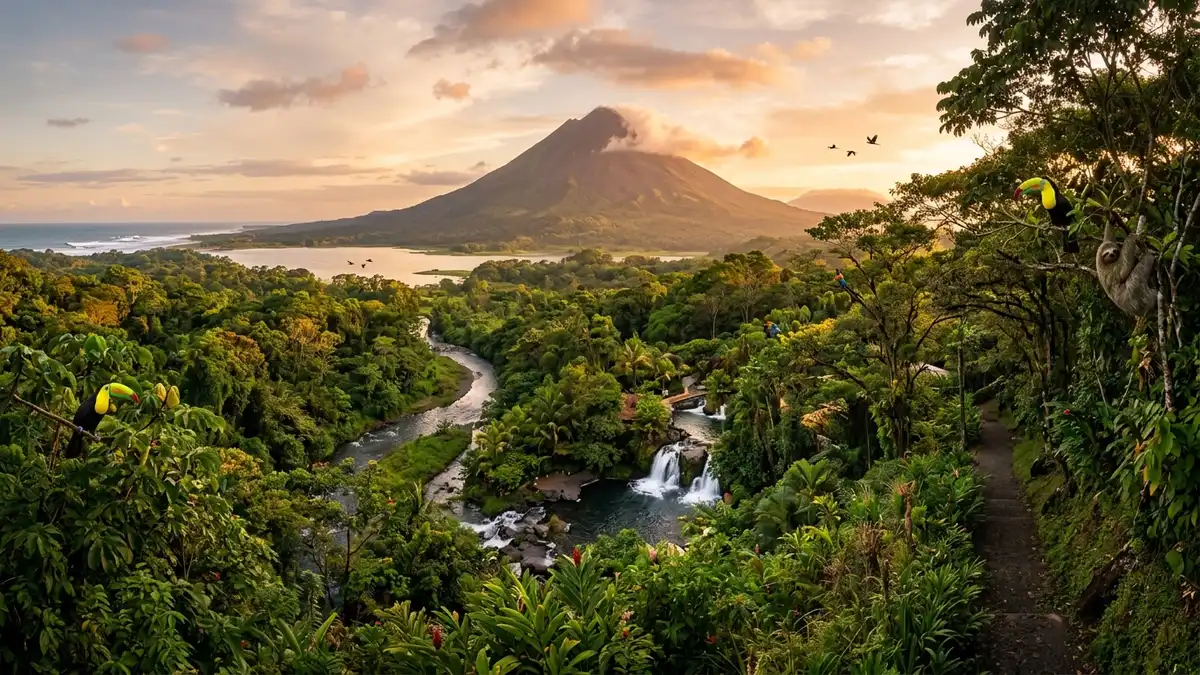
What Costa Rica does better than almost anywhere else is stack extraordinary experiences close together. You can stand at the edge of an active volcano in Arenal, soak in natural hot springs fed by geothermal activity, then be on a Pacific surf beach within a few hours. The biodiversity is staggering — this small country contains a significant portion of the world's species, and wildlife spotters will find sloths, toucans, howler monkeys, and sea turtles without having to work particularly hard for the sightings. The rainforests of the Osa Peninsula and the cloud forests around Monteverde are genuinely unlike anywhere else on earth.
Timing matters on this route. Peak season runs December through January and again June through August, which aligns with both U.S. school holidays and Costa Rica's dry season on the Pacific side. Fares from Boston reflect that demand — standard roundtrip pricing runs $550 to $700 or more during busy periods. A roundtrip under $350 is the benchmark for a genuinely good deal, and those fares do appear if you're strategic. Book six to eight weeks out, fly mid-week, and steer clear of U.S. holiday windows to realistically save 20 to 30 percent compared to peak dates.
The shoulder seasons — particularly April through May and September through November — offer a compelling trade-off: lower fares, thinner crowds, and lush green landscapes that the dry season simply can't match. The rain tends to come in afternoon bursts rather than all-day downpours, leaving mornings wide open for adventure.
The real tip worth taking seriously: don't try to see everything. Costa Rica rewards slowness. Pick two or three regions, give yourself time to settle in, and let the Pura Vida pace do its work. That philosophy will serve you far better than any packed itinerary.