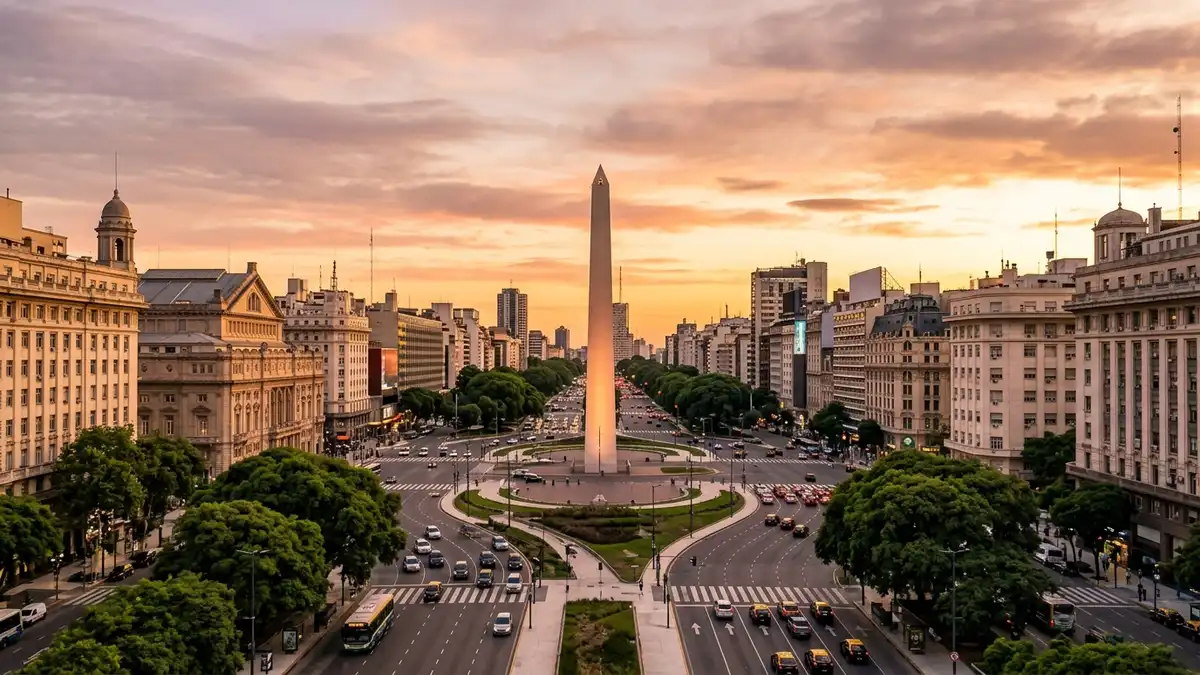



Route Briefing: Dallas to Buenos Aires
There's a reason Buenos Aires earned its reputation as the Paris of South America, and once you land at Ezeiza International Airport after roughly thirteen and a half hours from Dallas, you'll understand immediately why this city rewards the journey. American Airlines, LATAM, and United all serve this route with one-stop connections, and if you're strategic about booking, you can land a roundtrip fare under $700 — a genuine steal for a destination this rich. Standard fares run closer to $1,000 to $1,400, so booking three to six months out is your single best move, especially if you're eyeing the Southern Hemisphere summer between December and February when the city buzzes with holiday energy and warm evenings that stretch late into the night.
Buenos Aires is a city that operates on its own rhythm, and that rhythm runs deep into the small hours. The neighborhoods each have a distinct personality — Palermo with its leafy streets and design culture, San Telmo with its cobblestones and antique markets, La Boca with its vivid painted buildings and unmistakable working-class soul. Tango isn't a tourist performance here; it's a living tradition you'll find in milongas where locals dance with the kind of intensity that makes you want to learn immediately. The food scene centers on beef that is genuinely world-class — Argentine parrillas serve cuts cooked over wood fire in a way that redefines what a steak can be. Pair that with Malbec from Mendoza and you have an evening that costs surprisingly little by North American standards.
From Ezeiza, the city center is roughly 35 kilometers away. Remis taxis and private transfer services are the most straightforward options for getting into the city, and booking a transfer in advance through your accommodation is a smart move for a smooth arrival after a long flight.
One experience-enhancing tip worth knowing: the Argentine peso situation means that understanding the local currency landscape before you arrive can meaningfully stretch your budget. Do your research on this before departure, as it affects everything from dining to accommodation costs in ways that can work strongly in your favor.
Timing-wise, the route runs year-round, but if you want warm weather and the city at full energy, December through February delivers. Spring in Buenos Aires — September through November — offers mild temperatures and thinner crowds, which is worth considering if you want the city more to yourself. Midweek flights on this route can save you noticeably compared to weekend departures, so flexibility in your travel dates is genuinely worth the effort when you're searching fares.