


Route Briefing: Dallas to Miami
Dallas and Miami might both sit in the Sun Belt, but stepping off a plane at MIA after that quick two-hour-fifty-five-minute hop feels like landing in an entirely different country. The energy shifts immediately — Spanish flows freely, the air carries salt and humidity, and the color palette of everything around you seems to turn up a few notches. For Texans craving a genuine change of scenery without burning a full day of travel, this route is one of the most rewarding short flights in the country.
American Airlines, Spirit, and Delta all compete heavily on the DFW-MIA corridor, which is great news for your wallet. Keep an eye out for roundtrip fares under $150 — they do appear on this route, especially if you book four to six weeks ahead and aim for Tuesday or Wednesday departures. Holiday weekends will cost you, so if your schedule has any flexibility at all, mid-week travel is the single easiest way to save real money here.
Miami's peak season runs December through April, when snowbirds and international visitors flood South Beach and hotel rates climb accordingly. That said, summer brings its own rewards — locals reclaim the city, festivals pop up across neighborhoods, and while afternoon thunderstorms are common, mornings are often glorious. If budget is your priority, the shoulder months of May and November can offer a sweet spot of decent weather and lower prices.
Once you land at Miami International, the city is genuinely accessible without a rental car. The Miami Metrorail connects directly from the airport to downtown and the Brickell financial district, and from there you can reach South Beach via the free Metromover or a rideshare. It's a practical, affordable option that drops you right into the action.
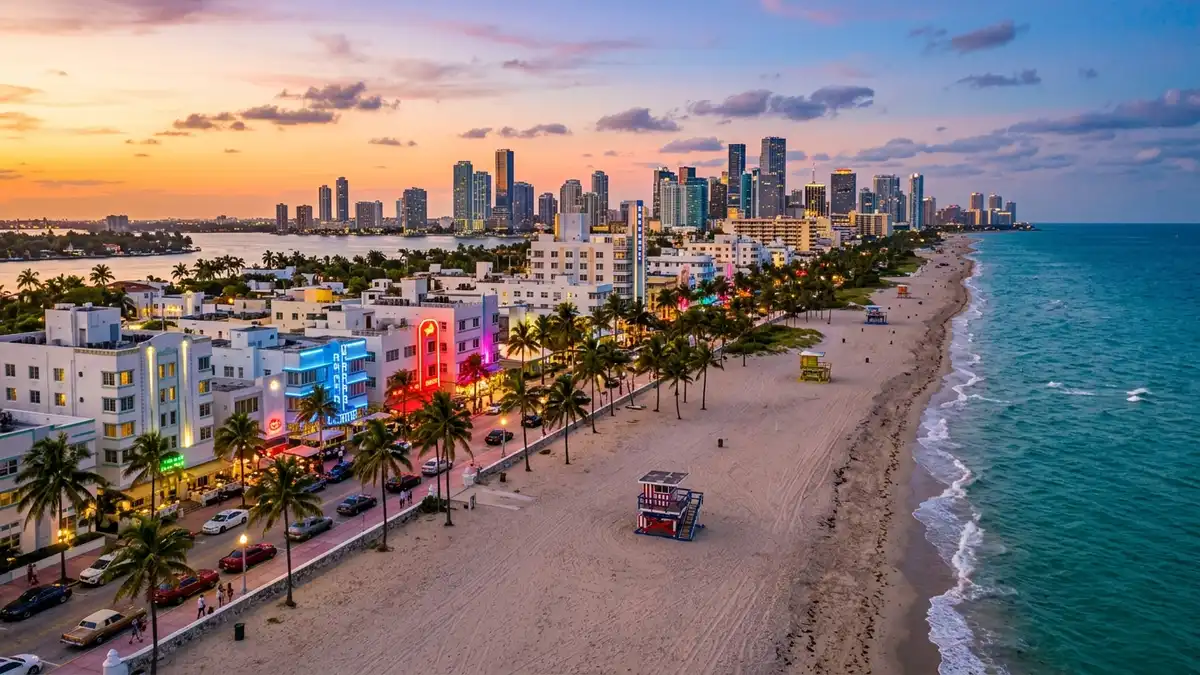
South Beach's Art Deco Historic District is the obvious starting point — those pastel-colored buildings along Ocean Drive are as photogenic in person as they look online. But Miami rewards the curious traveler who ventures beyond the beach. Wynwood's street art scene has transformed a former warehouse district into one of the most visually striking neighborhoods in America. Little Havana offers some of the most authentic Cuban food and coffee you'll find outside of Havana itself, and the James Beard-recognized dining scene across Brickell and the Design District means serious food lovers will never run short of options.
The tip that genuinely changes a Miami trip: resist the urge to stay exclusively on South Beach. Basing yourself in Brickell or Midtown often means lower accommodation costs, easier access to local life, and a short rideshare to the beach whenever you want it. Miami is a city best experienced in layers, and this route makes exploring all of them remarkably easy.