


Route Briefing: Dubai to Boston
Dubai to Boston is one of those long-haul routes that genuinely rewards the effort. You're looking at around 14 and a half hours with a stop, typically connecting through Doha or Abu Dhabi depending on whether you fly Qatar Airways, Etihad, or Emirates — all three serve this route and are consistently strong choices for comfort on a journey this length. If you're hunting for value, keep an eye on fares under $700 roundtrip, which represent a genuinely good deal on this corridor. Booking two to four months ahead gives you the best shot at those prices, and it's worth comparing Qatar and Etihad connections specifically, as routing through Doha or Abu Dhabi can sometimes undercut the more obvious Emirates options.
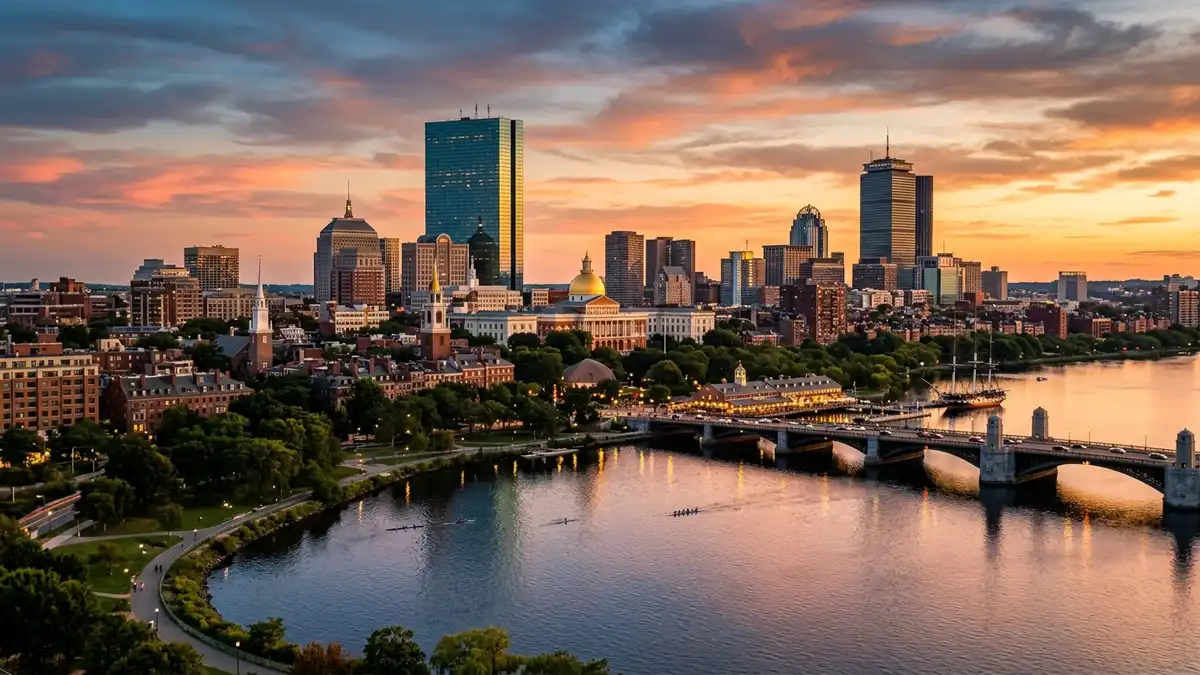
Boston itself is one of America's most rewarding cities to land in, particularly if you love history, food, and the rare pleasure of a major city that's actually walkable. The Freedom Trail threads through the heart of downtown, connecting sites from the American Revolution in a way that feels surprisingly alive rather than museum-dusty. The city's identity is shaped by its universities — Harvard and MIT sit just across the Charles River in Cambridge, and the intellectual energy spills into the neighbourhoods, the bookshops, and the conversation you'll overhear in any decent café.
The seafood here is the real deal. New England clam chowder, lobster rolls, and fresh oysters are staples you'll find across the city, from casual waterfront spots to proper sit-down restaurants. Don't skip the harbour area — it's a genuinely pleasant place to orient yourself when you arrive.
Getting from Logan International Airport into the city is straightforward and cheap. The Silver Line bus connects directly from the terminals to South Station and is free from the airport, making it one of the better airport transit deals in any American city. From South Station you can connect to the subway, known locally as the T, which covers most of the places you'll want to reach.
Timing matters here. Summer, from June through August, is peak season — the weather is warm, the outdoor events are plentiful, and the city is buzzing. It's also when fares climb and accommodation fills up. If you can travel in September or October, you'll catch Boston at its most atmospheric: the famous New England autumn foliage, cooler temperatures, and noticeably thinner crowds. Spring is another solid window, with the city shaking off winter and the famous Boston Marathon bringing an infectious energy in April. Winter is cold and occasionally brutal, but fares drop significantly and the city doesn't shut down — it just gets quieter and more local.