


Route Briefing: Dublin to Washington D.C.
Flying from Dublin to Washington D.C. is one of those transatlantic routes that genuinely rewards the traveller. At around eight and a half hours direct, you're not burning a full day in the air, and when you land you're stepping straight into one of the most historically rich cities on the planet — one that, remarkably, won't drain your wallet the moment you walk through the door.
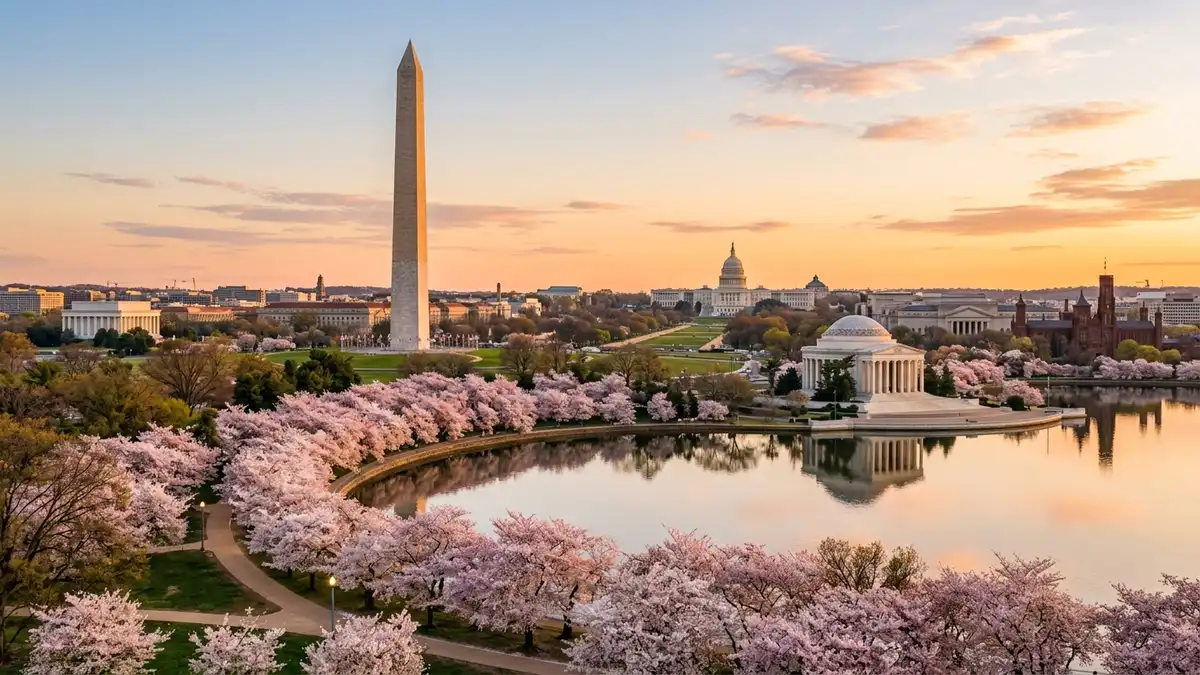
Washington D.C. is the rare world capital where the headline attractions are completely free. The Smithsonian Institution alone could occupy you for a week — it's not one museum but a sprawling collection of them, covering everything from natural history and aerospace to American art and African American culture. The National Mall stretches between the Lincoln Memorial and the Capitol Building, lined with monuments that carry genuine emotional weight when you see them in person. If your timing is right and you visit in late March or early April, the famous cherry blossoms around the Tidal Basin transform the city into something almost surreal.
Aer Lingus operates this route and is consistently worth watching for competitive fares — their transatlantic pricing can be surprisingly sharp, especially outside peak summer months. A roundtrip under $500 is genuinely achievable if you're flexible and book three to six months ahead. Summer, from June through August, is peak season when the city fills with tourists and prices climb accordingly, so spring and autumn offer a sweet spot of pleasant weather and better value.
One practical note on arrival: Washington D.C. is served by two main airports relevant to this route — Dulles International (IAD) and Reagan National (DCA). Dulles is further from the city centre but well connected by the Silver Line Metro, which makes getting into downtown straightforward without the cost of a taxi or rideshare. Reagan National sits closer to the city and has direct Metro access on the Blue and Yellow lines, making it extremely convenient if your flight lands there.
The city's neighbourhoods are worth exploring beyond the Mall. Areas like Georgetown, Capitol Hill, and the U Street Corridor each have their own distinct character, with independent cafés, bookshops, and restaurants that give you a feel for how Washingtonians actually live. The food scene reflects the city's international population, so you'll eat well across a wide range of cuisines and price points.
Set a fare alert for this route — it's a year-round connection with real value hiding in the off-peak windows.