


Route Briefing: Frankfurt to Florence
Frankfurt to Florence is one of those routes that feels almost unfairly short for the reward waiting at the other end. Just three and a half hours with a connection, and you step off the plane into the city that essentially invented the modern world as we know it — the birthplace of the Renaissance, the cradle of Dante, Michelangelo, and Leonardo. For anyone flying out of Germany, this is an easy cultural pilgrimage to justify.
On the fare side, the sweet spot is under $300 roundtrip, which genuinely does appear if you time things right. Standard pricing creeps above $500, so the difference between a savvy booking and a lazy one is real money. Lufthansa, ITA Airways, and Swiss all serve this route, and here's a tip worth remembering: connections through Munich or Zurich frequently undercut fares that route through Rome. It sounds counterintuitive, but the numbers bear it out. Book six to eight weeks ahead and you'll be in the best position to catch those lower fares before they evaporate.
Florence's Peretola Airport sits close to the city, and getting into the centre is refreshingly straightforward — a bus service connects the airport to the main Santa Maria Novella train station, putting you right in the heart of things without the taxi drama you'd face arriving into a larger Italian hub.
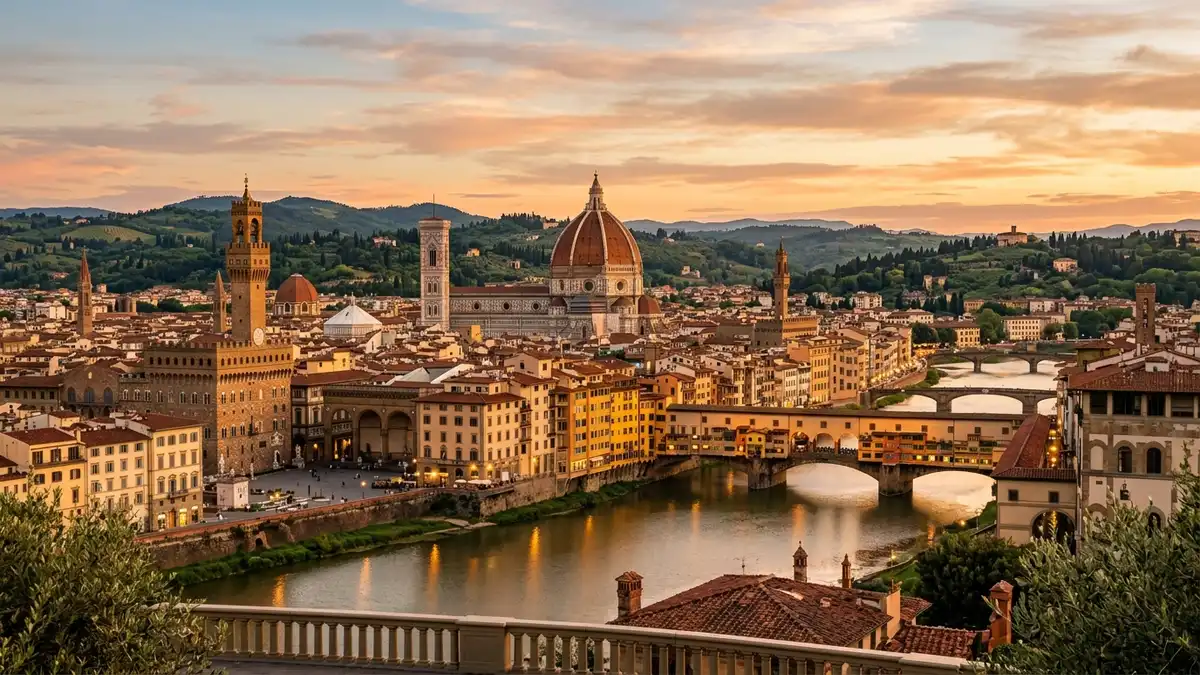
Once you're there, the city rewards slow, aimless walking more than any rigid itinerary. The Uffizi Gallery holds one of the world's great collections of Renaissance painting, and the Duomo — with Brunelleschi's extraordinary dome dominating the skyline — is the kind of landmark that genuinely stops you in your tracks even if you've seen a hundred photographs of it. The Oltrarno neighbourhood on the south side of the Arno tends to feel a little less crowded and gives you a more lived-in sense of the city alongside its galleries and artisan workshops.
Tuscan cuisine here is the real thing: ribollita, bistecca alla Fiorentina, fresh pasta, and wine from the surrounding hills. Eating well doesn't require spending extravagantly — the neighbourhood trattorias away from the main tourist squares offer better value and often better food.
Timing matters. June through August is peak season, meaning crowds at the major sites and higher accommodation prices. If your schedule allows any flexibility, late spring or early autumn gives you warm weather, manageable crowds, and a city that breathes a little more easily. That said, Florence rewards visits year-round — even a grey winter afternoon in front of a Botticelli is a pretty good use of your time.