


Route Briefing: Las Vegas to Bucharest
Trading the neon sprawl of Las Vegas for the crumbling grandeur of Bucharest is one of those travel decisions that feels quietly brilliant once you arrive. These two cities couldn't be more different in character, which is precisely what makes the journey worthwhile. Bucharest rewards curiosity — it's a city that doesn't hand you its best moments immediately, but once it does, you'll understand why travelers who discover it tend to come back.
Getting there from Las Vegas takes around 16 and a half hours with one stop, typically connecting through Frankfurt, Vienna, or Istanbul depending on which carrier you book. Lufthansa, Austrian Airlines, and Turkish Airlines all serve this route well, and each hub city offers its own mini-adventure if you opt for a longer layover. Fares under $700 roundtrip represent genuinely good value for a transatlantic-plus journey of this distance — standard pricing runs $1,000 to $1,400 or more, so booking two to four months ahead is worth building into your planning calendar. Being flexible about your layover length is one of the most reliable ways to shave money off the ticket price, so don't automatically filter for the shortest connection.
Once you land at Henri Coandă International Airport, the city center is accessible by express train, which is a straightforward and affordable option that drops you near the northern part of the city. Taxis and rideshare apps are also widely available, though agreeing on a fare or using a metered cab from official ranks is the smarter move.
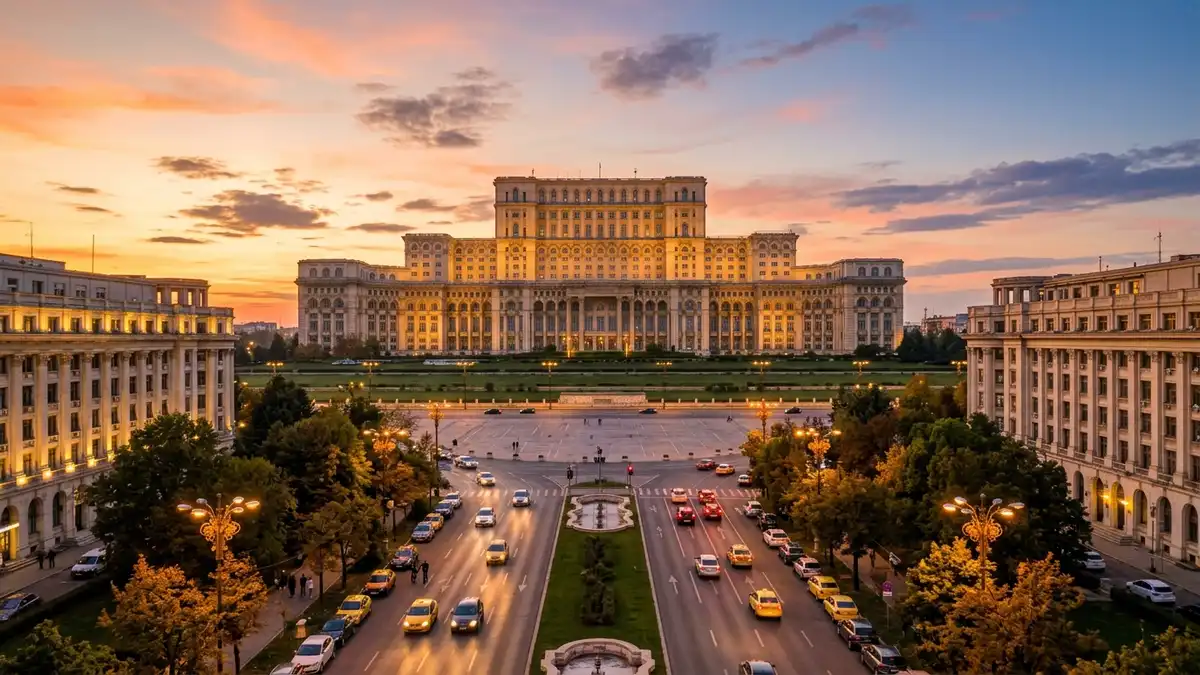
Bucharest itself is a city of beautiful contradictions. Belle Époque boulevards sit alongside brutalist Soviet-era architecture, and both somehow feel at home together. The historic center, known locally as the Old Town, buzzes with cafés, wine bars, and live music well into the early hours — the nightlife here has a genuine, unpretentious energy that puts many Western European capitals to shame. The Palace of the Parliament, one of the largest administrative buildings in the world, is a staggering piece of architecture that tells you everything about the ambitions and excesses of the Ceaușescu era. It's worth a guided tour just to grasp the scale of it.
Romanian cuisine is hearty and deeply satisfying — think slow-cooked stews, grilled meats, and fresh bread, often paired with local wines from regions like Dealu Mare or Cotnari that remain largely undiscovered by international markets. Eating and drinking well here costs a fraction of what you'd spend in Paris or Amsterdam.
Peak season runs June through August when the city is warmest and most alive, but spring and early autumn offer a sweeter deal — pleasant weather, thinner crowds, and even more competitive airfares. If you can travel outside the summer rush, Bucharest in May or September is genuinely lovely.