


Route Briefing: London to Florence
Florence is one of those cities that genuinely earns every superlative thrown at it, and the fact that you can reach it from London in a few hours makes this one of the most rewarding short-haul routes in Europe. Whether you're flying from Heathrow, Gatwick, or Stansted, you're looking at roughly three and a half hours with a connection — typically through Milan or Rome — or a little under two and a half hours on the occasional direct seasonal charter. For a city that shaped the entire course of Western art, that's an extraordinarily small investment of time.
Vueling, British Airways, and Ryanair all serve this route, and Ryanair's seasonal service out of Stansted is worth checking first if price is your priority. Fares under £150 return represent a genuinely good deal; standard pricing tends to sit in the £200 to £350 range. Book two to four months ahead if you're targeting summer travel, and lean towards midweek departures — Tuesday and Wednesday flights consistently come in cheaper, often saving you a meaningful chunk.
Florence's Peretola Airport sits close to the city centre, and you can reach the historic core relatively quickly by taxi or shuttle bus, making arrival refreshingly painless compared to many European destinations.
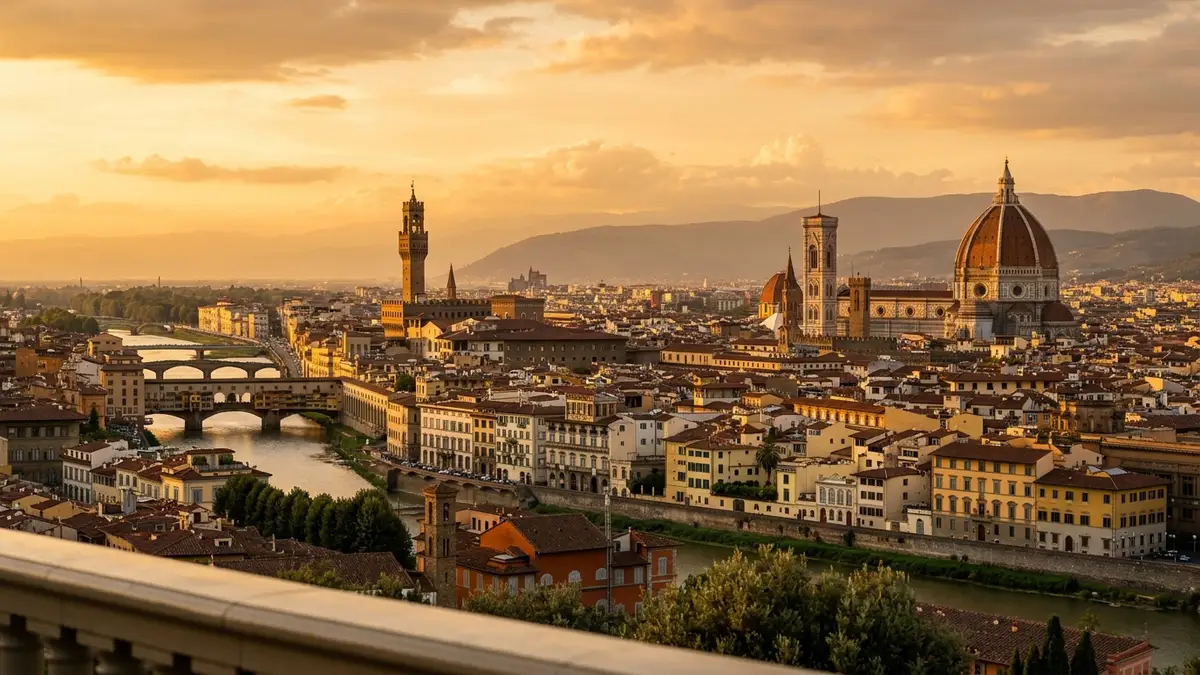
Once you're there, the city rewards slow, deliberate exploration. The Uffizi Gallery houses one of the greatest collections of Renaissance painting anywhere on earth — Botticelli's Birth of Venus, Raphael, Caravaggio — and queues can be brutal in summer, so booking tickets well in advance is non-negotiable. The Duomo, with Brunelleschi's extraordinary dome dominating the skyline, is the kind of landmark that genuinely stops you in your tracks even if you've seen a hundred photographs. Climb to the top for views over the terracotta rooftops and the Arno winding through the valley.
Tuscan cuisine here is unfussy and deeply satisfying — bistecca alla Fiorentina, ribollita, fresh pasta, and wines from the surrounding Chianti hills. Eating well doesn't require spending heavily; neighbourhood trattorias away from the main tourist drag offer far better value and atmosphere than anything near the Ponte Vecchio.
Peak season runs June through August, when the city is warm, busy, and buzzing with energy but also genuinely crowded. If you can manage it, late April, May, or September offer near-perfect conditions — comfortable temperatures, fewer crowds, and the same golden light that inspired the painters who made this city famous. Spring in Tuscany is particularly special, with the surrounding countryside in full bloom and the city feeling almost manageable. For a route this short and this rewarding, the only real mistake is waiting too long to book.