


Route Briefing: London to Washington D.C.
Washington D.C. might just be the world's greatest free city. Nowhere else can you spend an entire week absorbing world-class art, history, science, and culture without spending a single dollar on admission — and that alone makes this eight-and-a-half-hour direct flight from London one of the most rewarding transatlantic routes you can book.
British Airways, United Airlines, and Virgin Atlantic all operate this route year-round, giving you genuine flexibility on timing and price. A good deal comes in under $500 roundtrip, while standard fares typically sit above $800 — so the gap between a smart booking and a lazy one is significant. Book two to four months ahead, aim for mid-week departures, and steer well clear of the American school holiday periods. That discipline alone can shave 20 to 30 percent off what you'd otherwise pay.
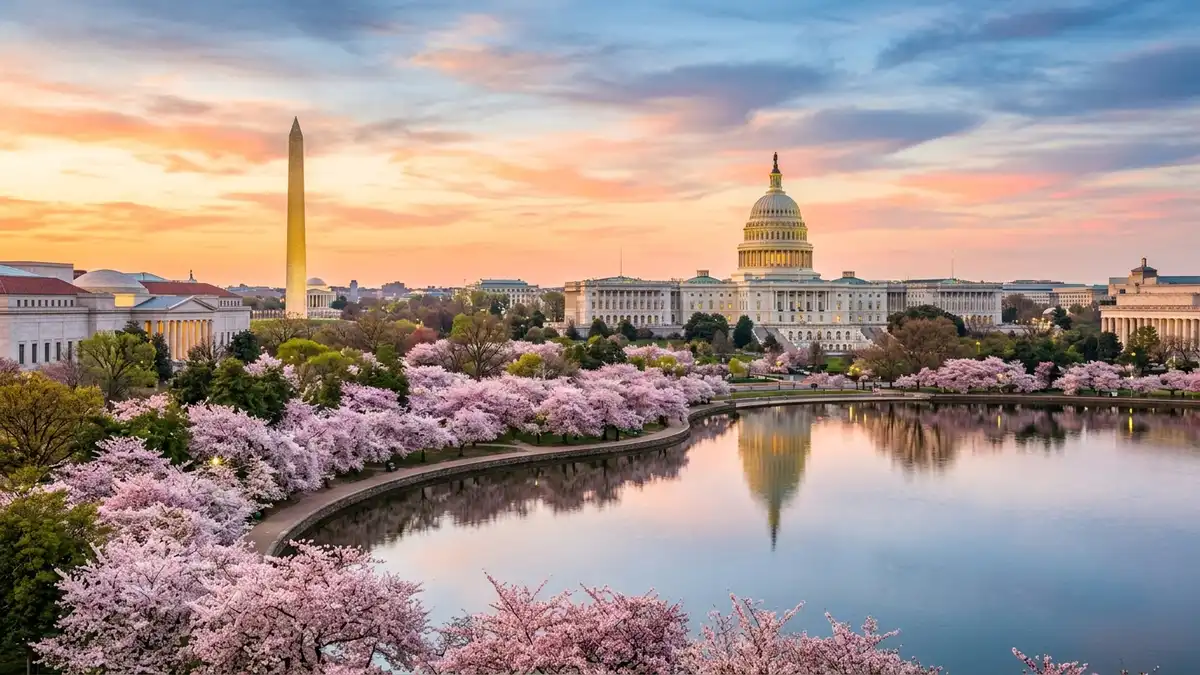
Timing your visit matters beyond just the price. June through August is peak season, which means crowds at the monuments and humidity that hits you like a warm, wet towel the moment you step outside. Spring is the sweet spot — the famous Japanese cherry blossoms around the Tidal Basin typically bloom in late March to early April, drawing visitors from across the country, but the city still feels manageable and the weather is genuinely pleasant. Autumn brings cooler temperatures and beautiful foliage without the summer crush.
Once you land — most transatlantic flights arrive into Dulles International — the Washington Metro's Silver Line connects the airport directly to the city centre, making it one of the more straightforward airport arrivals in any major American city. Reagan National, closer in, is served by the Metro's Blue and Yellow lines if your flight routes through there.
The Smithsonian Institution is the obvious anchor of any visit: a sprawling collection of free museums stretching along the National Mall, covering everything from aerospace and natural history to American art and African American culture. The monuments — Lincoln Memorial, the Vietnam Veterans Memorial, the Washington Monument — are genuinely moving in person in a way photographs never quite capture. Walk the Mall at dusk when the crowds thin and the light turns golden, and you'll understand why people fall hard for this city.
One tip worth taking seriously: get a Metro card loaded up on arrival and use it freely. D.C.'s walkable core is compact, but the Metro is clean, reliable, and far cheaper than taxis or rideshares for getting between neighbourhoods. It's the kind of city that rewards the curious wanderer — Georgetown's cobbled streets, the Eastern Market neighbourhood, the energy around Capitol Hill — and the best way to find all of it is simply to move around without a rigid plan.