


Route Briefing: New York to Riga
Few European capitals reward the curious traveler quite like Riga, and the fact that most Americans overlook it entirely is precisely what makes the journey worthwhile. You'll connect through a European hub — Helsinki, Frankfurt, or Copenhagen depending on which carrier you book — turning what could feel like a chore into a genuine bonus stop. Finnair, Lufthansa, and SAS all serve this route well, and with a total travel time around eleven and a half hours, you'll arrive feeling far less battered than a transatlantic marathon to somewhere more obvious.
The fare math here is genuinely exciting. A roundtrip under $600 is a real deal on this route, while standard pricing climbs past $900 — meaning a well-timed booking can save you hundreds for a destination that already stretches your dollar beautifully once you land. Book two to four months out, and pay attention to which hub your connection routes through, since swapping from one airline to another can sometimes shave a surprising amount off the total. Flexibility on that layover city is your single most powerful lever for savings.
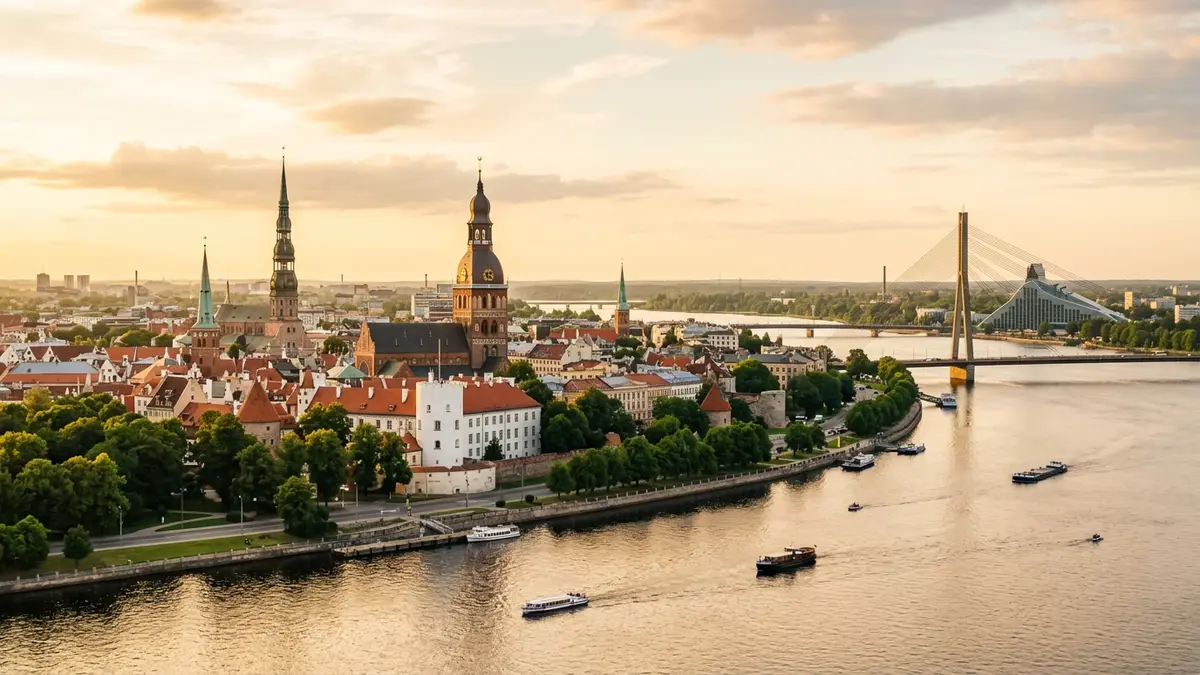
Riga itself is one of Europe's great architectural surprises. The city holds one of the largest collections of Art Nouveau buildings anywhere in the world, and simply wandering the streets of the quiet residential neighborhoods north of the Old Town feels like stepping into an elaborate open-air museum of ornate facades and elaborate ironwork. The Old Town, a UNESCO World Heritage Site, is compact and walkable, layered with medieval guild halls, cobblestone lanes, and the soaring spires of churches that have watched centuries of Baltic history unfold beneath them.
The Central Market, housed in enormous repurposed zeppelin hangars near the train station, is one of those rare places that manages to be both a working local institution and a genuinely unmissable experience for visitors. Go hungry. Latvian food leans hearty and honest — rye bread, smoked fish, and dairy feature prominently, and the local beer culture is worth exploring seriously.
Timing matters here. Summer, from June through August, brings long daylight hours, outdoor festivals, and the city at its most animated and social. That said, Riga in winter has a moody, atmospheric quality that suits the Gothic architecture beautifully, and crowds thin considerably. Shoulder seasons in May and September offer a lovely middle ground — pleasant temperatures without the peak-season pricing on accommodation.
From Riga International Airport, the city center is easily reachable by bus, making the arrival straightforward and affordable. The airport sits close enough to the city that you won't lose much time getting settled. Get a local SIM or download an offline map before you clear customs, and you'll be navigating the Old Town's winding streets within the hour.