


Route Briefing: San Francisco to Belize
Flying from San Francisco to Belize City is one of those routes that genuinely rewards the effort. You're looking at around eight and a half hours total with one stop, typically connecting through Houston or Dallas — and that layover actually works in your favor, since those hubs tend to offer the most competitive fares and tighter connection times. United, American, and Delta all service this route, so you have real options when hunting for deals. If you can snag a roundtrip under $450, grab it without hesitation — that's a genuinely good fare on this corridor. Standard pricing climbs to $650 and beyond, so booking two to four months ahead gives you the best shot at the lower end.
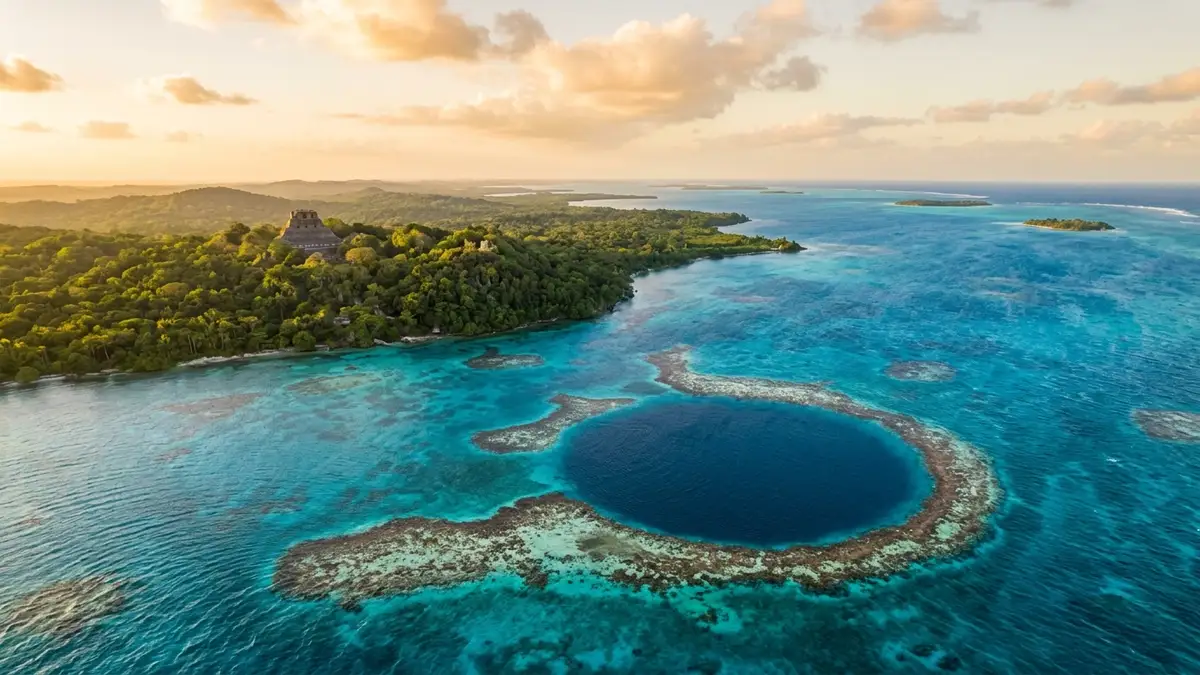
Belize punches well above its weight for a country this small. The Great Blue Hole — that iconic circular marine sinkhole off the coast — is one of those rare natural wonders that actually lives up to the photographs. Snorkeling and diving along the Mesoamerican Barrier Reef, the second largest in the world, is world-class and accessible even for casual swimmers. Inland, the country holds an extraordinary concentration of ancient Mayan ruins scattered through dense jungle, with sites like Xunantunich and Caracol offering genuine archaeological drama without the crushing crowds you'd find at more famous sites elsewhere in the region.
What makes Belize particularly appealing for travelers coming from California is the cultural texture — English is the official language, which removes a common friction point, and the food reflects a fascinating blend of Caribbean, Creole, and Mesoamerican influences. Stewed chicken with rice and beans is the kind of honest, satisfying meal you'll find yourself craving long after you're home.
Arriving at Philip S. W. Goldson International Airport, you're just a short drive from Belize City, with taxis readily available at the terminal. If your final destination is one of the cayes — Ambergris Caye being the most popular — water taxis and small domestic flights connect you onward from the city.
Timing matters here. December through April is peak season, bringing dry weather, calm seas, and the best diving conditions. It's also when prices for accommodation spike and beaches fill up. If you're flexible, the shoulder months just outside that window can offer a sweeter balance of decent weather and thinner crowds. One tip worth taking seriously: pair your reef time with at least one inland excursion. The jungle interior feels like an entirely different country, and most visitors who skip it leave wishing they hadn't.