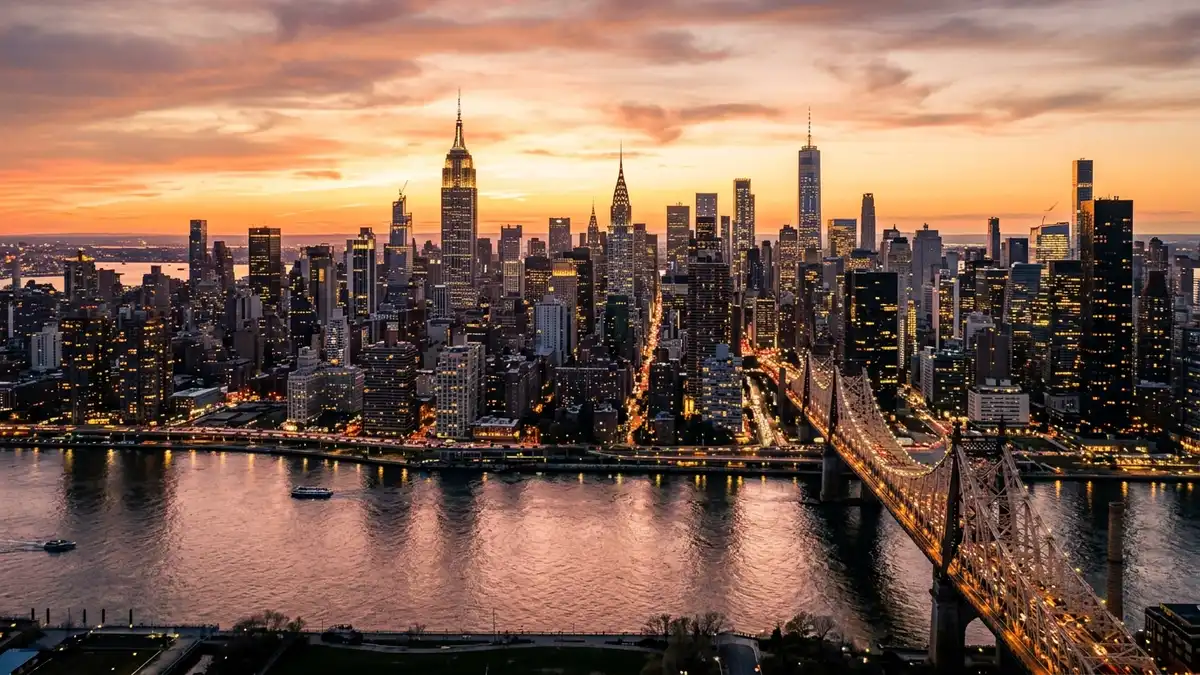



Route Briefing: San Francisco to New York
Few routes in American aviation carry quite the same energy as the transcontinental hop between San Francisco and New York. You're trading one iconic skyline for another, swapping Bay fog for Manhattan hustle, and doing it all in about five and a half hours nonstop. United, JetBlue, and Delta all compete hard on this corridor, which is genuinely good news for your wallet — roundtrip fares under $200 exist if you're patient and flexible, though the typical going rate sits somewhere between $350 and $500. Book four to eight weeks out, and if you can stomach a Tuesday or Wednesday departure instead of the weekend rush, you're looking at meaningful savings on an already competitive route.
New York rewards every type of traveler, but it especially rewards those who simply walk. Central Park alone could fill a full day — from the Bethesda Fountain to the Reservoir to the quieter northern reaches most tourists never reach. Beyond the park, the city's museum culture is genuinely world-class: the Metropolitan Museum of Art holds one of the largest collections on earth, MoMA anchors modern art in a way few institutions can match, and the American Museum of Natural History is far more impressive in person than any photograph suggests. Broadway is worth the splurge at least once, and the neighborhoods — the West Village, Williamsburg, Flushing, Harlem — each feel like distinct cities layered on top of one another.
On the airport question, your choice of JFK, Newark, or LaGuardia matters more than people realize. JFK connects to the subway via the AirTrain, making it the most straightforward and affordable option for getting into Manhattan. Newark is served by NJ Transit rail with an AirTrain connection, which is reliable and reasonably priced. LaGuardia is closest to Midtown geographically but has no rail link, so you're dependent on buses or a taxi, which can be slow during peak traffic hours.
Timing your visit shapes the experience considerably. Summer brings energy, outdoor festivals, and long evenings in the parks, but also crowds and humidity that can feel punishing in July and August. Late spring and early autumn hit a sweet spot — comfortable temperatures, thinner crowds, and the city operating at a kind of relaxed confidence. The holiday season from late November through early January is magical but expensive, and peak fares reflect that.
The one tip worth internalizing: New York is a city that punishes over-planning. Pick two or three anchors for each day, then let the streets fill in the rest. Some of the best experiences here happen when you take a wrong turn.