


Route Briefing: Seattle to Amalfi Coast
There are few trips that reward the effort of a long-haul flight quite like Seattle to the Amalfi Coast. Yes, you're looking at roughly 13 and a half hours in the air with one stop, but the moment you round a coastal bend and catch your first glimpse of pastel villages tumbling down limestone cliffs toward impossibly blue water, every hour of travel evaporates instantly.
From Seattle, Lufthansa, British Airways, and Air France tend to offer the most competitive options, routing you through Frankfurt, London, or Paris respectively. These major European hubs are worth keeping an eye on when you're fare hunting — connections through them consistently produce the best pricing on this corridor. A roundtrip under $700 is a genuine deal and absolutely worth jumping on. Standard fares climb above $1,100, so the savings are real. Your best move is to start searching four to six months before a summer departure, since the Amalfi Coast draws visitors from all over the world between June and August and availability tightens fast.
You'll fly into Naples International Airport, which serves as the practical gateway to the coast. From Naples, you can reach the Amalfi Coast by ferry or by road — the coastal highway, the SS163, is famously dramatic and winding, so if you're prone to motion sickness, the ferry option between towns like Positano, Amalfi, and Salerno is both more comfortable and genuinely scenic.
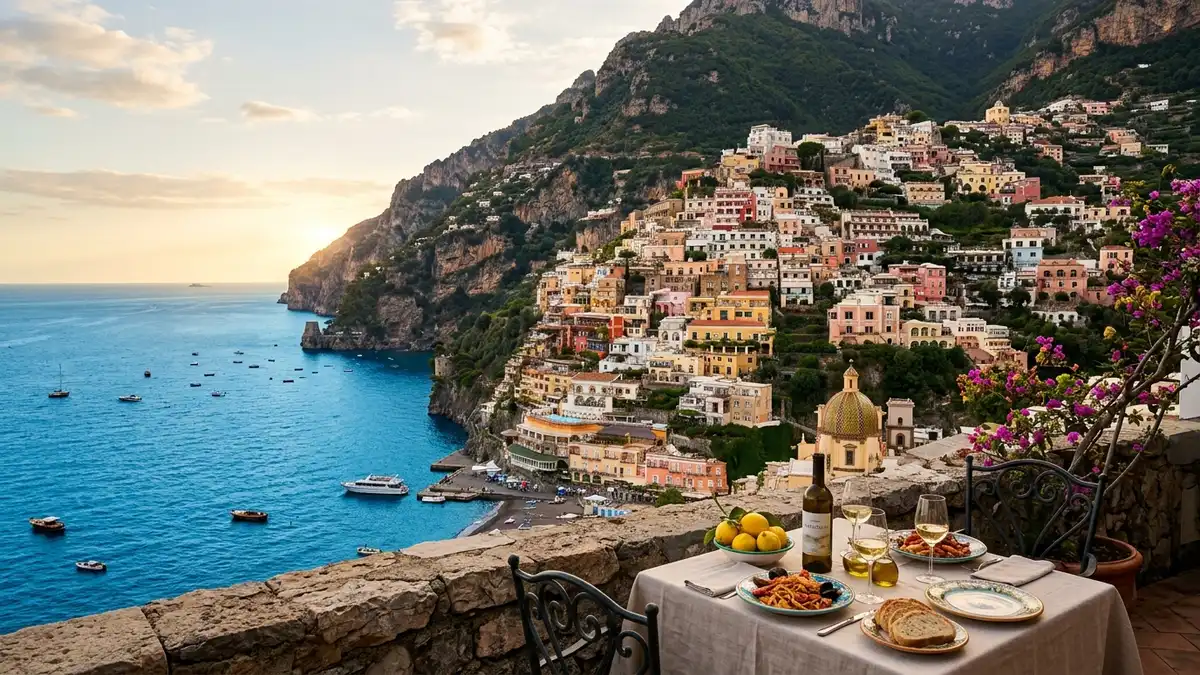
The coast itself is a string of small towns, each with its own personality. Positano is the most photographed, with its stacked, colorful buildings and pebble beaches. The town of Amalfi has a magnificent medieval cathedral and a lively central piazza. Ravello, perched higher in the hills, offers quieter streets and sweeping views that feel almost private by comparison. The food throughout the region leans into what the sea and the volcanic soil provide — fresh seafood, locally grown lemons that find their way into everything from pasta to the famous limoncello, and simple preparations that let quality ingredients do the work.
If you want the beauty without the peak-season crowds and prices, consider shoulder season. Late May and September offer warm weather, calmer waters, and a noticeably more relaxed atmosphere in the villages. The light in September is particularly golden and the sea remains warm enough for swimming. Traveling just outside the summer rush also means accommodation prices ease up considerably, which can make a meaningful difference on an already premium destination. The Amalfi Coast isn't a budget trip once you're there, so any savings you can engineer on flights and timing are worth the planning effort.