


Route Briefing: Seattle to Montego Bay
Trading Seattle's grey skies and drizzle for the turquoise waters of Jamaica's north coast is one of those trips that feels genuinely transformative, and at under $450 roundtrip, it's hard to argue with the math. American Airlines, Delta, and United all serve this route with one-stop connections, and at around seven hours and forty-five minutes of total travel time, you're looking at a manageable journey that deposits you squarely in the Caribbean sun.
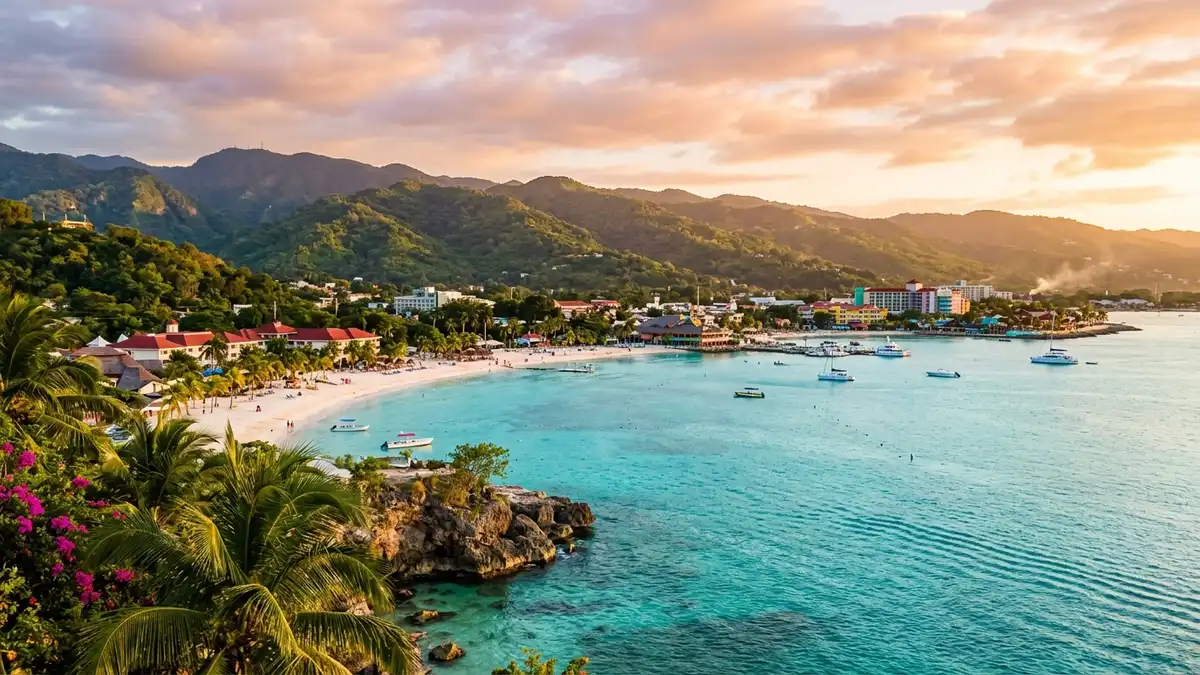
Montego Bay is Jamaica's most visited destination for good reason. The beaches along the Hip Strip — the stretch of road running along Doctor's Cave Beach — are legitimately stunning, with warm, calm water and the kind of white sand that earns its postcard reputation. But MoBay, as locals call it, rewards those who venture beyond the resort gates. The city has a real pulse to it, shaped by reggae music that seems to drift from every corner, street food vendors serving jerk chicken and festival bread, and a warmth in the local culture that's hard to replicate anywhere else in the Caribbean.
Coffee lovers should make a point of seeking out Blue Mountain coffee, grown in the misty highlands of Jamaica's interior — it's among the most celebrated coffees in the world, and tasting it here, close to its source, is a different experience entirely. If you have the time, a day trip into the Jamaican countryside opens up a completely different side of the island.
When you land at Sangster International Airport, taxis and shuttle services are readily available for the transfer into town and to the resort areas. Agree on a fare before you get in the car — it's standard practice and saves any awkwardness at the end of the ride.
Timing matters on this route. December through April is peak season, when Jamaican weather is at its most reliably sunny and dry, and when Seattleites are most desperate to escape. Prices reflect that demand, so if you're targeting winter travel, book two to four months out and steer clear of the Christmas and spring break windows when fares spike sharply. Shoulder season — late spring and early fall — can offer significantly better value, and while the summer months bring more humidity and the occasional tropical shower, the island is far from unpleasant and the crowds thin considerably.
The smartest move for any first-timer is to spend at least one full day outside the resort bubble. Jamaica's food, music, and people are the real attraction, and the beaches, beautiful as they are, are only part of the story.