


Route Briefing: Singapore to Brussels
Singapore to Brussels is one of those long-haul routes that genuinely rewards the effort. Yes, you're looking at around 13 and a half hours with a stop, but carriers like Singapore Airlines, Qatar Airways, and Emirates make the journey remarkably comfortable, and connecting through Doha or Dubai often unlocks fares well below the standard range — if you can find a roundtrip under $700, that's a genuine bargain worth jumping on immediately. Book two to four months ahead and you'll be in the best position to catch those prices before they climb toward the $1,000-plus territory that becomes the norm closer to departure.
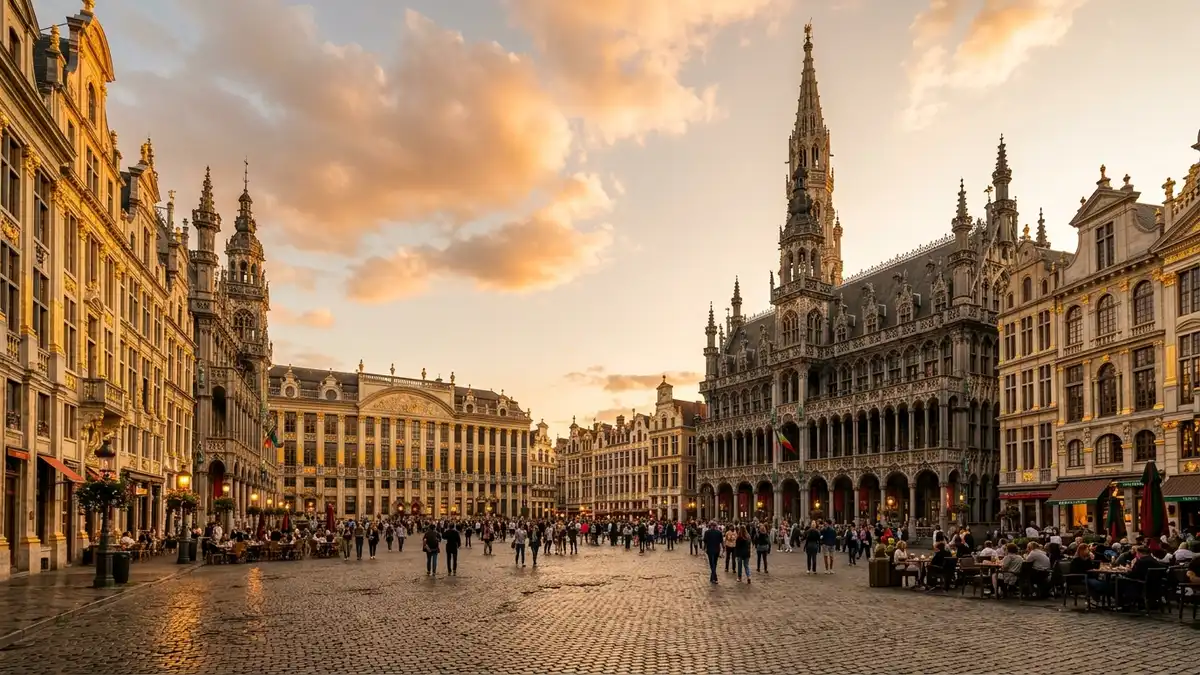
Brussels has a way of surprising people who arrive expecting a grey bureaucratic city and instead find themselves wandering through one of the most architecturally rich capitals in Europe. The Grand Place at the heart of the old city is genuinely jaw-dropping — a gilded medieval square that feels almost theatrical in its grandeur, and it's completely free to simply stand in and absorb. The city's Art Nouveau heritage runs deep, with entire neighbourhoods of sinuous, organic facades that reflect Brussels' outsized role in that early 20th-century movement. Victor Horta's work in particular is worth seeking out for anyone with even a passing interest in design or architecture.
Then there's the food culture, which is as serious as anywhere in Europe. Belgian chocolate here isn't a tourist gimmick — it's a genuine craft tradition, and the difference between a quality praline from a proper chocolatier and airport chocolate is night and day. Pair that with the country's extraordinary beer culture, where Trappist ales and lambics have centuries of brewing history behind them, and you have a destination that rewards slow, indulgent exploration. Waffles, moules-frites, and rich Flemish stews round out a food scene that punches well above the city's size.
Practically speaking, Brussels Airport sits northeast of the city and is well connected by direct train into the central stations — it's a straightforward, affordable journey that takes roughly twenty minutes and drops you right into the heart of things. No need to stress about taxis or navigating unfamiliar bus routes on arrival.
Timing matters here. June through August is peak season, when the city fills with visitors and outdoor terraces come alive, but spring — particularly April and May — offers mild weather, fewer crowds, and a city that feels genuinely local. If budget is your priority, travelling outside summer almost always means better fares and more breathing room at the major sights. Either way, Brussels is the kind of city that reveals itself gradually, so give yourself at least four or five days to do it justice.