


Route Briefing: Toronto to Brussels
Eight hours and fifteen minutes is a remarkably small price to pay for landing in the beating heart of Europe. Brussels sits at the crossroads of French and Flemish culture, and that collision of influences makes it one of the continent's most underrated cities — sophisticated without the tourist fatigue of Paris, historic without feeling like a museum piece.
The moment you clear customs at Brussels Airport, getting into the city is refreshingly straightforward. The Airport Express train runs directly to Brussels Central, Midi, and Nord stations, making it one of the easiest airport-to-city connections in Europe. You'll be sipping your first Belgian beer before the jet lag even registers.
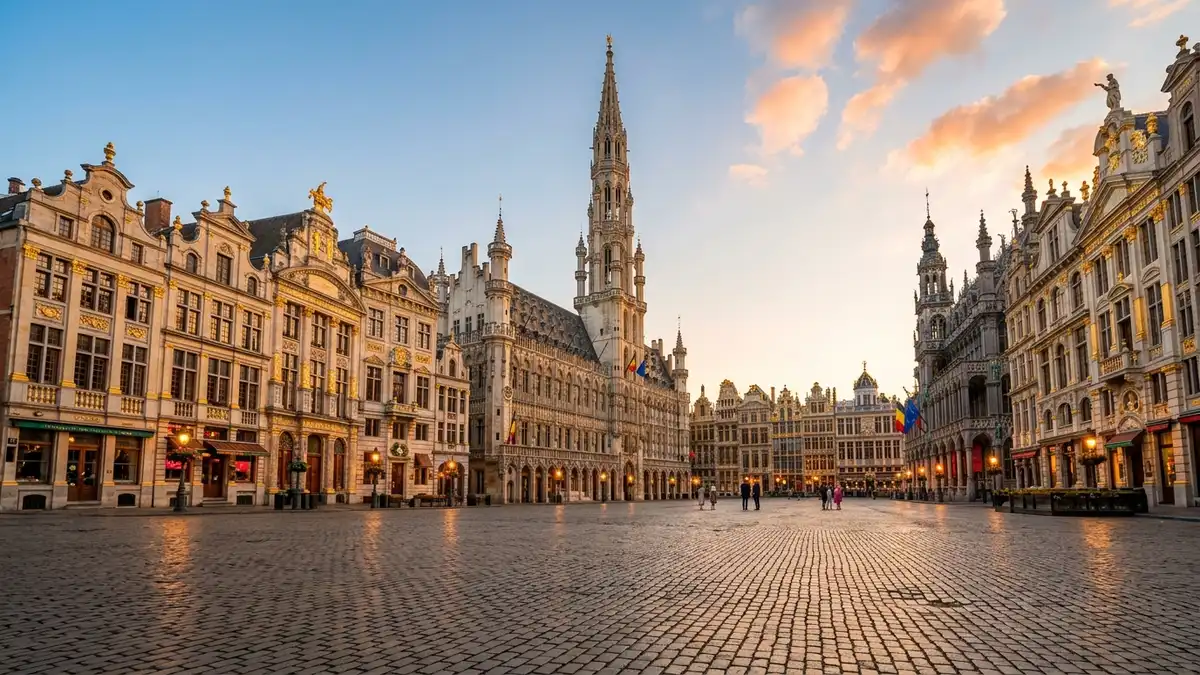
And that beer deserves its reputation. Belgium produces some of the world's most complex and celebrated ales — Trappist monasteries, lambics, saisons — and Brussels is your gateway into all of it. Pair that with chocolate that genuinely tastes different from anything you've had at home, and the city earns its foodie credentials before you've even stepped inside a museum. The Grand Place, Brussels' central square, is one of the most ornate public spaces in Europe and worth seeing at multiple times of day as the light changes across its gilded guild halls.
Art Nouveau architecture is scattered throughout the city's residential neighbourhoods, a legacy of the movement that flourished here in the late 19th and early 20th centuries. Victor Horta's buildings alone justify an afternoon of wandering.
On the fare side, Air Canada, Brussels Airlines, and Lufthansa all serve this route year-round, with direct flights keeping that travel time tight. A roundtrip under $700 is genuinely good value — standard fares typically run $900 to $1,200 or more. Summer between June and August is peak season, so if that's your window, book three to five months ahead. Travelling mid-week and sidestepping school holiday periods can shave a meaningful amount off your ticket.
The smartest tip for this particular destination: don't sleep on the shoulder seasons. September and October bring cooler temperatures, thinner crowds, and a city that feels lived-in rather than performed. The café terraces are still open, the museums are quieter, and you'll have a much easier time having an actual conversation with locals rather than navigating tour groups. Brussels rewards the curious traveller who takes their time, and arriving in autumn gives you exactly that.