


Route Briefing: Toronto to Seville
There are cities that greet you with a postcard view, and then there are cities that grab you by the collar the moment you step off the plane. Seville is firmly in the second category — and for Canadians willing to commit to a 13-and-a-half-hour journey with one stop, the reward is one of Europe's most intoxicating destinations at a price that, with a little planning, won't wreck your budget.
Connecting through Madrid or Frankfurt tends to offer the most reliable options and competitive fares, with Iberia, Air Canada, and Lufthansa all serving this route. If you can snag a roundtrip under $700, you're doing well — standard fares push past $1,000, so booking three to six months ahead is genuinely worth the calendar reminder. Seats fill fast because direct connections to Seville are limited, and savvy travellers have already figured out this city is worth the effort.
Once you land at Seville's compact airport, the city centre is only about ten kilometres away. Taxis are readily available outside arrivals, and there's also a bus service connecting the airport to the central Prado de San Sebastián bus station — a practical and affordable option if you're travelling light.
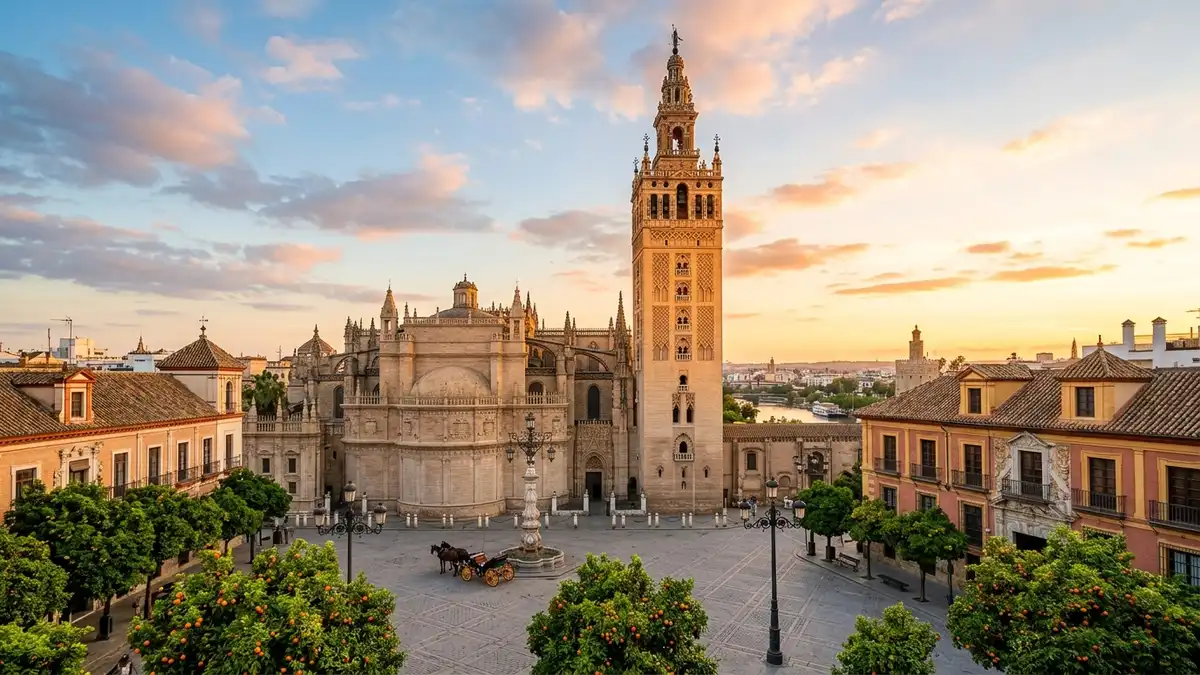
Now, about the city itself. Seville is the soul of Andalusia, and it wears that identity without apology. The Real Alcázar is a UNESCO World Heritage Site and one of the most breathtaking royal palaces in Europe — its Moorish architecture and lush gardens feel almost surreal. The Gothic cathedral next door is the largest in the world by volume and houses the tomb of Christopher Columbus. These aren't just tourist boxes to tick; they're genuinely moving places to spend an afternoon.
Beyond the monuments, Seville rewards slow wandering. The Triana neighbourhood across the Guadalquivir River has a distinct personality — ceramic workshops, neighbourhood bars, and a flamenco tradition that feels lived-in rather than performed for tourists. Speaking of which, catching a flamenco show here carries real weight; this is where the art form took root, and you can feel the difference.
Timing matters enormously. June through August is peak season, and Seville in summer is seriously hot — temperatures regularly climb well above 35°C. Spring, particularly April and May, is widely considered the finest time to visit: warm, beautiful, and alive with local festivals. September and October offer a gentler heat and thinner crowds.
The one tip worth burning into your memory: eat late, like the locals do. Dinner before nine o'clock in Seville marks you as a tourist immediately, and the best tapas bars don't really hit their stride until the evening cools down. Order a cold glass of fino sherry alongside your jamón and you'll understand immediately why people keep coming back.