


Route Briefing: Toronto to Warsaw
Few cities in the world carry as much emotional weight as Warsaw, and yet few reward the curious traveller quite so generously. This is a capital that was essentially erased from the map during the Second World War and then painstakingly rebuilt, brick by brick, from old paintings and collective memory. That resilience is baked into everything here — the architecture, the people, the food, the sheer energy of a city that refuses to be defined by its wounds.
From Toronto, you're looking at around nine and a half hours with one stop, and LOT Polish Airlines is almost always worth checking first. As Poland's national carrier, LOT frequently offers the most competitive fares on this route, and flying into Warsaw's Chopin Airport means you're already arriving at the hub — no awkward onward connections. When fares dip under $700 roundtrip, that's genuinely strong value for a transatlantic journey to Central Europe. Standard pricing tends to hover above $1,000, so booking two to four months ahead is the move that separates the savvy travellers from the ones paying full price.
Chopin Airport sits close to the city centre, and a train connection links the airport directly to Warsaw's main railway station, making arrival refreshingly straightforward compared to many European capitals. You'll be in the thick of things quickly.
June through August is peak season, and for good reason — Warsaw in summer is lively, warm, and full of outdoor events. That said, shoulder seasons like May and September offer a compelling trade-off: thinner crowds, lower prices, and weather that's still very comfortable for walking the city's wide boulevards and cobblestoned corners.
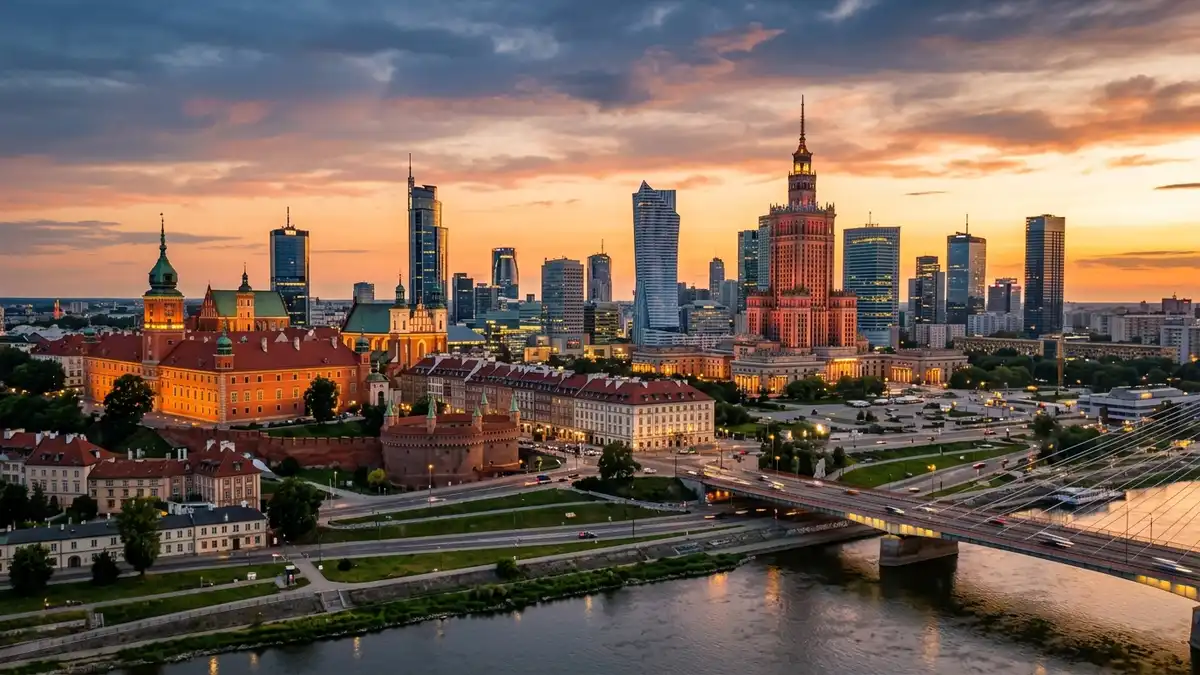
And there is so much to walk. The reconstructed Old Town is a UNESCO World Heritage Site, and knowing it was rebuilt almost entirely from scratch makes it more impressive, not less. The Royal Castle, the Market Square, the riverside Vistula promenade — these are places that feel both historic and genuinely alive. Warsaw also has a thriving contemporary food scene, with a wave of creative Polish restaurants reinterpreting traditional cuisine alongside excellent coffee culture and a nightlife scene that punches well above its weight.
The practical tip worth remembering: Poland uses the Polish złoty, not the euro, and Warsaw remains significantly more affordable than Western European capitals. Your dining, transport, and entertainment budget will stretch considerably further here than in Paris or Amsterdam. That gap in cost, combined with the depth of what Warsaw offers culturally and historically, is exactly why this route deserves more attention than it gets.