


Route Briefing: Washington D.C. to Bora Bora
There are bucket-list destinations, and then there is Bora Bora — a place so absurdly beautiful that first-time visitors often go quiet the moment the plane descends and that impossible shade of turquoise lagoon comes into view. Getting there from Washington D.C. takes serious commitment, roughly 18 and a half hours across multiple stops, but this is one of those rare trips where the journey feels like part of the ritual. You're crossing the Pacific to reach what many consider the most stunning island on earth. That's worth a long travel day.
From IAD or DCA, your most practical routing runs through Los Angeles on the way to Papeete, Tahiti, where you'll connect onward to Bora Bora's small airport on Motu Mute. Air Tahiti Nui is the natural choice for the Papeete leg and beyond, with United offering solid connections through LAX. If you're open to a longer routing, Air France through Paris can occasionally surface competitive fares, so it's worth checking both directions. A good deal on this route lands under $1,800 roundtrip — genuinely impressive for the distance — while standard fares run $2,500 to $3,500 or more. Because Bora Bora is a high-demand luxury destination with limited seat inventory, booking four to six months ahead isn't just a suggestion, it's almost a requirement if you want any flexibility on timing or price.
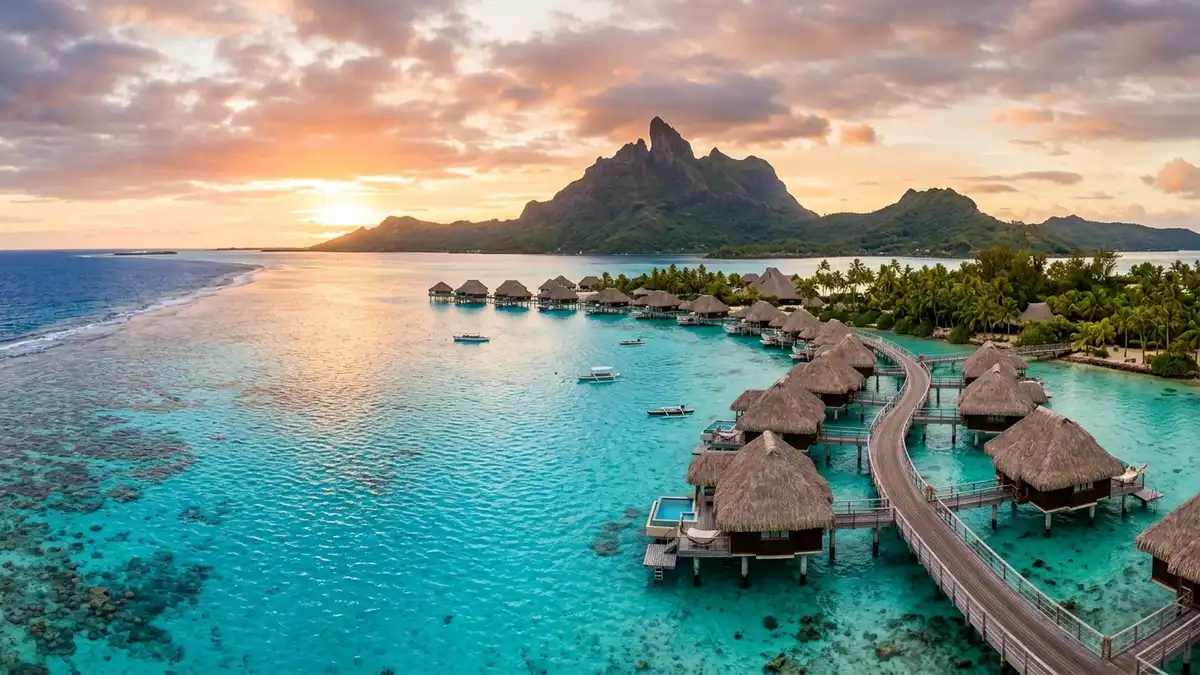
Once you land on Motu Mute, you'll take a short boat transfer across the lagoon to reach the main island — a genuinely lovely introduction to the place. The lagoon itself, ringed by a coral reef and watched over by the dramatic volcanic peak of Mount Otemanu, is the destination. Snorkeling and diving in the reef ecosystem are exceptional, and the overwater bungalows that have made Bora Bora famous worldwide live up to every photograph you've ever seen.
Peak season runs July through August and again December through January, when demand is highest and prices follow. The shoulder months on either side of those windows can offer a quieter, more affordable experience while still delivering the warm, clear conditions the island is known for.
The one tip that genuinely changes the trip: don't assume you need to stay in an overwater bungalow every night to experience them. Some resorts offer day passes or dining access, letting you enjoy that iconic setting while keeping accommodation costs manageable — a smart move on a route where airfare already demands a significant investment.