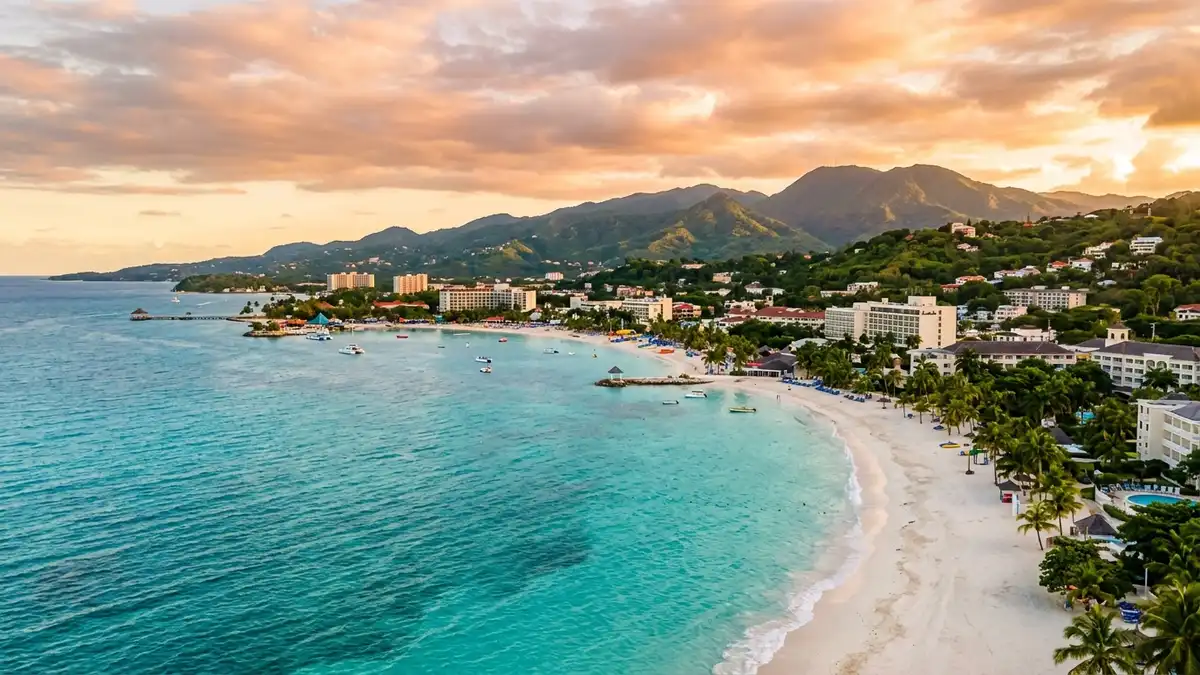



Route Briefing: Washington D.C. to Montego Bay
Less than four hours from the nation's capital and you're stepping off a plane into warm Caribbean air, the faint pulse of reggae somewhere in the distance, and the kind of blue water that makes you question every life decision that kept you in a desk chair this long. The Washington to Montego Bay route is one of the most rewarding short-haul escapes on the East Coast, and when you catch a good fare — anything under $350 roundtrip — it feels almost irresponsible not to go.
American Airlines, Southwest, and United all service this route year-round, which keeps competition healthy and prices relatively honest. Standard fares tend to settle in the $550 to $700 range, so when you see something meaningfully below that, move quickly. Booking six to eight weeks out gives you the best shot at those lower fares, and flying midweek — Tuesday through Thursday — can shave another ten to twenty percent off compared to weekend departures. That's real money that's better spent on a rum punch at the beach.
Montego Bay is Jamaica's resort hub, and it earns that reputation. The beaches along the north coast are genuinely stunning — white sand, warm water, the kind of setting that looks like it was designed by committee to be perfect. But MoBay, as locals call it, has more texture than a resort brochure suggests. The town itself has a lively street food culture, and Jamaican cuisine — jerk chicken, ackee and saltfish, fresh seafood — is worth exploring beyond the all-inclusive buffet. Blue Mountain coffee, grown in the island's interior highlands, is among the finest in the world and widely available.
Sangster International Airport sits close to the resort strip, so getting to your accommodation is straightforward and doesn't require a long transfer. Taxis and resort shuttles are readily available at the airport, though agreeing on a fare before you get in is standard practice and worth doing.
Timing matters here. December through April is peak season — the weather is reliably dry and the island fills with travelers fleeing northern winters, so prices climb accordingly. July and August see another surge. If you want the best combination of good weather and manageable crowds, the shoulder months on either side of peak season are worth considering. One genuinely useful tip: if you're not locked into an all-inclusive, staying in town rather than the resort corridor gives you a more authentic experience of Montego Bay and usually costs considerably less. The beach isn't going anywhere.