


Route Briefing: Washington D.C. to Seville
There's something almost poetic about flying from the capital of one great republic to the heart of Andalusia — two cities shaped by grand ambitions, history, and a certain theatrical flair. The journey from Washington D.C. to Seville runs around twelve and a half hours with a connection, typically routing through Madrid or London on carriers like Iberia, American Airlines, or British Airways. It's a solid overnight trip, and if you time your booking right — three to five months ahead — you can land a roundtrip fare under $650, which for a transatlantic journey to one of Europe's most captivating cities is genuinely excellent value.
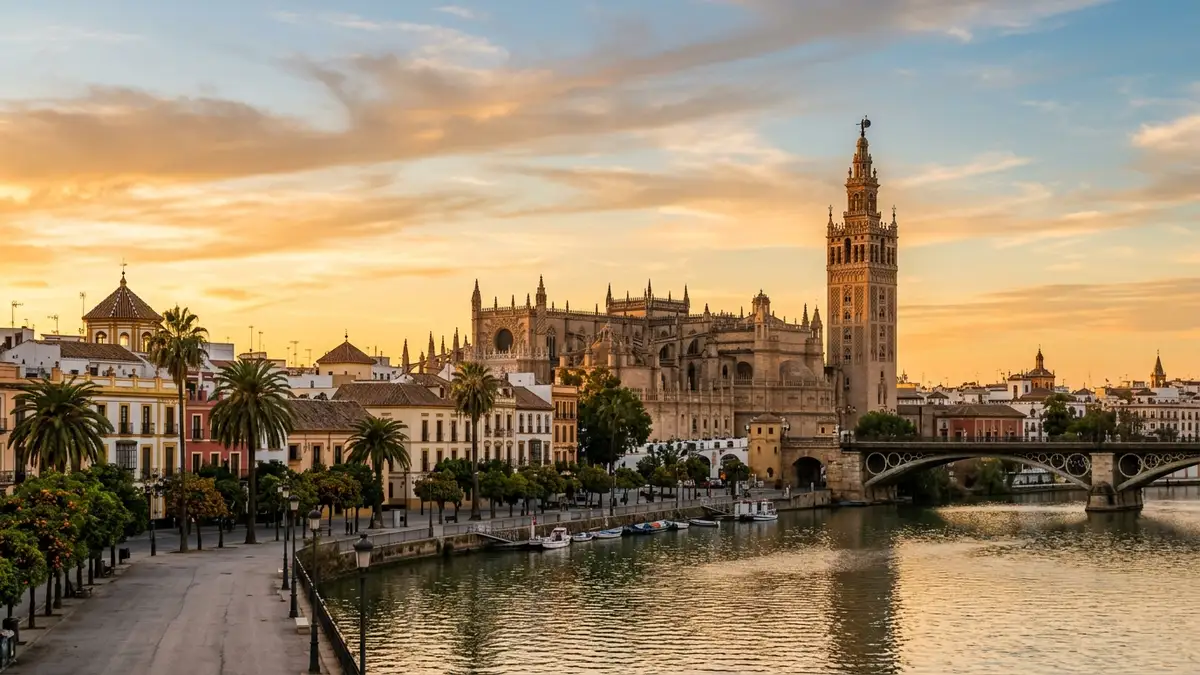
Seville rewards you the moment you arrive. This is the city that gave the world flamenco, and you feel that intensity in everything — the architecture, the pace of evening life, the way locals treat a simple plate of jamón and a glass of fino sherry as a near-sacred ritual. The Real Alcázar is one of the most breathtaking royal palaces on the continent, a layered masterpiece of Moorish and Renaissance design that has been in continuous use for centuries. The Gothic cathedral next door houses the tomb of Christopher Columbus and boasts a bell tower, the Giralda, that you can climb for sweeping views over the terracotta rooftops. Wander the Barrio Santa Cruz — the old Jewish quarter — and you'll find yourself happily lost in a maze of whitewashed lanes and orange-tree courtyards.
From Seville's San Pablo Airport, the city centre is easily reachable by taxi or bus, and the journey is short enough that you won't feel the sting of a long transfer after a transatlantic flight. Once in the city, Seville is remarkably walkable, and its historic core is compact enough to explore largely on foot.
Timing matters here more than almost anywhere else in Spain. Summer in Seville is genuinely intense — temperatures regularly climb well above 40°C in July and August, making sightseeing a sweaty endurance test. The shoulder seasons of April through May and September through October offer a far more comfortable experience, with warm but manageable weather, and the added bonus of fares that can run noticeably cheaper than peak summer prices. Spring also brings Semana Santa and the Feria de Abril, two of the most spectacular cultural events in all of Europe — though book accommodation very early if those dates are on your radar, as the city fills up fast.
The one tip worth burning into your memory: eat late, like the locals do. Dinner before nine in the evening marks you as a tourist. Show up at ten, order slowly, and let the night unfold over tapas. That's when Seville truly comes alive.