


Route Briefing: Washington D.C. to Tallinn
Few American travelers think to put Tallinn on their radar, which is precisely what makes this route so rewarding. While Paris and Rome absorb the crowds, Estonia's capital quietly offers one of the most intact medieval city centers on the planet — cobblestone lanes, limestone towers, and Gothic spires that look lifted straight from a storybook, without the tourist fatigue that plagues more famous European destinations.
Getting there from Washington takes around 13 and a half hours with one stop, and the most efficient connections typically run through Helsinki or Frankfurt. Lufthansa, Finnair, and SAS are your most reliable carriers on this route, and routing through Helsinki with Finnair is particularly satisfying — the layover puts you just a short hop from Tallinn, and Finnish airport efficiency means connections tend to run smoothly. Lock in your tickets two to four months ahead and you have a real shot at landing under $700 roundtrip, which is exceptional value for transatlantic travel. Standard fares climb to $900 and well beyond, so early planning genuinely pays off here.
Once you land at Lennart Meri Tallinn Airport, the city center is refreshingly close — just a few kilometers away, easily reached by bus or taxi in under twenty minutes. You won't spend half a day just getting to your hotel, which is a small but meaningful luxury after a long flight.
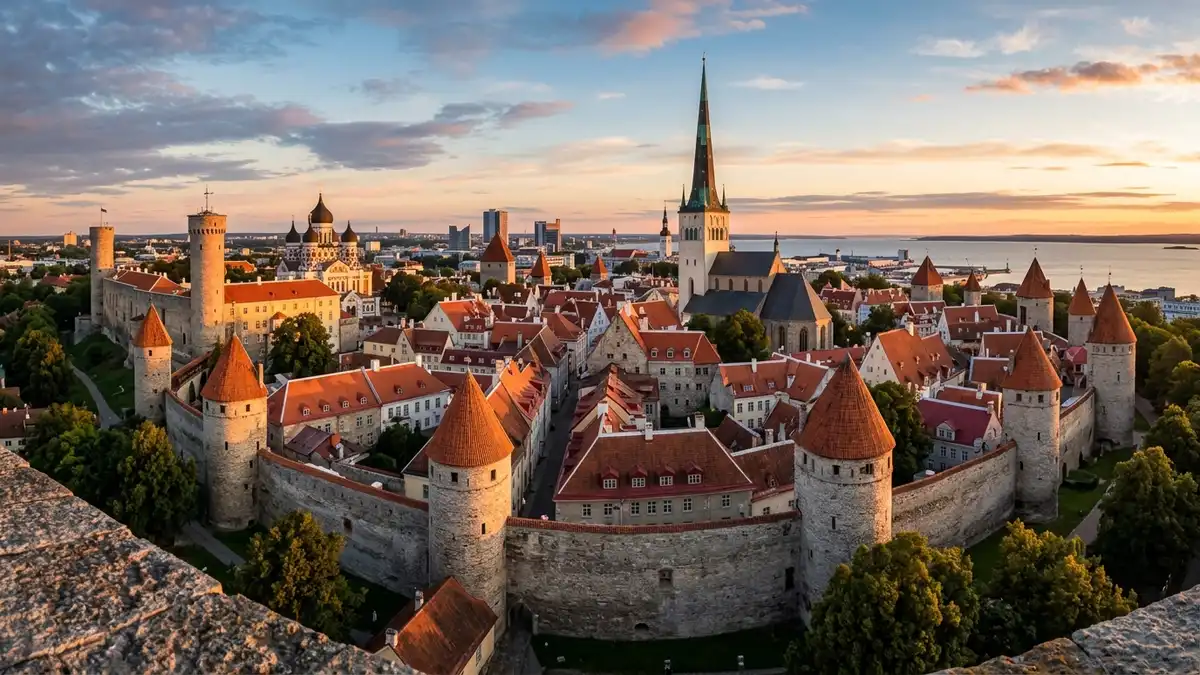
Tallinn's Old Town is a UNESCO World Heritage Site, and walking it for the first time feels genuinely cinematic. Toompea Hill anchors the upper town with its castle and sweeping views over the terracotta rooftops below. The lower town's medieval merchant houses and town hall square fill up with life in summer, when June through August brings long Nordic daylight hours and a festival atmosphere. That said, Tallinn in winter has its own quiet magic — snow on the towers, Christmas markets in the square, and far fewer visitors competing for the same narrow streets.
Estonia's digital reputation is well-earned — this is a country that invented Skype and offers e-residency to the world — but the city itself balances that forward-thinking identity with a deeply preserved sense of history. The food scene leans into hearty Northern European traditions: dark rye bread, elk and wild boar dishes, and warming soups that make cold-weather visits genuinely cozy.
The one tip worth burning into your memory: don't sleep on the neighborhoods just outside the Old Town walls. The Kalamaja district, a short walk from the center, has a creative, lived-in energy that gives you a truer sense of modern Tallinn life — and tends to be considerably easier on the wallet than dining and drinking inside the tourist core.