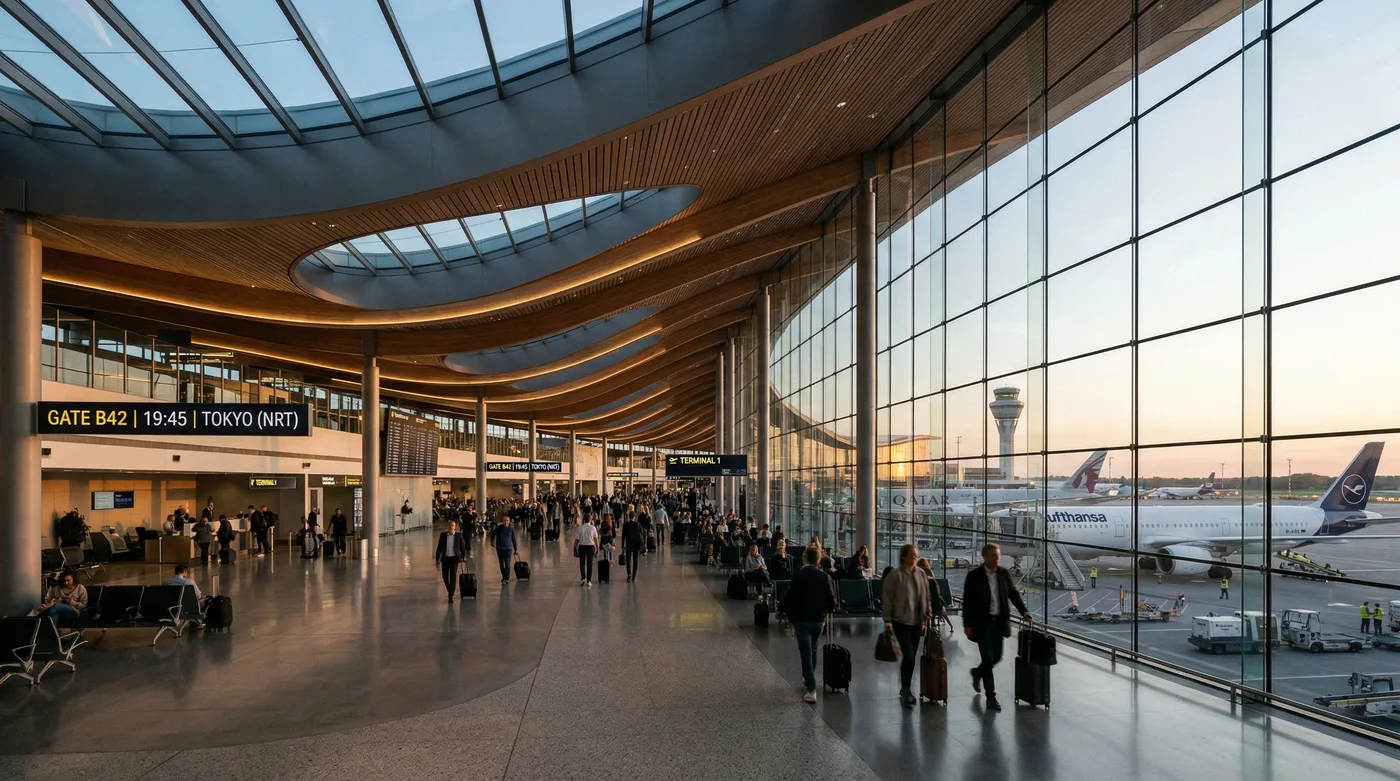
The $589 roundtrip that changed my Japan budget math
Last March, a FlightKitten pounce alert fired at 11:47pm on a Tuesday. LAX to Tokyo Narita on Korean Air, connecting through Seoul, $589 roundtrip including taxes. I'd been half-heartedly watching that route for four months expecting nothing below $800. I booked it in my pajamas in under six minutes.
That's the thing about Japan fares in 2026 — they're volatile in a way that rewards people who are actually paying attention. The average roundtrip from the US West Coast hovers around $820-$950 in economy. But the floor? It drops to $550-$650 several times a year if you know when to look and which metal to trust.
This is the breakdown I wish I'd had before I spent two years guessing.
Why Japan fares are actually beatable right now
Post-pandemic, the Japan route exploded. The yen weakened, tourism went ballistic, and airlines piled on capacity. More seats means more competition, which occasionally means you win.
The US-Japan market is now served by a surprisingly large roster: United, American, Delta, Japan Airlines, ANA, Korean Air (via Seoul), Cathay Pacific (via Hong Kong), EVA Air (via Taipei), Philippine Airlines (via Manila), and China Airlines (via Taipei). That's a lot of airlines fighting over your seat. Budget carrier Zipair — a low-cost subsidiary of JAL — has also been quietly expanding its Tokyo routes from LAX and SFO, and their base fares are genuinely disruptive to the legacy pricing.
The result is a market where fares don't move in a straight line. They spike, they crater, they do weird things around Japanese public holidays. Which is exactly the environment FlightKitten was built for.
Best US gateway cities for cheap Japan flights
Not all departure cities are created equal. Here's the honest picture for 2026 economy roundtrips to Tokyo (NRT or HND):
| Departure city | Typical economy roundtrip | Occasional deal floor | Best carrier for deals |
|---|---|---|---|
| Los Angeles (LAX) | $780–$950 | $549–$620 | Zipair, EVA Air, Korean Air |
| San Francisco (SFO) | $800–$970 | $570–$640 | ANA, United, China Airlines |
| Seattle (SEA) | $820–$990 | $590–$660 | Delta, ANA |
| New York (JFK/EWR) | $900–$1,100 | $680–$780 | JAL, Korean Air via ICN |
| Chicago (ORD) | $870–$1,050 | $640–$720 | United, ANA |
| Dallas (DFW) | $890–$1,080 | $660–$750 | American, JAL |
Beyond Tokyo, Osaka (KIX) is worth hunting separately. Fares to Kansai International are often $30-$80 cheaper than Narita equivalents, and if your Japan itinerary is Kyoto-heavy anyway, you're arriving exactly where you want to be.

Which airlines actually deliver the cheap seats
Let me be direct about who's worth your attention and who's just filling search results.
Zipair is the sleeper pick for 2026. They're JAL's low-cost arm, flying 787s on LAX-NRT and SFO-NRT. Base fares regularly dip to $349-$420 one-way. The catch: meals cost extra, carry-on weight limits are strict, and the seat pitch is 31 inches — fine for under 5'10", less fine for longer legs. But if you're under 6 feet and traveling carry-on only, this is your airline. EVA Air via Taipei (TPE) consistently offers some of the best value on the West Coast-Japan corridor. The Taipei connection adds 2-4 hours to your journey, but fares frequently sit $100-$150 below direct options. Their economy product is also genuinely decent — better meal service than you'd expect at this price point. Korean Air via Seoul Incheon (ICN) is another reliable deal source. ICN is one of the best connecting airports in Asia — efficient, clean, good food — so a Seoul layover isn't a punishment. Roundtrips from LAX via ICN to NRT often surface around $620-$720 when the direct market is sitting at $900+. ANA and JAL rarely lead on price, but they run periodic sales that are worth catching. ANA's "Super Value" fares and JAL's flash sales have both produced sub-$700 roundtrips from the West Coast in the past 18 months. Set a hunt on both. Philippine Airlines via Manila is the dark horse. PAL fares from LAX to NRT via MNL can drop to $580-$650 roundtrip. The Manila connection is longer than Seoul or Taipei, but if the savings are $200+, the math often works.Pro Tip: Always search NRT and HND separately. Tokyo has two airports and the fare difference can be $50-$120 on the same travel dates. HND (Haneda) is closer to central Tokyo, but NRT sometimes prices lower — worth the extra train ride if you're saving real money.
The timing question: when to book and when to fly
This is where most people get it wrong. They hear "book early" and interpret that as "book six months out no matter what." That's not how Japan fares work.
For 2026, the sweet spots look like this:
Best travel months for low fares: January (after New Year's), February, late May to mid-June (before peak summer), and September to mid-November. These are the windows where supply exceeds demand and airlines get nervous. Months to avoid if price is your priority: Late July through August (Japanese summer, packed with domestic tourists too), late December, and Golden Week (late April to early May — Japanese national holidays that make flights and hotels both brutal). Booking window: For economy deals, the 2-4 month booking window tends to produce the best fares on this route. Beyond 5-6 months out, airlines haven't released their sale inventory yet. Under 3 weeks out, you're paying panic pricing unless there's a genuine last-minute dump — which does happen, but you can't plan a Japan trip around a maybe.The exception to all of this: mistake fares and flash sales don't care about booking windows. They fire when they fire. A $499 roundtrip from LAX to NRT appeared for about 14 hours in October 2025. People with FlightKitten hunts set caught it. Everyone else missed it entirely.
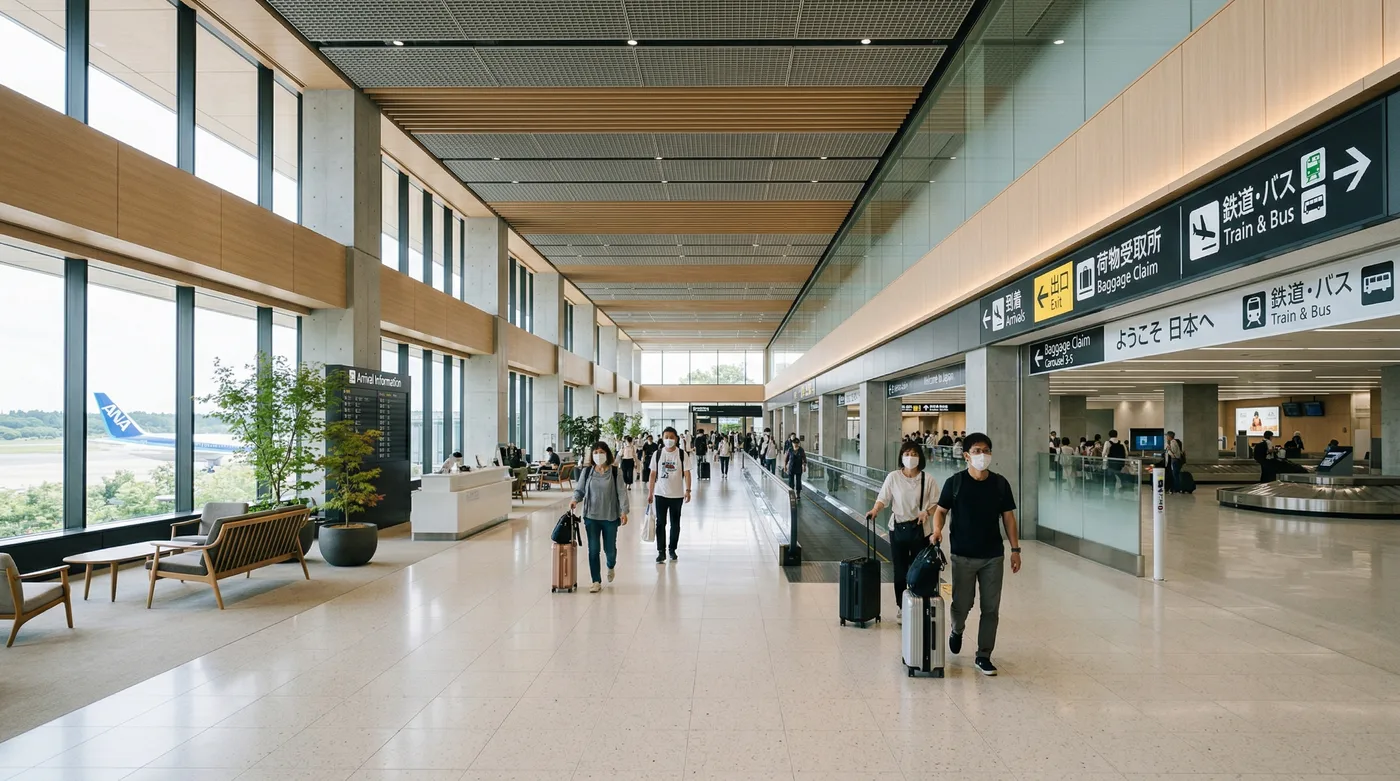
Osaka vs. Tokyo: does your entry point change the price?
If you're doing a multi-city Japan trip — which, honestly, you should be — the entry/exit airport question matters more than people realize.
Flying into Tokyo (NRT/HND) and out of Osaka (KIX), or vice versa, is called an open-jaw routing. These can be cheaper than roundtrips to the same city, because you're not backtracking. Search them explicitly. Google Flights handles open-jaw searches reasonably well; just set your outbound destination and return origin to different airports.
A sample 2026 open-jaw I priced recently: LAX to NRT inbound, KIX to LAX outbound, on a mix of ANA and JAL — $743 total. The equivalent roundtrip to NRT was $820. Cheaper, and you don't waste a day taking the Shinkansen back to Tokyo just to fly home.
Other Japanese airports worth checking: Fukuoka (FUK) occasionally has cheap positioning fares from Seoul or Taipei if you're building a Kyushu-focused trip. Sapporo (CTS) in Hokkaido is mostly domestic connecting, but worth knowing if you're going north.
Stopovers: turning a connection into a free extra destination
Korean Air, Asiana, and EVA Air all allow free stopovers at their hubs — Seoul and Taipei respectively — on certain fare types. This is genuinely one of the better deals in economy travel and most people don't ask about it.
A Seoul stopover on a Korean Air fare to Tokyo means you spend 1-2 nights in one of Asia's great food cities at no additional airfare cost. Taipei on EVA gets you night markets, mountains, and some of the best dumplings on the planet. Both cities have cheap accommodation options well under $60/night in decent neighborhoods.
The catch is you need to book directly with the airline, not through a third-party OTA, and you need to specifically request the stopover fare type. Call them. Yes, actually call. The website usually won't surface it cleanly.
Pro Tip: If you're doing a Seoul stopover on Korean Air, position yourself at ICN's transit hotel (inside the terminal, no visa needed for short stays) for a quick overnight. It's not glamorous, but it's functional and you're back airside without the immigration hassle.
What to expect on the ground: budget reality check
I'm including this because flights are only half the equation, and I've watched people blow their flight savings on the first two days in Tokyo.
Accommodation: Capsule hotels in Tokyo run $25-$50/night. Business hotels like Toyoko Inn and APA Hotel are $60-$90/night in decent locations. Hostels with private rooms hit $45-$70. Budget is very doable.
Food: This is where Japan genuinely rewards budget travelers. A bowl of ramen at a proper shop: $8-$12. Conveyor belt sushi lunch: $10-$18. Convenience store onigiri breakfast: $2-$4. You can eat extremely well in Japan for $25-$35/day if you're not eating at tourist-trap restaurants.
Transport: The IC card (Suica or Pasmo) is your best friend. Load it up, tap in and out of every train and subway. The Shinkansen between cities is expensive — Tokyo to Kyoto is around $130 one-way — but the Japan Rail Pass is worth it if you're covering significant ground. Price it out before you go; the math changes based on your itinerary.
Setting up your Japan hunt on FlightKitten
Here's exactly how I'd set this up. Create separate hunts for your most likely departure airport to both NRT and HND. If you're flexible on entry point, add KIX as a third hunt. Set your alert threshold at whatever your "I'll book it immediately" price is — for most West Coast travelers, that's somewhere around $650-$700 roundtrip all-in.
Set the date range wide. If you can travel any time in your target window rather than specific dates, you'll catch significantly more alerts. The difference between "any week in October" and "October 14-21 specifically" is often the difference between catching a deal and watching it go by.
Also set a hunt for open-jaw routings if you're planning a multi-city trip. NRT inbound, KIX outbound (or reverse). It's a separate search but worth the two minutes to configure.
Japan fares move fast when they move. The $589 Korean Air fare I mentioned at the top? It was gone in about 18 hours. The people who caught it weren't refreshing Google Flights obsessively — they had alerts set and they moved when the pounce came in.
The bottom line
Japan in 2026 is absolutely reachable on a budget. The roundtrip floor from the West Coast is real — $549-$650 happens multiple times a year on routes like LAX-NRT via Seoul or Taipei. From the East Coast, $700-$780 is the realistic deal floor, and it's catchable.
The variables you control: your departure airport, your travel month (avoid Golden Week and August), your willingness to connect through Seoul or Taipei, and whether you have alerts actually set up to catch the fares when they drop.
The variable you don't control: when the deals fire. Which is exactly why you set the hunt now and let FlightKitten do the watching. Japan will still be there when the right fare shows up. And when it does, you'll want to be ready to pounce.