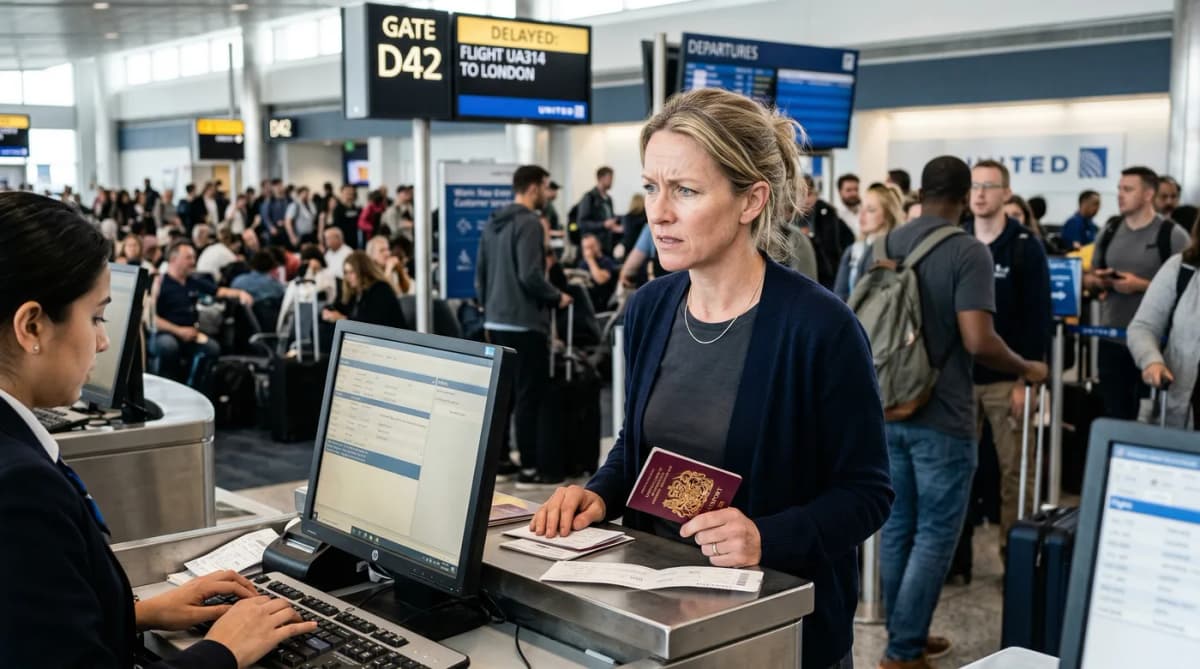
A United flight from Newark to Lisbon got cancelled at 11pm last March. The gate agent handed out $12 meal vouchers — enough for half a sad airport sandwich — and told the 200-odd passengers that was "all they were entitled to." It wasn't. Not even close.
Airlines are not charities, and their customer service scripts are not written with your bank account in mind. But there are hard rules — some with actual teeth — that govern what you're owed when a cancellation blows up your trip. The trick is knowing which rules apply to your specific flight, because the answer changes dramatically depending on where you're flying, which airline you're on, and what caused the cancellation.
This is the guide I wish I'd had before I accepted a travel voucher I never used instead of the $400 cash refund I was legally entitled to. Learn from my mistake.
The one rule that actually matters: EU261
If you fly into or out of the European Union — or on a European carrier anywhere in the world — EU Regulation 261/2004 is your best friend. It's the strongest passenger protection law on the planet, and it covers more flights than most people realize.
Here's the coverage breakdown:
- Any flight departing from an EU airport (regardless of airline)
- Any flight arriving at an EU airport on an EU-based carrier
- This includes UK flights under the retained UK261 regulation post-Brexit
So your Ryanair flight from Dublin to New York? Covered. Your Delta flight from JFK to Paris? Covered on the Paris end if Delta causes the cancellation. Your American Airlines flight from Miami to Madrid? Covered, because you're landing in the EU.
What EU261 actually pays out
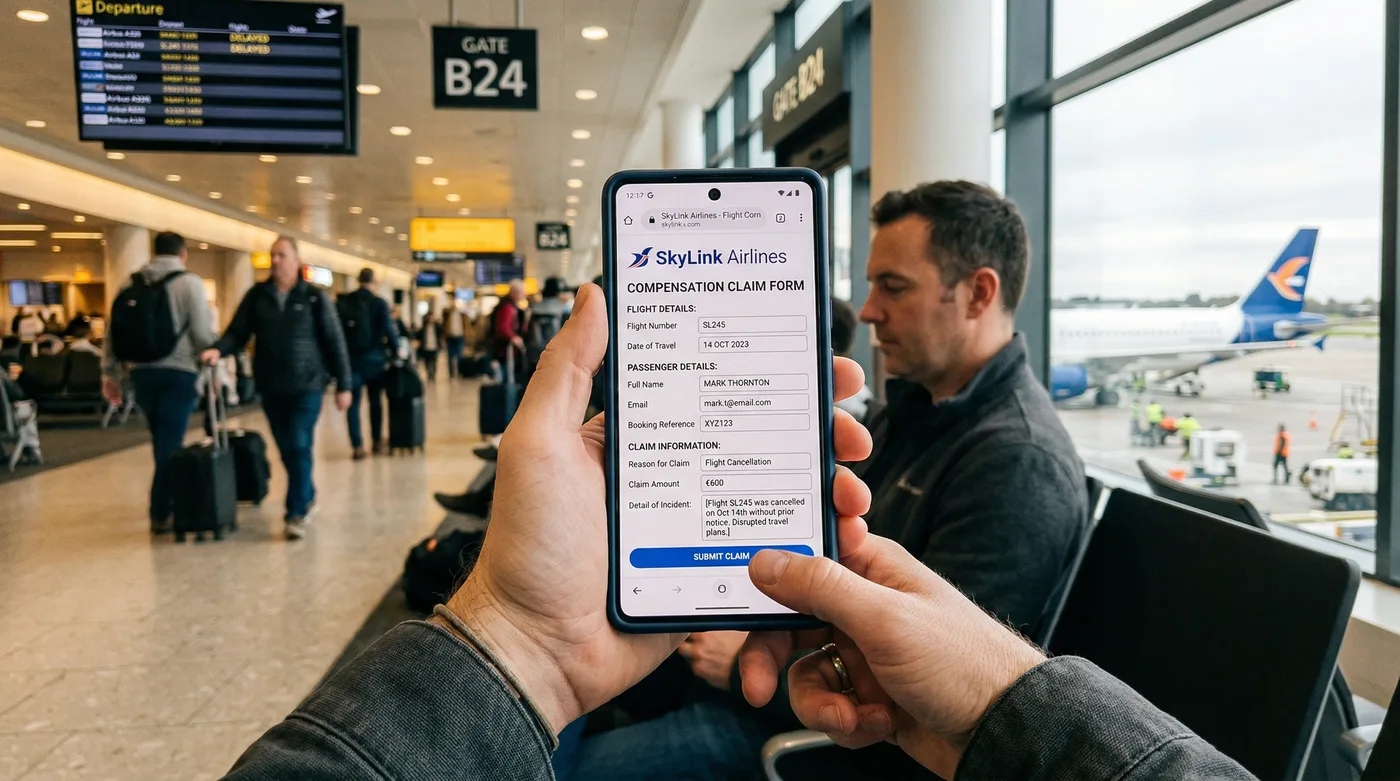
When an airline cancels your flight and it's their fault — mechanical issues, crew scheduling, overbooking — EU261 requires both a full refund OR rebooking, plus separate cash compensation based on flight distance.
| Flight distance | Compensation |
|---|---|
| Under 1,500 km | €250 (~$270) |
| 1,500–3,500 km | €400 (~$435) |
| Over 3,500 km | €600 (~$650) |
The catch: "extraordinary circumstances" let airlines off the hook for the cash compensation part. Severe weather, air traffic control strikes, and genuine security threats qualify. A broken seat-back screen does not. Neither does a pilot who called in sick when the airline had 48 hours to find a replacement.
Airlines abuse the extraordinary circumstances clause constantly. Ryanair and Wizz Air are repeat offenders — they've had courts rule against them multiple times for labeling ordinary technical faults as extraordinary. If an airline denies your claim on those grounds, push back. The European Consumer Centre has a free disputes service, and claims management companies like AirHelp or ClaimCompass will take your case on a no-win-no-fee basis (they keep 25-35% of your payout, but 65% of €600 beats 100% of nothing).
Pro Tip: Always ask the airline for the specific reason for cancellation in writing before you leave the airport. "Operational reasons" is not an acceptable answer and courts have agreed. Get the actual cause documented — it makes your claim significantly harder to deny later.
US rules: better than nothing, worse than Europe
The Department of Transportation doesn't require cash compensation for cancellations the way EU261 does. What it does require — as of the Biden-era rule updates that survived into 2026 — is an automatic cash refund when the airline cancels or makes a "significant change" to your itinerary.
Significant changes now include:
- Departure or arrival time changes of 3+ hours (domestic) or 6+ hours (international)
- A change in departure or arrival airport
- An increase in connections
- A downgrade to a lower class of service
The key word is "automatic." Airlines are required to proactively issue the refund to your original payment method without you having to ask. If they offer a voucher first, you are legally allowed to say no and demand cash. You do not have to accept travel credit.
In practice, United, American, and Delta have all gotten better about this since the DOT started issuing actual fines — Delta paid $2.2 million in 2024 for refund violations. Spirit and Frontier still try the voucher-first shuffle more aggressively. Know your rights before you're standing at a gate at midnight.
The hotel and meal situation
This is where things get murky and airlines really do try to lowball you.
Under EU261, airlines must provide "care" during long delays and cancellations regardless of the cause — even weather. That means:
- Meals and refreshments proportionate to the wait time
- Hotel accommodation if you're stranded overnight
- Transport between the airport and hotel
- Two free phone calls or emails
In the US, there's no legal requirement for hotels or meals during weather cancellations. However — and this matters — most major US airlines have voluntarily committed to providing hotel and meal vouchers for cancellations within their control. The DOT's airline customer service dashboard (dashboard.transportation.gov) lists exactly what each airline has committed to. Alaska, American, Delta, Hawaiian, JetBlue, Southwest, Spirit, and United have all signed on to hotel and meal commitments for controllable cancellations as of 2026.
Frontier has not committed to hotel vouchers. File that away.
If you're on a transatlantic budget carrier like Norse Atlantic or Level and you get cancelled, EU261 still applies on the EU departure end. Norse cancelled a significant number of flights in 2024 and 2025 during their fleet restructuring — passengers who knew their EU261 rights got €600. Passengers who accepted the €50 voucher email did not.
Connecting flights and the rebooking trap
This is where I see budget travelers get burned the hardest.
If you booked a JFK-BCN itinerary as a single ticket on Iberia for $347 and your first leg gets cancelled, Iberia owes you rebooking on the next available flight to Barcelona — including on partner airlines — or a full refund of the entire ticket. They cannot strand you in Madrid and call it done.
But if you booked that same trip as two separate tickets — say, a Spirit flight JFK-MCO and then a separate TAP flight MCO-LIS-BCN — you have zero protection if Spirit cancels. TAP doesn't know you exist. You're buying two separate contracts, and Spirit only owes you a refund on the Spirit leg. You eat the TAP ticket.
This is the core risk of "self-connecting" to save money. Sometimes the savings are worth it. A $180 Spirit fare versus $347 on a single-ticket itinerary is real money. But you need to build in enough buffer time (I use 4 hours minimum for self-connects at unfamiliar airports) and accept that you're carrying the risk.
FlightKitten's pounce alerts will flag when single-ticket itineraries drop to near self-connect prices — which happens more than you'd think, especially on TAP Portugal routes through Lisbon and Iberia routes through Madrid. Worth setting up a hunt before you commit to the DIY routing.
Codeshares, OTAs, and the blame game
Booking through Expedia, Google Flights, or Kayak doesn't change your legal rights — but it absolutely changes how painful it is to exercise them.
When your flight gets cancelled, the operating carrier (the airline actually flying the plane) is responsible for your EU261 or DOT refund. But if you booked through an OTA, you often have to go through them first, and they have every incentive to slow-walk the process. Expedia has been fined by the DOT for refund delays. Kiwi.com has a particularly messy track record with cancellation handling.
The cleanest path: always book directly with the airline when possible, even if the OTA shows the same price. When prices are identical, direct booking wins every time. If you must use an OTA for a genuinely better price, use a credit card with travel protection — Amex Platinum, Chase Sapphire, and Capital One Venture X all have trip cancellation/interruption coverage that can fill gaps the airline won't.
Pro Tip: Screenshot your booking confirmation, your seat assignment, and the fare rules page before you travel. Airlines have been known to claim a ticket was non-refundable when the original fare rules said otherwise. Documentation wins disputes.
What to do at the airport, step by step
Theory is great. Here's what to actually do when the cancellation board lights up with your flight.
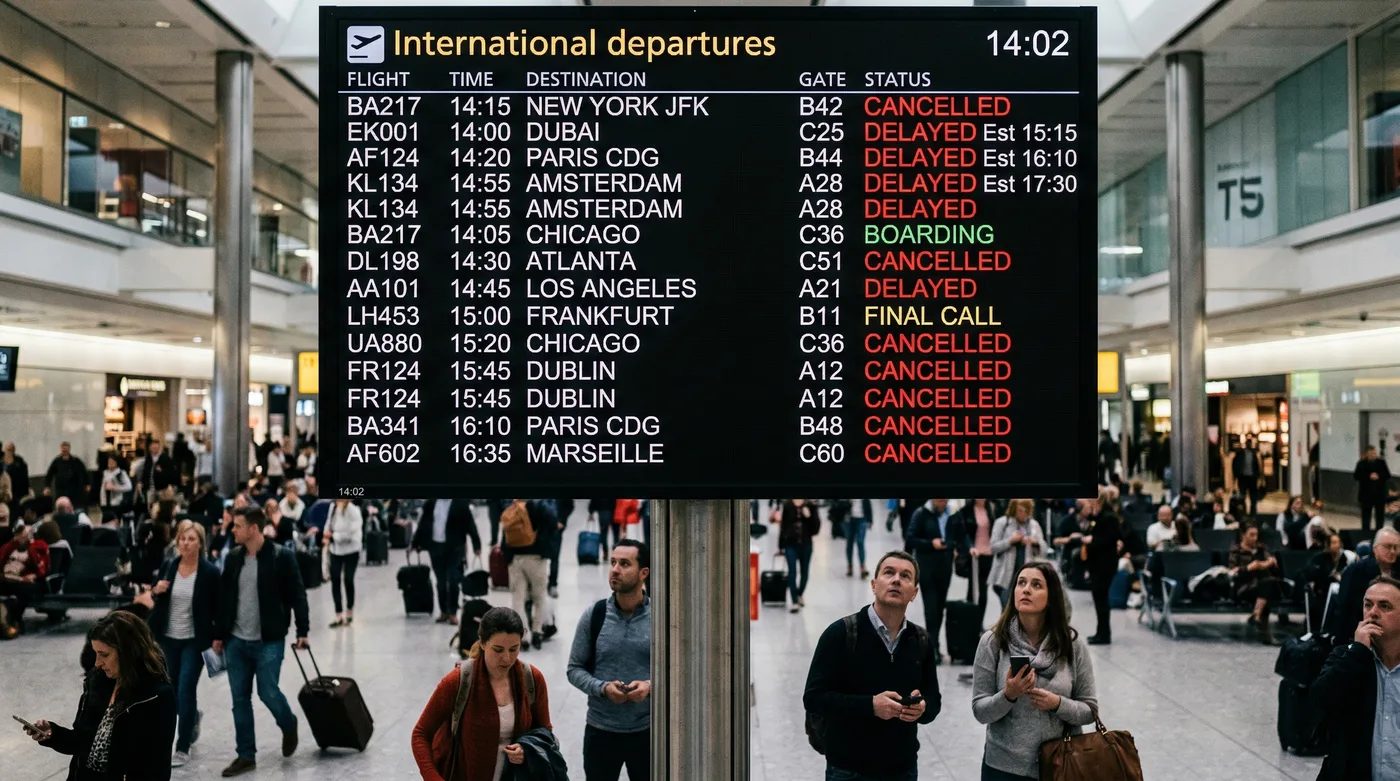
Step one: get in line and get on the phone simultaneously. Call the airline's customer service number while you're waiting in the rebooking queue. The phone agents often have more authority and shorter wait times than the gate staff. If you're a frequent flyer with status, use the dedicated line — even basic status gets you faster access. Step two: know your ask before you open your mouth. Do you want rebooking on the next available flight, or do you want a full refund? Decide before the conversation starts. If you want a refund, say "I'd like a full cash refund to my original payment method" — not "what are my options," which invites a voucher pitch. Step three: document everything. Get the cancellation reason in writing. Take a photo of the departure board. Keep all your receipts if you buy food or a hotel room — you'll need them for EU261 care claims or credit card travel insurance. Step four: if they deny a legitimate claim, escalate. In the EU: file with the national enforcement body (CAA in the UK, Luftfahrt-Bundesamt in Germany, DGAC in France). In the US: file a complaint with the DOT at transportation.gov. Both processes are free and airlines take them seriously — a formal DOT complaint triggers a required response within 60 days.How FlightKitten fits into the cancellation picture
No fare alert service can prevent cancellations — anyone who tells you otherwise is selling something. But FlightKitten's catch notifications are useful in one specific post-cancellation scenario: rebooking at fair prices.
When airlines cancel flights, they often rebook passengers onto the next available flight at no charge. But if that flight doesn't work for your schedule and you want a refund instead, you're now back in the market buying a last-minute replacement ticket — which is where prices get ugly fast. Setting up a hunt for your route the moment you know you're stranded means you'll catch any flash availability or price drops before they disappear. Last-minute deals are rare, but they exist, and being first to see them matters.
The bottom line
Airlines cancelled over 1.2% of all US domestic flights in 2025 and disrupted millions more internationally. The math says you will deal with a cancellation eventually. The question is whether you'll walk away with what you're legally owed or with a $12 meal voucher and a vague promise.
Know the three things that determine your rights: where the flight departs and arrives, which airline is operating it, and whether the cause was within the airline's control. EU261 is powerful and covers more flights than most travelers realize. US DOT rules are weaker but have real cash refund requirements. And in both cases, the airlines are counting on you not knowing the difference.
Set up your FlightKitten hunts before you travel so you have a rebooking option ready if things go sideways. Keep your booking documentation. And the next time a gate agent hands you a $12 voucher and calls it even, you'll know exactly what to say.