Master the Hunt: How Fare Alerts Will Revolutionize Your Travel Budget
Ever felt the sting of buying a flight ticket, only to see its price plummet a week later? Or spent hours refreshing airline websites, chasing an elusive deal that never quite materializes? You're not alone. The world of flight pricing can feel like a high-stakes game of chance, but what if you had an insider's edge? What if you could get a personal notification the moment your dream flight drops to an irresistible price? That, my savvy traveler, is the magic of fare alerts, and mastering them is your secret weapon to unlocking incredible travel savings in 2026 and beyond.
At FlightKitten, we've seen countless travelers transform their budget by smartly deploying fare alerts. These digital sentinels tirelessly monitor flight prices for you, ensuring you're always in the know and ready to pounce. Forget endless searching; it's time to let the deals come to you. Ready to turn those travel dreams into affordable realities? Let's dive in.
What Exactly Are Fare Alerts and Why Do You Need Them?
Think of a fare alert as your personal flight price detective. You tell it where you want to go, when you want to travel, and sometimes even how much you're willing to pay. Then, the alert system gets to work, constantly scanning for price changes on that specific route and date range. The moment a significant drop occurs, or the price hits your target, you get a 'pounce alert' – typically via email or app notification.
The Undeniable Benefits of Setting Up Fare Alerts
* Save Time & Effort: No more manual checking. Your time is valuable, and fare alerts free you from the endless refresh button. Spend that time planning your adventure instead!
* Catch Fleeting Deals: The best flight deals often disappear as quickly as they appear. An alert ensures you're among the first to know, giving you a crucial advantage to book before prices rebound.
* Peace of Mind: Knowing a system is working on your behalf reduces travel planning stress. You can relax, confident that you won't miss out on a great price.
* Flexibility Pays Off: Even if your dates aren't set in stone, monitoring a range of dates can reveal surprisingly cheap options you might not have considered.
* Budget Control: Set a target price, and only get notified when your travel budget is respected. This prevents overspending and helps you stick to your financial goals.
Pro Tip: Not all fare alert services are created equal. Look for platforms that offer comprehensive coverage, customizable alerts (specific dates, flexible dates, 'anywhere' searches), and reliable notifications. FlightKitten's sophisticated
huntsare designed to do just that, keeping you ahead of the curve.
The Early Bird Catches the Best Deal: Timing Your Hunt
When it comes to flight prices, timing isn't just important – it's often everything. Setting your fare alerts at the right moment can mean the difference between a good deal and an unbelievable catch.
The Golden Window: When to Start Your Fare Alert Hunt
General wisdom suggests booking flights well in advance, but there's a sweet spot. Too early, and airlines haven't finalized their pricing strategies for those dates. Too late, and you're left with the scraps.
* International Flights: Start your hunt roughly 3-6 months before your desired departure date. For popular routes or peak seasons (like Europe in summer or Asia during Lunar New Year), push that to 6-9 months.
Example*: Planning a trip from New York (JFK) to Paris (CDG) for July? Set your fare alert in January or February. You might catch a deal on Air France or Delta for $500-$600 round trip, compared to $900+ closer to departure.
* Domestic Flights (within North America/Europe): A window of 1-3 months out is generally ideal. For major holidays or events, extend that to 3-5 months.
Example*: Looking for a flight from Los Angeles (LAX) to Miami (MIA) for Thanksgiving? Start monitoring in July or August. A Spirit Airlines or Frontier deal could drop to $150-$200 round trip, saving you hundreds over last-minute bookings.
Why Monitoring Early Matters
Airlines often release initial batches of tickets at various price points. By monitoring early, you're more likely to see these initial, often lower, prices and track their fluctuations. You'll observe the "normal" price range for your route, making it easier to spot a genuine deal when a pounce alert arrives.
Specificity vs. Flexibility: Crafting Your Perfect Fare Alert
This is where many travelers either hit a home run or strike out. The more flexible you can be, the better your chances of snagging an incredible deal. However, even specific plans can benefit immensely from alerts.
The Power of Flexibility: Your Best Friend for Budget Travel
* Flexible Dates: If your travel dates are movable by a few days or even a week, this is your golden ticket. Set alerts for an entire month or season. Weekday departures/returns (Tuesday, Wednesday) are often cheaper than weekends.
Example*: Instead of "London to Rome, Oct 15-22," try "London to Rome, October (any dates)." You might find Ryanair or EasyJet flights for as low as $30-$50 round trip on off-peak weekdays, saving you significant euros.
Flexible Destinations: Don't have a specific place in mind, just a desire to travel? Use "explore" or "anywhere" fare alerts. Many services, including FlightKitten, allow you to set an alert for flights from your home airport to any* destination that drops below a certain price or percentage.Example*: From Dublin (DUB), an "anywhere" alert might notify you of a sudden flash sale to Krakow (KRK) for €20 on Wizz Air, or to Porto (OPO) for €40 on Ryanair, inspiring an impromptu adventure.
When Specificity Still Wins: Essential for Fixed Plans
Even if you must travel on specific dates to a specific location (e.g., a wedding, a conference), fare alerts are indispensable.
* Fixed Dates, Fixed Destination: Set the alert precisely for your desired route and dates. You might not get a 70% off deal, but you'll be notified of any smaller, yet significant, drops – perhaps 10-20% off, which can still be hundreds of dollars on international flights.
Example*: If you need to fly from San Francisco (SFO) to New York (JFK) for a specific business meeting on November 10-14, set that exact alert. You might see a price drop on United or Alaska Airlines from $450 to $380, a solid $70 saving you wouldn't have caught manually.
Beyond the Basics: Advanced Fare Alert Strategies
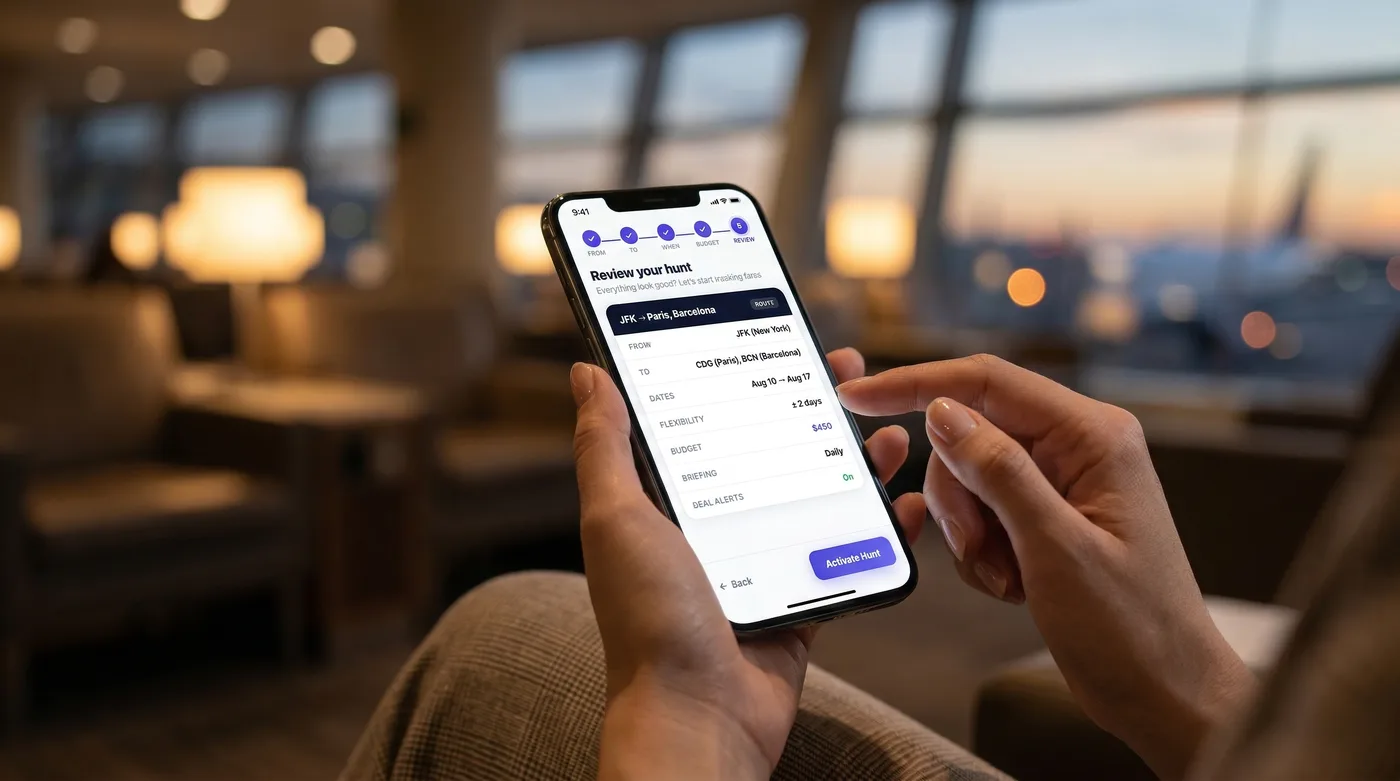
Ready to level up your hunt? These strategies can uncover even more elusive catches.
1. Consider Nearby Airports
Often, flying into or out of a smaller, secondary airport near your primary destination can yield substantial savings. Set alerts for these alternatives.
Example*: Instead of only JFK or EWR for New York, also monitor LGA. For London, look at Gatwick (LGW) and Stansted (STN) in addition to Heathrow (LHR). A flight to LGW might be $100-$200 cheaper than LHR, even with the cost of ground transport factored in.2. Multi-City and Open-Jaw Alerts
If you're planning a trip with multiple stops, or flying into one city and out of another (open-jaw), these complex itineraries can also be monitored.
* Multi-City: Set alerts for each leg individually, or use tools that allow multi-city searches. Sometimes booking separate one-way tickets on different airlines, driven by alerts, can be cheaper than a single round trip.
Open-Jaw: Example*: Fly NYC to London, then London to Rome, then Rome back to NYC. Or, fly NYC to London, and then Paris back to NYC. Alerts can help you find the cheapest combination of these segments.3. "Anywhere" or "Explore" Alerts from Your Home Airport
This is fantastic for spontaneous travelers. Set an alert from your home airport (e.g., Chicago O'Hare - ORD) to "anywhere" with a maximum price threshold (e.g., under $300 round trip). When a flash sale hits an unexpected destination, you'll be the first to know.
4. Incognito Mode & VPNs (Limited Impact on Alerts, but Good for Booking)
While incognito mode and VPNs primarily help when booking by potentially circumventing dynamic pricing based on your browsing history or location, they don't directly influence the fare alerts themselves. However, it's a good habit to switch to incognito when you're ready to finalize a purchase triggered by an alert.
The Art of the Pounce: What to Do When an Alert Hits
Congratulations! Your FlightKitten pounce alert just landed. Now what? This is the critical moment where preparation meets opportunity.
1. Act Swiftly (But Smartly)
Good deals, especially mistake fares or flash sales, don't last. They can disappear in hours, or even minutes. Be ready to book.
* Have Travel Documents Ready: Ensure your passport is valid (most countries require 6 months validity beyond your return date). Have your visa information handy if required.
* Payment Method Prepared: Know which credit card you'll use. Consider cards with travel points or no foreign transaction fees.
2. Double-Check Everything
Before you hit "book," take a deep breath and review all the details.
* Dates & Times: Are they correct? Does the arrival time allow for connections or ground transport?
* Airports: Are you flying into the correct airport (e.g., O'Hare vs. Midway)?
* Baggage Allowance: Low-cost carriers (Spirit, Frontier, Ryanair, EasyJet) often have strict baggage rules. That $50 flight might become a $150 flight if you need a carry-on and checked bag. Factor this into your total cost.
* Layover Times: Are they reasonable? Too short, and you risk missing a connection. Too long, and it's a wasted day.
* Airline Reputation: While budget is key, a quick check on reviews for a lesser-known airline can save you headaches.
3. Understand the 24-Hour Rule
For flights to/from the U.S., the Department of Transportation (DOT) mandates a 24-hour rule for most airlines. This means you can typically cancel a flight within 24 hours of booking (if booked at least 7 days before departure) for a full refund. This provides a small safety net if you book quickly and then find a minor issue or a slightly better deal.
Airline-Specific vs. Aggregator Alerts: A Comparison
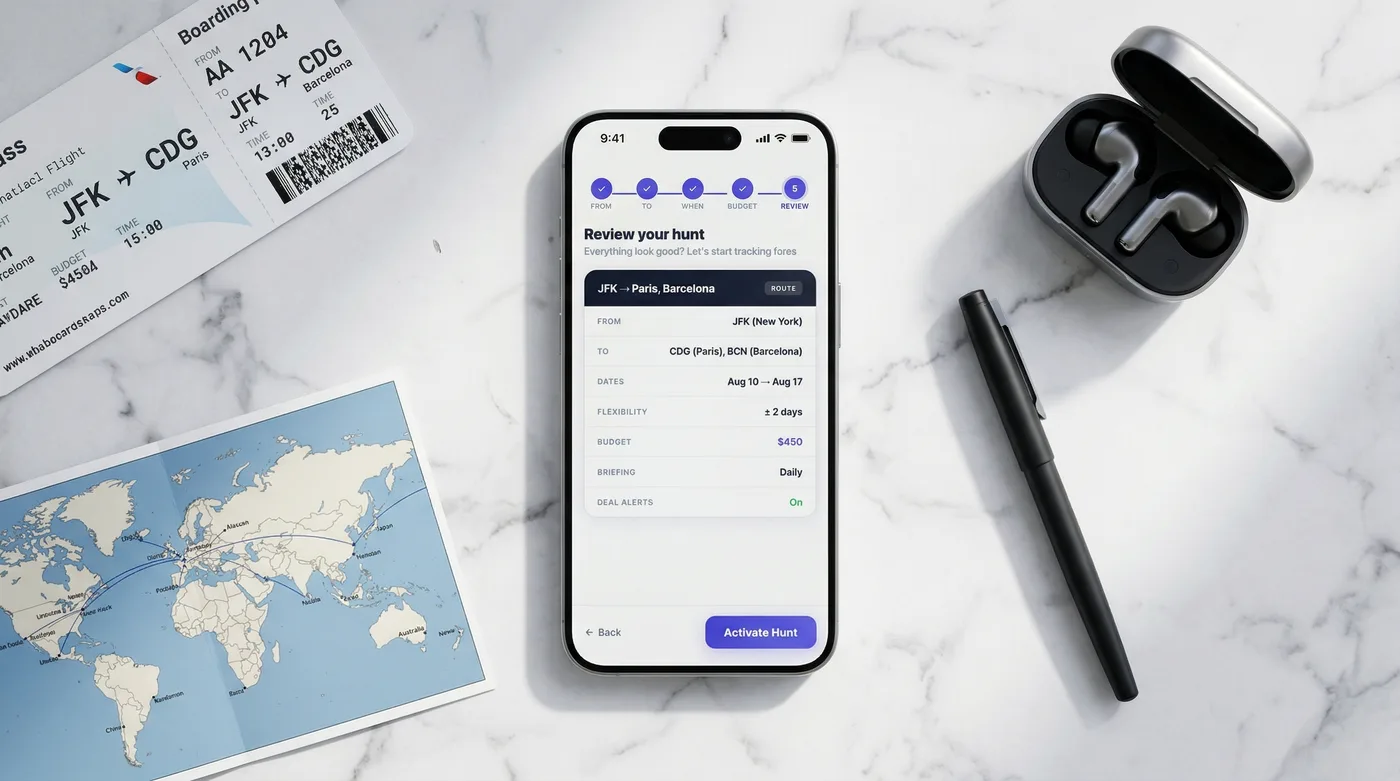
Where should you set your alerts? Both direct airline sites and flight aggregators have their merits.
| Feature | Airline-Specific Alerts (e.g., Delta, British Airways) | Aggregator Alerts (e.g., FlightKitten, Google Flights, Skyscanner) |
|---|---|---|
| Coverage | Only that airline's flights | Multiple airlines, including low-cost carriers |
| Deal Types | Often includes loyalty program sales, specific promos | Primarily focuses on price drops across the market |
| Flexibility | Limited to their routes & partners | Excellent for flexible dates/destinations, 'anywhere' searches |
| Ease of Use | Simple if you know the airline you want | Can be more complex to set up initially, but offers broader scope |
| Best For | Brand loyalists, tracking specific airline sales | Most budget travelers, broad searches, finding the absolute lowest price |
Pro Tip: For the most comprehensive coverage, use a combination. Set a few alerts directly with your preferred airlines for specific routes, and then use a robust aggregator like FlightKitten for broader
huntsand flexible date/destination monitoring. This dual approach ensures you don't miss anycatches.
Common Pitfalls to Avoid When Using Fare Alerts
Even with the best tools, a few missteps can cost you. Here's what to watch out for.
1. Ignoring Baggage Fees
This is the silent killer of budget travel. A $70 flight on Spirit Airlines might look amazing until you realize your carry-on is $35 each way and a checked bag is $50 each way. Always factor in potential baggage costs before booking.
2. Over-Alerting Yourself
Setting too many overly broad alerts can lead to "alert fatigue." You'll start ignoring notifications, potentially missing a truly great deal. Be strategic: focus on your most desired routes/dates first, then expand.
3. Forgetting to Check Nearby Airports
As mentioned, ignoring alternative airports can mean missing out on significant savings. Always broaden your search geographically if possible.
4. Not Acting Fast Enough
Procrastination is the enemy of a good flight deal. If you see a price that genuinely excites you and fits your budget, don't wait. Prices can change in a heartbeat.
5. Falling for "Too Good to Be True" Deals Without Verification
While rare, sometimes a mistake fare might be too low to be honored. Reputable fare alert services typically filter these, but always do a quick search on the airline's direct website to confirm the price before purchasing through a third-party site if you're unsure.
Case Studies: Real-World Savings with Fare Alerts
Let's look at how fare alerts have helped real travelers snag incredible deals.
* The Spontaneous European Adventure: Sarah, based in Boston, set a FlightKitten hunt for "Boston (BOS) to Anywhere in Europe" for under $400 round trip, for travel in the spring. In January, she received a pounce alert for a round trip to Lisbon (LIS) on TAP Air Portugal for an astonishing $385. She booked it instantly, saving over $300 compared to typical prices.
* The Family Holiday to Florida: The Chen family needed to fly from Toronto (YYZ) to Orlando (MCO) for March Break. Knowing this was peak season, they set a fare alert 7 months in advance. Their alert pinged in October for a WestJet flight at $220 CAD per person, a significant drop from the usual $350-$400. They saved over $500 for their family of four.
* The Last-Minute Business Trip: Mark needed to fly from Denver (DEN) to Seattle (SEA) for a conference in two weeks. He set an alert for the exact dates. Within 24 hours, he received a notification that a United Airlines flight had dropped by $90, from $310 to $220. He booked immediately, saving his company a nice chunk of change.
These aren't hypothetical scenarios; they're the everyday catches FlightKitten users experience by simply being smart with their hunts.
Maximizing Your Savings: Combining Fare Alerts with Other Strategies
Fare alerts are powerful, but they're even better when paired with other smart travel hacks.
1. Be Flexible with Dates and Destinations (Reiterated)
This is worth repeating. The single biggest factor in flight price is demand. If you can travel when others don't, you win. Alerts make finding these windows effortless.
2. Consider Budget Airlines (and Their Caveats)
Low-cost carriers like Spirit, Frontier, Ryanair, EasyJet, Wizz Air, and Norwegian often offer the lowest base fares. Use fare alerts to track their promotions. Just remember to factor in all potential add-ons (bags, seat selection, food) to get a true comparison.
3. Fly Mid-Week and During Off-Season
Tuesdays, Wednesdays, and Saturdays are typically the cheapest days to fly. Avoid Fridays and Sundays. Similarly, traveling during shoulder seasons (spring/fall in many regions) or true off-peak (e.g., Caribbean in late summer) will always yield better prices. Your fare alerts will highlight these cheaper patterns.
4. Leverage Credit Card Points and Airline Miles
If you have travel points or miles, use them strategically. Sometimes, a flight found via a fare alert might be so cheap that paying cash is better, saving your points for a more expensive, last-minute trip or an upgrade.
5. Clear Your Browser Cache / Use Incognito Mode When Booking
While less proven for flight prices than hotel prices, some travelers report seeing different prices after clearing their browser cache or using incognito mode. It's a quick, harmless step to take before finalizing your purchase.
Your FlightKitten Toolkit: How We Help You Hunt for Deals
At FlightKitten, we're passionate about making budget travel accessible. Our platform is built around empowering you with the best tools to find those elusive catches.
* Effortless Hunts: Set up a hunt for specific routes and dates, or use Explorer mode (Core and Pro plans) to scan an entire region — like Europe, Southeast Asia, or the Caribbean — for the cheapest weekend, one-week, or two-week getaways from your airport. Explorer surfaces deals you'd never think to search for. Our intuitive interface makes it a breeze.
* Real-Time Pounce Alerts: Each alert includes an AI briefing — your personal deal analyst explaining exactly why a fare stands out and whether it's worth booking. Plus, price insights powered by Google Flights data show whether a fare is high, typical, or genuinely great. Get instant notifications via email or app when prices drop significantly, or when a deal matches your criteria. We ensure you're always first to know.
* Comprehensive Coverage: We scour hundreds of airlines, including major carriers and budget airlines, to bring you the widest array of potential deals.
* Data-Driven Insights: Our system learns and predicts, giving you a better understanding of what constitutes a "good deal" for your chosen route.
We believe everyone deserves to explore the world without breaking the bank. Let FlightKitten be your trusted companion in the exciting hunt for your next great adventure.
Conclusion: Your Passport to Affordable Adventures Awaits
The days of manually scouring the internet for flight deals are over. With the strategic use of fare alerts, you're no longer passively hoping for a good price; you're actively setting yourself up to catch it. From understanding the optimal timing to setting clever, flexible hunts, you now have a powerful arsenal of strategies at your fingertips.
Remember, the best deals are often fleeting. Be prepared to act, double-check your details, and factor in all costs. By embracing fare alerts, you're not just saving money; you're saving time, reducing stress, and opening up a world of travel possibilities that once seemed out of reach.
Ready to embark on your next affordable adventure? Start setting up your hunts today with FlightKitten and let the pounce alerts lead you to your dream destination for less!