


Route Briefing: Amsterdam to Kathmandu
There are flights, and then there are flights that change you. Amsterdam to Kathmandu is firmly in the second category — a journey that carries you from one of Europe's most polished capitals to a city where ancient temples share street corners with backpacker guesthouses, and where the air itself seems to hum with something older than tourism.
The route runs around 13 and a half hours with a stop, typically connecting through Doha or Istanbul depending on whether you fly Qatar Airways or Turkish Airlines, both of which serve this route well and consistently offer the most competitive pricing. Air India is another solid option worth checking. A roundtrip under $700 is genuinely a good deal here — standard fares tend to run $900 to $1,200 or more — so when you spot something in that lower range, move quickly. Booking two to four months ahead is your best strategy, and this matters especially if you're targeting the October trekking season, when prices climb alongside the trail traffic.
Timing your trip around October and November or March and April puts you in Kathmandu at its finest. The skies clear, the mountain views sharpen dramatically, and the energy in the city is electric with trekkers, climbers, and pilgrims all converging on the same ancient streets. The monsoon season brings heavy rain and reduced visibility, so most visitors avoid it for Himalayan adventures specifically.
Kathmandu's Tribhuvan International Airport sits close to the city, and taxis are readily available from the arrivals area — agree on a fare before you get in, or use a prepaid taxi counter if one is operating, to avoid the negotiation dance when you're jet-lagged and overwhelmed. The Thamel neighborhood is where most first-time visitors base themselves, a dense maze of gear shops, cafes, and guesthouses that functions as the city's adventure-tourism heartbeat.
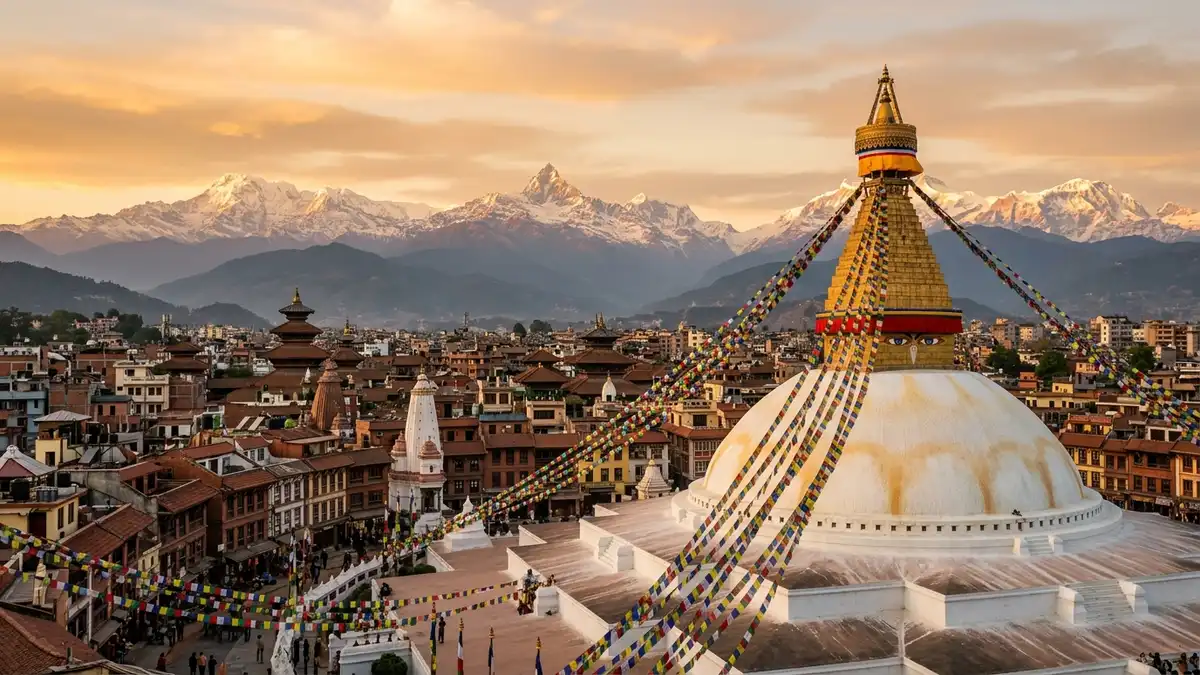
Beyond Thamel, Kathmandu rewards slow exploration. The UNESCO-listed Boudhanath Stupa is one of the largest Buddhist stupas in the world, and circling it at dusk while butter lamps flicker and monks chant is the kind of experience that stays with you for years. Pashupatinath Temple on the banks of the Bagmati River offers an equally profound, if more intense, glimpse into Hindu ritual life. The medieval city of Bhaktapur, a short drive away, feels like stepping into a living museum of Newari architecture.
The one tip worth underlining: don't treat Kathmandu purely as a launchpad for trekking. Give the city itself two or three days. The food, the chaos, the spirituality layered into every courtyard and alleyway — it deserves your full attention before the mountains take over.