


Route Briefing: Atlanta to Koh Samui
Yes, getting to Koh Samui from Atlanta takes commitment — we're talking 22-plus hours and at least two stops — but the moment you step off that final Bangkok Airways puddle-jumper onto the island's compact little airport tarmac, with warm tropical air wrapping around you and palm trees literally visible from the runway, you'll understand exactly why people make this journey. This is one of those destinations that genuinely rewards the effort.
Most itineraries route you through a major Asian hub — Bangkok is the natural connector, served by carriers like Thai Airways and EVA Air — before you catch a short onward flight into Koh Samui's airport (USM). Bangkok Airways operates that final island hop, and it's worth looking for through-fares that bundle both legs together rather than booking them separately. That single move can save you real money and headache. Speaking of money, anything under $900 roundtrip from Atlanta is a genuinely strong deal on this route; standard pricing typically runs $1,200 to $1,800 or more, so when fares dip, jump on them. Booking three to six months ahead gives you the best shot at those lower prices.
Once you land on Samui, taxis and songthaews — the shared red pickup trucks that serve as informal buses — are your main ground transport options. Negotiate taxi fares before you get in, as meters aren't always used.
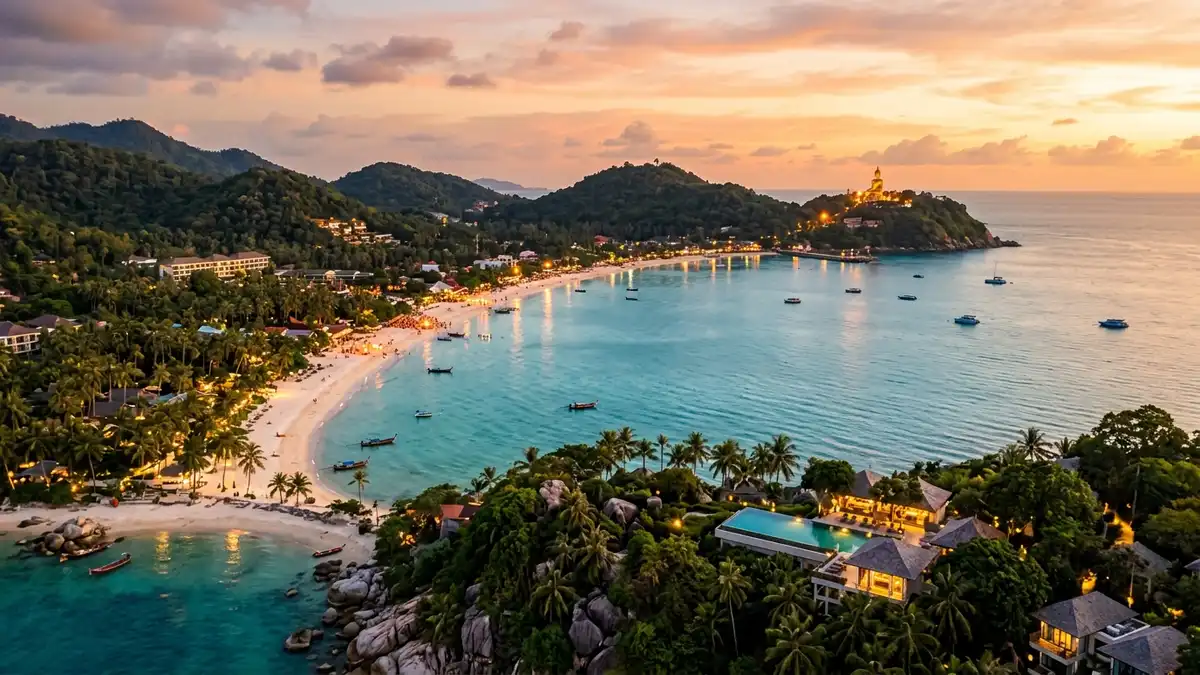
Koh Samui's personality is a wonderful contradiction: it can feel simultaneously luxurious and laid-back. The northeast coast around Chaweng is the liveliest stretch, packed with beach bars, restaurants, and nightlife energy. If you prefer something quieter, the western and southern shores offer a more relaxed pace. The island's interior is lush and hilly, dotted with temples including the famous Big Buddha statue at Wat Phra Yai — an easy and worthwhile half-day trip.
Timing matters here. December through February is peak season for good reason: the weather on the Gulf of Thailand side of the island is reliably sunny and dry, the seas are calm, and the whole place hums with a festive atmosphere. That said, peak season means peak prices for accommodation too. If you're flexible, shoulder months on either side can offer a sweet spot of decent weather and thinner crowds.
The food scene alone justifies the airfare. Fresh seafood grilled on the beach, proper southern Thai curries that hit differently than anything you'll find back home, and coconut-based dishes that taste exactly as good as they sound. Eat where locals eat — smaller, simpler spots away from the main tourist strips — and your budget will thank you.