


Route Briefing: Atlanta to Siem Reap
Few flights from Atlanta reward the effort quite like this one. Yes, you're looking at roughly twenty and a half hours of travel across two stops, but what waits on the other end is Angkor Wat — the largest religious monument on earth, rising from the Cambodian jungle in a way that genuinely stops you in your tracks the first time you see it. This is one of those rare destinations where the reality actually exceeds the photographs, and that alone makes the journey worthwhile.
From Atlanta, Korean Air routing through Seoul Incheon and China Southern through Guangzhou tend to offer the most competitive fares on this route. If you can snag a roundtrip under $900, you're doing well — standard pricing pushes past $1,300, so the savings are real. The key is booking three to five months ahead. This isn't a heavily trafficked route with endless seat inventory, and fares climb noticeably as departure dates approach. Set a fare alert on FlightKitten and move quickly when something good appears.
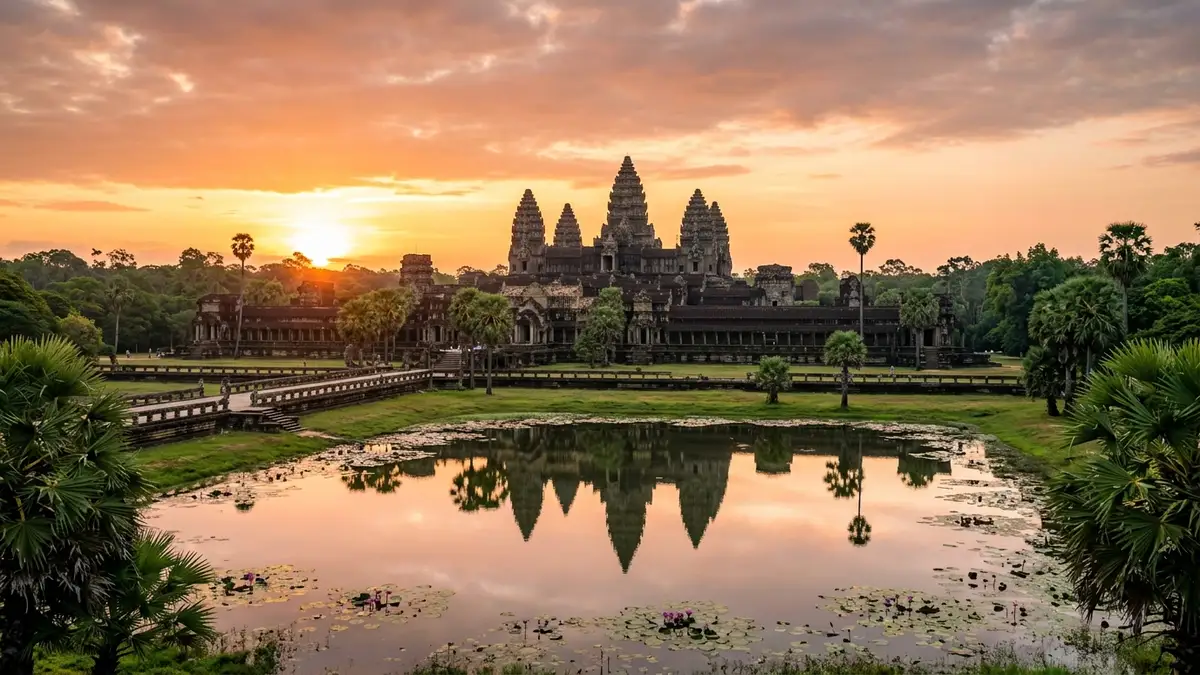
Timing matters enormously here. November through February is the sweet spot — cooler temperatures, lower humidity, and the dry season means the moat surrounding Angkor Wat reflects the temple in that iconic mirror-image shot you've seen everywhere. The wet season brings lush green landscapes and fewer crowds, but the heat and humidity are serious, and some rural roads become difficult to navigate.
Siem Reap itself is a small, walkable city that has grown up almost entirely around the temple complex. Tuk-tuks are the classic and practical way to get around, both from the airport into town and out to the temples each day. Hiring a tuk-tuk driver for a full day is affordable and gives you flexibility to move between the dozens of temple sites at your own pace — Angkor Thom, Ta Prohm with its famous tree roots swallowing the stone walls, and the quieter outer temples that most visitors skip entirely.
The genuinely useful tip here is to buy a multi-day Angkor pass rather than a single-day ticket. The complex is vast, and trying to compress it into one day means rushing past extraordinary things. Spread it across two or three mornings — temples are best visited early before the heat builds — and you'll leave feeling like you actually understood what you were looking at rather than just photographed it.
Cambodia's cuisine is worth your full attention too. Khmer food — fragrant with lemongrass, galangal, and fresh herbs — is distinct from its Thai and Vietnamese neighbors and deeply satisfying. Siem Reap's night markets are a great, low-cost way to eat well and soak up the atmosphere after a long day among the ruins.