


Route Briefing: Boston to Bruges
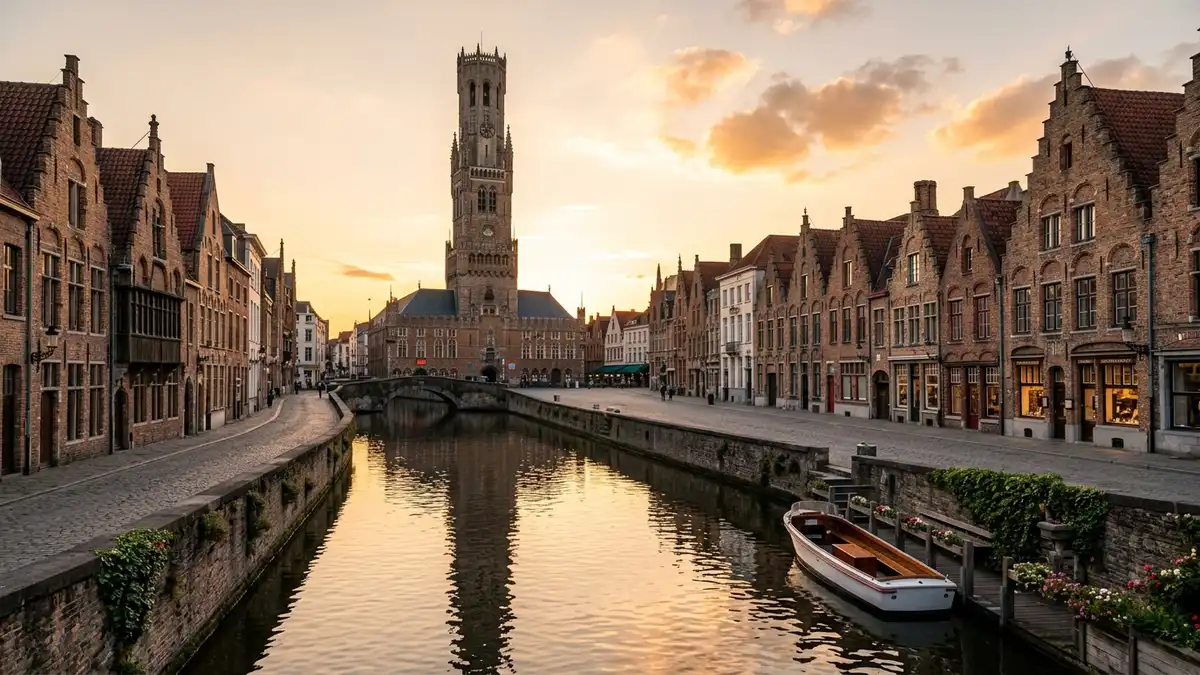
Stepping off a transatlantic flight into Belgium and finding yourself in one of Europe's most perfectly preserved medieval cities is the kind of travel reward that makes a nine-and-a-half-hour journey feel entirely worthwhile. Bruges is the rare destination that genuinely lives up to its reputation — a compact, walkable city of cobblestone lanes, mirror-still canals, and Gothic spires that looks, at certain angles, like someone forgot to tell it the Middle Ages ended.
From Boston, you're looking at a one-stop journey with carriers like Lufthansa, Brussels Airlines, and United Airlines doing the heavy lifting. Connections through Frankfurt or Amsterdam tend to produce the most competitive fares, so keep an eye on those routing options when you search. A roundtrip under $600 is a genuinely good deal on this route — standard pricing climbs well above $900 — and booking two to four months ahead gives you the best shot at landing that lower tier. This is a year-round route, which means flexibility is your friend.
Timing your visit matters more in Bruges than in many European cities. June through August is peak season, and the city draws serious crowds during those months — the canals are beautiful but the streets can feel overwhelmed. If you can travel in spring or early autumn, you'll find the same stunning architecture and chocolate shops with noticeably more breathing room and often softer prices on accommodation.
Once you land at Brussels Airport, the city center is well connected by train, and from Brussels you can reach Bruges by rail in under an hour — Belgium's intercity rail network is reliable and straightforward to navigate, making the onward journey genuinely easy even after a long flight.
In Bruges itself, the real pleasure is simply wandering. The Markt square, the Belfry tower, the network of canals — these aren't just postcard backdrops, they're the living fabric of daily life here. Belgian chocolate and waffles are legitimately world-class, and the local beer culture runs deep, with Trappist and abbey-style ales that taste entirely different enjoyed in a centuries-old brown café than they do anywhere else on earth.
The one tip worth burning into your memory: resist the urge to stay only in the historic center. Booking accommodation just slightly outside the tourist core saves money and gives you the experience of watching the city wake up before the day-trippers arrive — which, in Bruges, is genuinely magical.