


Route Briefing: Seattle to Bruges
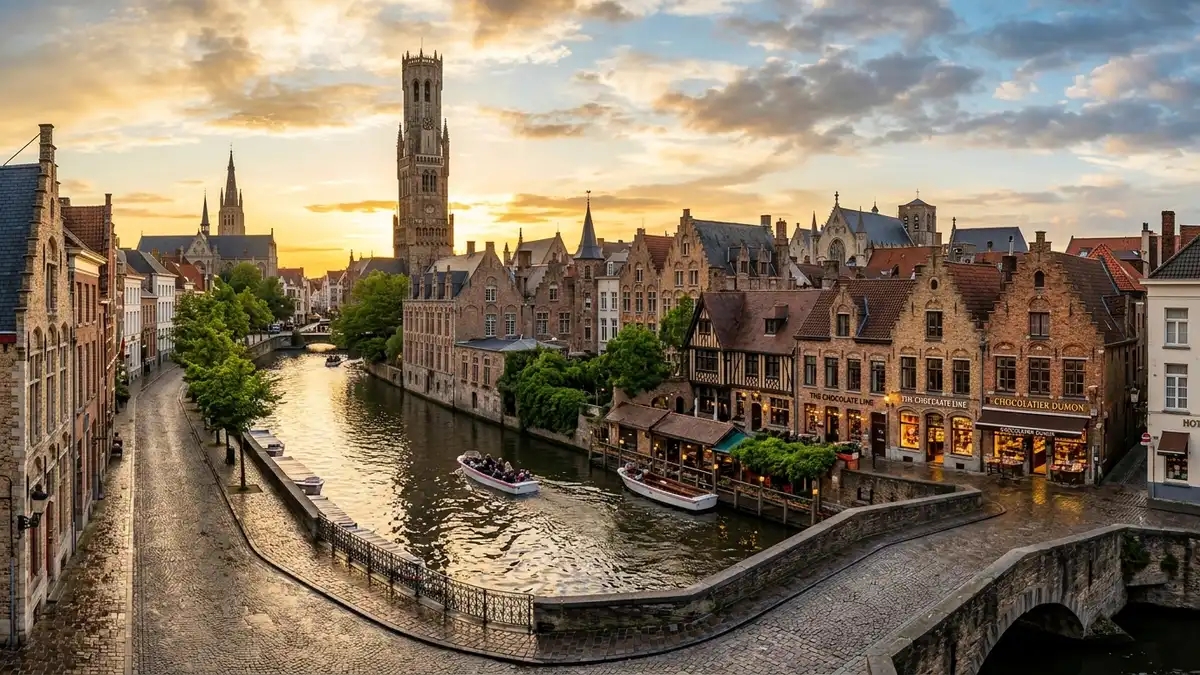
Stepping off a roughly ten-and-a-half-hour flight from Seattle and finding yourself in medieval Bruges feels like tumbling into a storybook — and that contrast alone makes this route worth every minute in the air. Few cities in Europe have preserved their historic core as completely as Bruges, where Gothic spires rise above a lacework of canals, horse-drawn carriages clatter over cobblestones, and the smell of warm chocolate drifts out of shops on nearly every corner. It's the kind of place that makes you slow down without even trying.
Delta, Lufthansa, and Brussels Airlines all serve this route year-round, typically with one stop. Connecting through Amsterdam or Frankfurt tends to unlock the sweetest fares, so when you're searching, don't fixate on a direct Brussels connection — flexibility on your layover city can be the difference between paying under $650 roundtrip (a genuinely good deal on this route) and watching prices climb past $900. Book two to four months ahead and you'll have the best shot at landing that lower tier.
Once you land at Brussels Airport, Bruges is easily reachable by train. The Belgian rail network is efficient and well-connected, and the journey from Brussels to Bruges by direct train takes roughly an hour — an easy, scenic introduction to the Belgian countryside before the city's medieval skyline comes into view.
Timing your visit matters more here than in many European cities. June through August is peak season, and Bruges earns every tourist it gets during those months — long golden evenings, outdoor café terraces along the canals, and the city looking its absolute best. That said, the shoulder seasons of April, May, and September offer a quieter, more intimate version of the same magic, often with noticeably lower accommodation prices and fewer crowds at the top sights like the Belfry tower and the Basilica of the Holy Blood.
The one tip that genuinely elevates a Bruges trip: rent a bicycle. The city is compact and almost entirely flat, the cycling infrastructure is excellent, and getting out beyond the tourist center into the surrounding Flemish countryside gives you a completely different perspective on the region. It's also the most local thing you can do in a city that takes its cycling culture seriously. Pair that with an unhurried afternoon sampling Belgian beers in a centuries-old brown café, and you'll understand exactly why people fly ten hours to get here.