


Route Briefing: Boston to Vienna
Boston to Vienna is one of those transatlantic routes that genuinely rewards the traveler willing to plan ahead. At around ten and a half hours with a connection, you're looking at a manageable journey — and if you can snag a roundtrip fare under $700, which absolutely happens when you book three to six months out, you're getting remarkable value for a city that consistently ranks among the most livable and culturally rich in the world.
Austrian Airlines, Lufthansa, and Swiss International Air Lines dominate this route, with connections typically routing through Frankfurt, Munich, or Zurich. That European hub connection isn't just a logistical detail — it's worth knowing that competing through those three airports tends to keep prices competitive, so it's worth comparing all three when you search. Flexibility on your connecting city can save you real money.
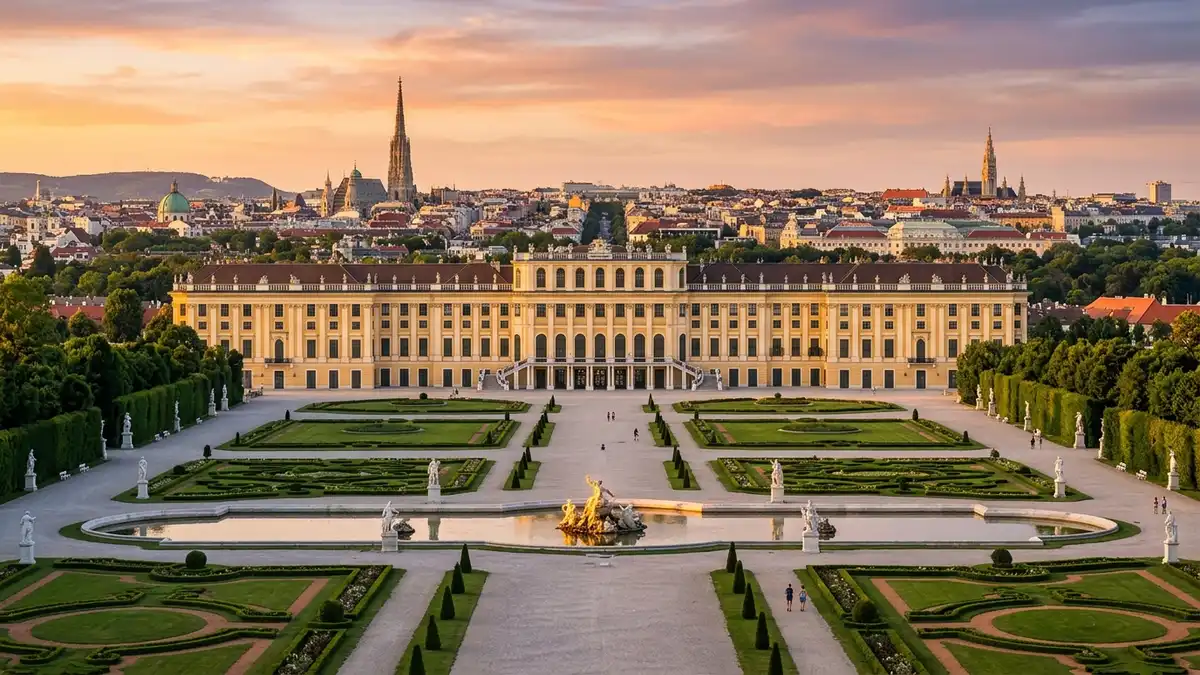
Vienna itself is the kind of place that earns its reputation without trying too hard. The Habsburg legacy is everywhere — the Schönbrunn and Hofburg palaces aren't just tourist checkboxes, they're genuinely staggering in scale and detail. The Kunsthistorisches Museum houses one of Europe's great art collections, and the Vienna State Opera is a living institution, not a museum piece. Classical music here isn't nostalgia; it's part of daily life in a way that's hard to explain until you're sitting in a concert hall on a Tuesday night feeling like the city was built specifically for this moment.
The food culture is deeply satisfying and unpretentious. Viennese coffee houses are a UNESCO-recognized cultural tradition — slow, sociable, and built around the idea that a single coffee and a newspaper can justify an entire afternoon. Sachertorte is the famous chocolate cake you'll find at its source here, and Wiener Schnitzel done properly is a revelation.
From Vienna International Airport, the City Airport Train connects directly to the city center in roughly sixteen minutes — it's fast, reliable, and takes the stress out of arrival entirely.
Peak season runs June through August when the city is warm and buzzing, but Vienna in December has a strong argument for being Europe's finest Christmas market destination. Spring and early autumn offer mild weather, thinner crowds, and often softer prices. If classical music is your draw, check the concert season calendar before you book — summer brings outdoor performances and festivals that make the city feel especially alive. Plan ahead, compare those hub connections, and Vienna will absolutely justify the journey.