


Route Briefing: Chicago to Antigua
Flying from Chicago to Antigua, Guatemala is one of those routes that genuinely rewards the effort. At around six and a half hours with one stop, you're not exactly hopping a puddle jumper, but you're also not committing to a transcontinental marathon — and what's waiting on the other end makes every minute worthwhile. United, American, and Copa Airlines all serve this route year-round, with connections typically running through Houston or Miami. Those two hubs tend to offer the most competitive fares and smoother layovers, so when you're searching, filter for IAH or MIA connections first. If you can lock in a roundtrip under $450, you've done well — standard fares creep above $650, so booking six to eight weeks out gives you the best shot at the sweeter end of that range.
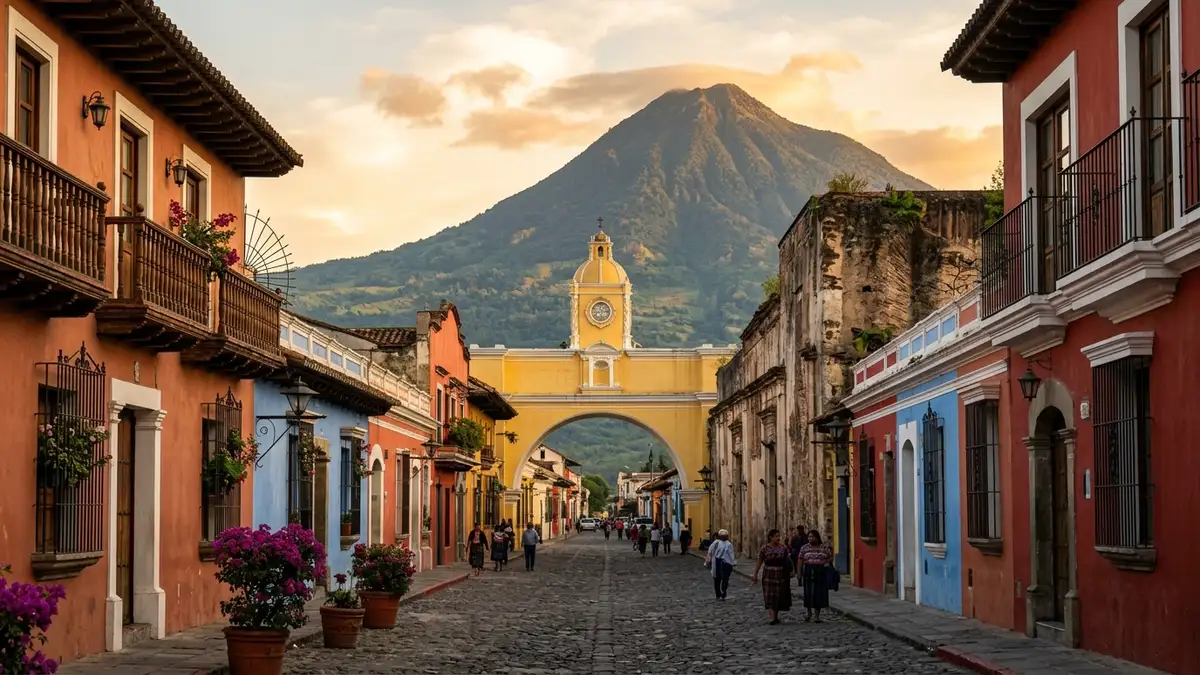
Antigua itself is one of Central America's most captivating cities, a UNESCO World Heritage Site wrapped in colonial Spanish architecture and framed on multiple sides by active and dormant volcanoes. Volcán de Agua looms dramatically to the south, and on clear mornings the view from almost anywhere in the city is genuinely jaw-dropping. The cobblestone streets, brightly painted facades, and ruined baroque churches give the place an almost cinematic quality — except it's completely lived-in and real, buzzing with local markets, artisan workshops, and some of the best coffee you'll ever drink. Guatemala grows exceptional coffee, and Antigua's cafés take full advantage of that.
Getting from Guatemala City's La Aurora International Airport into Antigua takes roughly 45 minutes to an hour by road, depending on traffic. Shuttle services specifically connecting the airport to Antigua are widely available and well-used by travelers — they're affordable, reliable, and far more straightforward than navigating local buses with luggage in tow. Book one in advance or arrange it through your accommodation.
Timing matters here. December through January brings holiday energy and dry, comfortable weather, but also peak crowds and higher prices. July and August are similarly busy. If you want Antigua at its most atmospheric without the shoulder-season rush, the dry months of February through April offer clear skies and manageable visitor numbers. Semana Santa — Holy Week before Easter — is world-famous for its elaborate street processions and is genuinely unmissable if you can handle the crowds.
The one tip that separates good Antigua trips from great ones: spend at least a day outside the city center. The surrounding villages, highland markets, and volcano hikes reveal a Guatemala that goes far deeper than the postcard version, and that's where the trip becomes something you'll talk about for years.