


Route Briefing: Chicago to Split
Few routes reward the effort quite like Chicago to Split, and at around 13 and a half hours with one stop, this is genuinely one of those journeys where the destination more than justifies the travel day. Connecting through Frankfurt, Vienna, or Zurich with Lufthansa, Austrian Airlines, or Swiss keeps things smooth and competitive — and if you catch a good deal, you can land a roundtrip under $700, which for the Adriatic in summer is remarkable value. Standard fares run $1,000 to $1,400 or more, so booking four to six months ahead of a summer trip is the single most important thing you can do for your wallet.
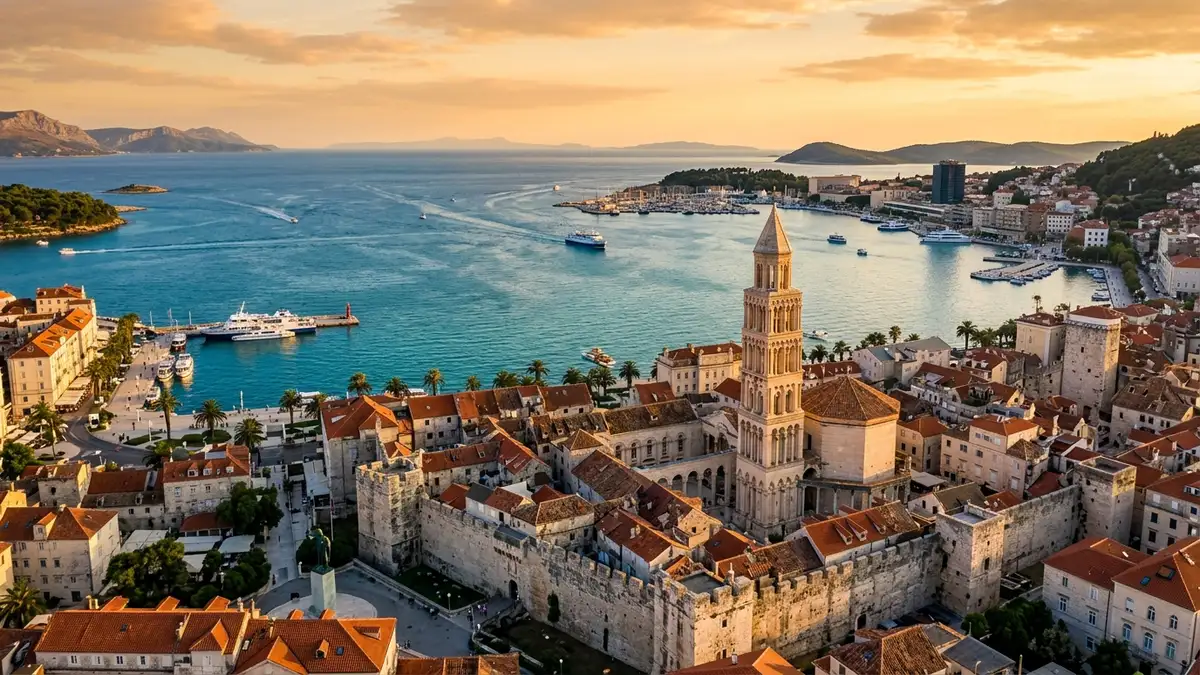
Split is one of those places that genuinely defies easy description. The old town isn't just built around a Roman palace — it essentially *is* the palace. Emperor Diocletian constructed his retirement complex here in the early fourth century, and over the following centuries, residents simply moved in, converting imperial halls into homes, churches, and eventually bars and restaurants. You can walk through a basement vault that once stored the emperor's wine and emerge moments later onto a sun-drenched waterfront promenade. That layering of history and everyday life is what makes Split feel so alive compared to more manicured heritage sites.
The Riva, Split's main waterfront boulevard, is where the city exhales each evening — locals and visitors alike spilling out for the ritual evening stroll. From the ferry terminal right there on the waterfront, you can reach the islands of Hvar, Brač, and Vis in under two hours, making Split an ideal base rather than just a stopover. Brač is famous for its white pebble beach at Zlatni Rat, and Hvar town draws a lively international crowd.
Split Airport sits on the coast between Split and Trogir, and regular bus services connect it to the city center, making the transfer straightforward and affordable. Taxis and rideshares are also readily available if you're arriving with heavy luggage after a long travel day.
Peak season runs June through August, when the Dalmatian coast is at its most electric but also its most crowded and expensive. If you have flexibility, the shoulder months of May and September offer warm swimming weather, thinner crowds, and noticeably lower accommodation prices — often the sweet spot for travelers who want the full experience without the summer crush.
The one tip worth burning into your memory: book your island ferry tickets in advance during summer. The ferries fill up fast, and nothing derails a carefully planned island day like a sold-out crossing. A little planning there unlocks the best of what this corner of Croatia has to offer.