


Route Briefing: Chicago to Stockholm
Chicago and Stockholm share a certain Nordic sensibility — both cities built around water, both proud of their architecture, both deeply serious about good coffee. That kinship makes this roughly ten-hour journey feel surprisingly natural, and when you land at Arlanda Airport, you'll quickly sense you've arrived somewhere that rewards the effort.
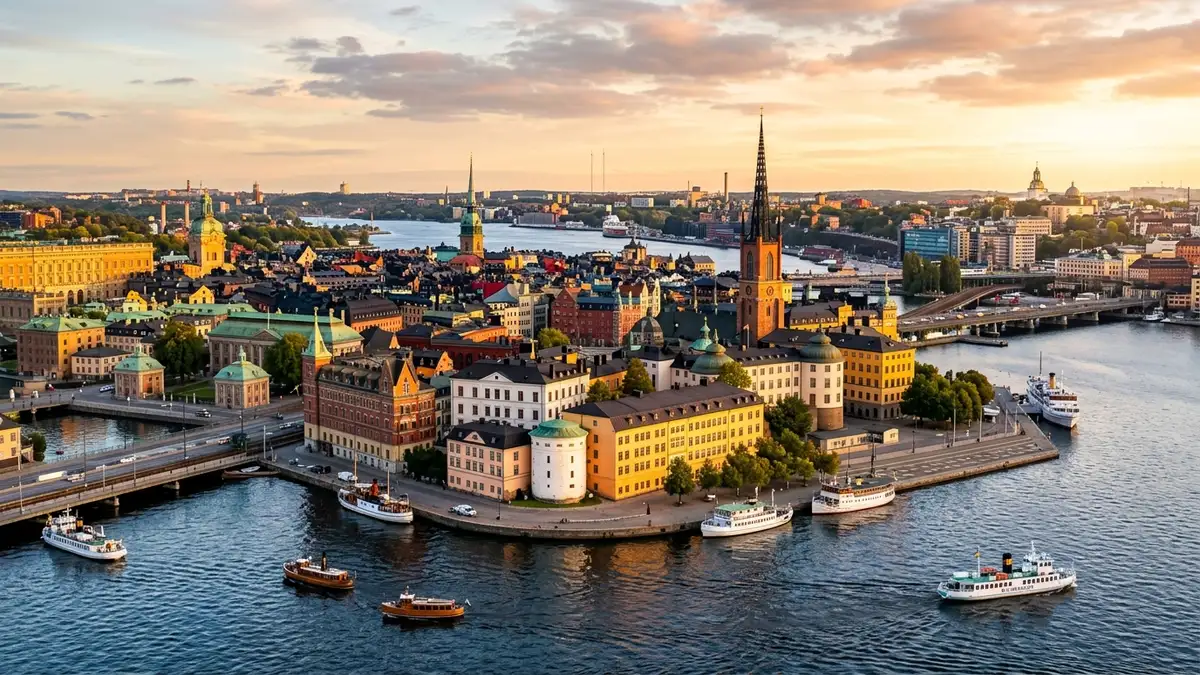
Stockholm earns its nickname, the Venice of the North, honestly. The city sprawls across fourteen islands where Lake Mälaren meets the Baltic Sea, meaning you're almost always within sight of shimmering water. The medieval old town of Gamla Stan is compact and walkable, its narrow cobblestone lanes lined with amber and ochre buildings that have stood for centuries. The Royal Palace sits right at its heart, still very much in active use. Beyond the old town, neighborhoods like Södermalm offer a hipper, more contemporary Stockholm — vintage shops, independent cafés, and some of the best design culture in Europe.
Don't skip the metro. Stockholm's tunnelbana is genuinely one of the most visually striking subway systems on the planet, with stations that double as underground art galleries — raw rock walls painted and sculpted by dozens of artists over decades. It's free to look and costs only a standard fare to experience.
Then there's fika, the Swedish ritual of slowing down for coffee and something sweet. It's not just a snack break — it's a cultural institution, and embracing it will immediately make you feel less like a tourist.
From Arlanda, the Arlanda Express train connects the airport to Stockholm's central station in roughly twenty minutes, making it one of the smoothest airport-to-city transfers in Europe.
On the fare side, a roundtrip under $650 from O'Hare is a genuinely good deal — standard pricing runs considerably higher. SAS, Lufthansa, and United all operate this route with a connection, and routing through Frankfurt or Copenhagen frequently unlocks better prices than other itineraries. If summer is your target, book three to five months out. June through August is peak season, the city is at its most luminous with long Scandinavian days, and fares climb steeply as the season approaches.
For a quieter, more affordable visit, late spring or early autumn delivers mild weather and thinner crowds — Stockholm in September still has plenty of warmth left and the city feels genuinely relaxed. Whenever you go, this is a route that punches well above its price when you catch it right.