


Route Briefing: Denver to Kuala Lumpur
Denver to Kuala Lumpur is one of those routes that rewards the patient traveler — not just because of the destination, but because the journey itself, connecting through world-class hubs like Hong Kong, Seoul, or Tokyo, feels like a mini adventure before you even arrive. At around 22 and a half hours with one stop, it's a long haul, but Cathay Pacific, Korean Air, and Japan Airlines all run this corridor with solid reputations for service and comfort, making the transit far more bearable than you might expect.
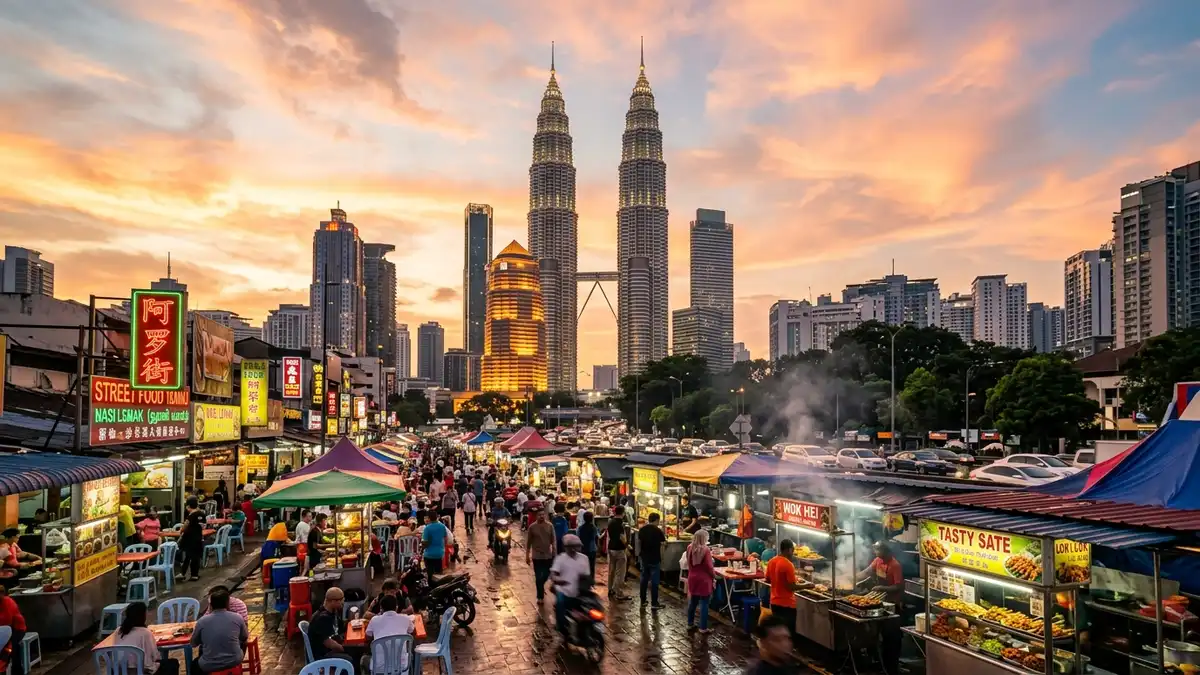
Now, about where you're headed. Kuala Lumpur is one of Southeast Asia's most underrated cities, and that's genuinely surprising given what it offers. The Petronas Twin Towers remain one of the most striking pieces of architecture anywhere on earth — seeing them illuminate the night sky from the KLCC park below is the kind of moment that stops you mid-sentence. But KL's real magic lives at street level. The city is a genuine melting pot of Malay, Chinese, and Indian cultures, and that diversity shows up most deliciously in the food. Jalan Alor is the city's famous street food strip, and wandering it after dark — satay smoke in the air, tables spilling onto the pavement — is as good as urban dining gets anywhere in the world. Brickfields, the city's Little India neighborhood, and Chinatown's Petaling Street add further layers to a city that genuinely rewards slow, curious exploration.
Your ringgit will stretch remarkably far here. Excellent meals cost very little, public transport is clean and efficient, and the city's metro system connects the airport directly to the city center via the KLIA Ekspres train, which is fast, comfortable, and takes the stress out of arrival entirely.
Timing matters on this route. Peak season runs June through August and again December through January, when prices and crowds both climb. If your schedule allows, the shoulder months on either side offer a sweeter deal. Speaking of deals — a roundtrip under $900 from Denver is genuinely achievable, compared to the standard fare of $1,300 or more. The key is booking three to six months ahead and being flexible about which hub you connect through, since routing via Hong Kong, Seoul, or Tokyo consistently produces the most competitive fares.
One tip worth keeping in your back pocket: build in a longer layover at your connecting city if you can. A day in Tokyo or Seoul on the way to KL turns a long-haul necessity into a two-destination trip for the price of one.