


Route Briefing: Denver to Medellín
Denver sits at a mile high, but Medellín somehow feels even more elevated — perched in the Andes at around 5,000 feet, with temperatures that hover in the low-to-mid 70s Fahrenheit nearly every day of the year. That's how it earned the nickname the City of Eternal Spring, and once you arrive, you'll understand why Colombians from the coast treat it like a dream destination. From Denver International, you're looking at roughly ten and a half hours with one stop, typically connecting through Miami or Houston. Both hubs offer solid options on Avianca, United, and American Airlines, and routing through either of those cities tends to keep layovers manageable and fares competitive.
Speaking of fares — this route rewards patience and planning. Roundtrip tickets under $450 represent a genuinely good deal, while leaving things to the last minute can push you past $700 without much effort. Booking six to eight weeks out is your sweet spot, and if your schedule has any flexibility, avoid December through January and June through July, when peak-season demand drives prices up. The shoulder months offer the same beautiful weather with noticeably lighter crowds and softer prices.
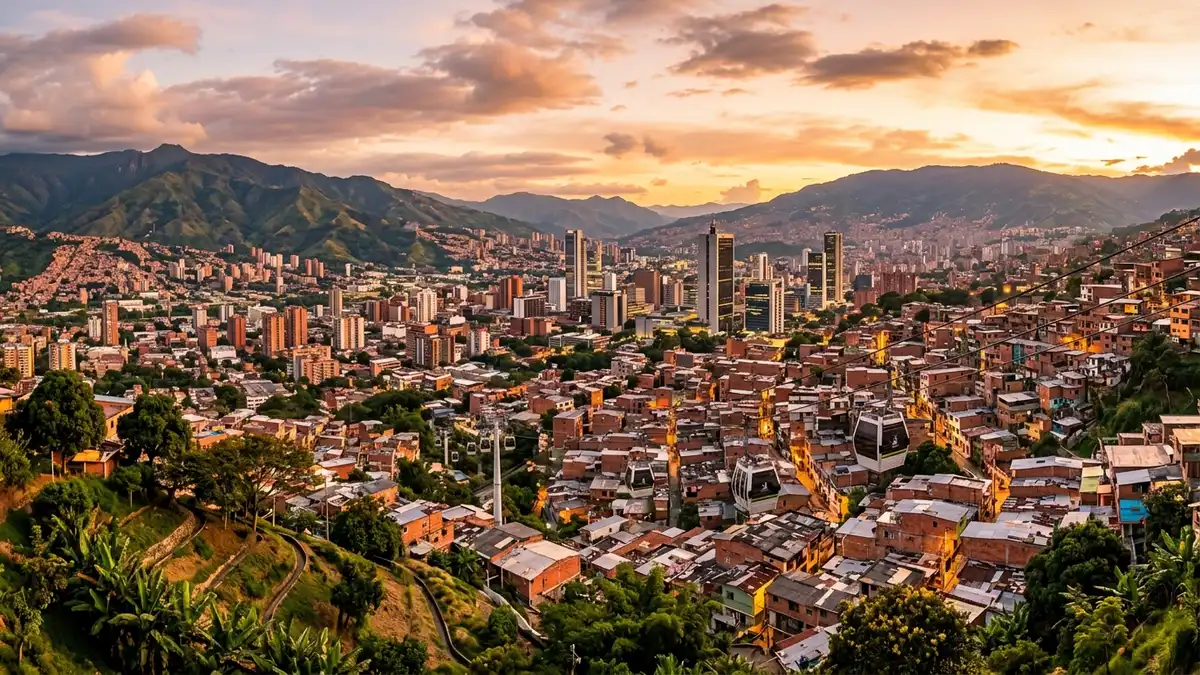
Medellín's transformation over the past few decades is one of the most remarkable urban stories in the Americas. The city invested heavily in public infrastructure, and that's immediately visible when you arrive — the Metro system is clean, reliable, and connects to a network of cable cars that climb into the hillside neighborhoods, offering views that no rooftop bar could replicate. From José María Córdova International Airport, taxis and app-based rideshares are the standard way into the city, with the journey taking roughly 45 minutes to an hour depending on traffic and your destination within the metro area.
Once you're settled, the city rewards slow exploration. The El Poblado neighborhood is the natural base for most visitors — walkable, full of cafés and restaurants, and well-connected to the rest of the city. But don't stay anchored there. The Laureles and Envigado areas offer a more local rhythm, and a ride on the Metrocable into the comunas gives you a perspective on the city that's genuinely moving. Colombian coffee culture is serious here, and the food scene leans into hearty Antioquian cuisine — think bandeja paisa, arepas, and fresh tropical fruit at every turn.
The one tip worth repeating to anyone on this route: download a local rideshare app before you land. It'll save you negotiation stress at the airport and help you move around the city confidently from day one.