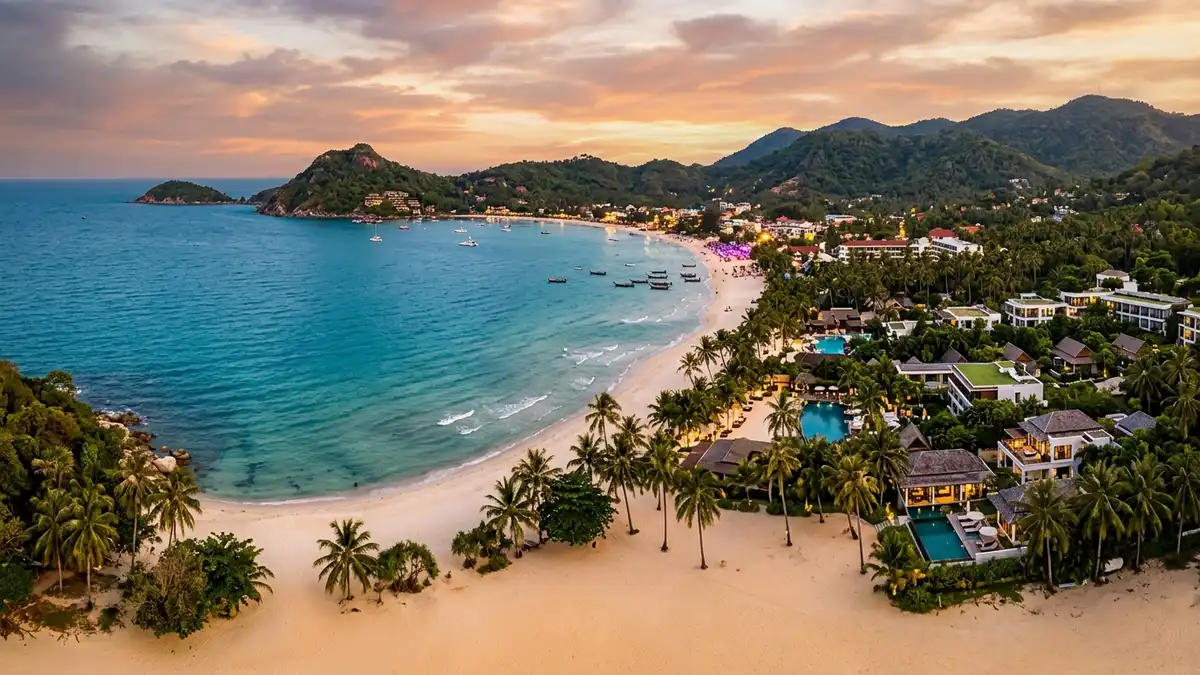



Route Briefing: Dubai to Koh Samui
Getting from Dubai to Koh Samui is one of those journeys that feels entirely worth the effort the moment you step off the plane and the warm, salt-tinged Gulf of Thailand air hits you. At around ten and a half hours with a connection, it's not a short hop — but for an island this beautiful, you'll forgive every minute of it.
Most flights route through Bangkok's Suvarnabhumi Airport, which is genuinely the smoothest way to do it. Bangkok Airways operates a strong presence on the Bangkok-to-Samui leg, and connecting through BKK typically gives you the widest choice of departure times and the most competitive fares. Emirates also offers codeshare options that can work well if you're already loyal to their network. A roundtrip under $450 is a genuinely good deal on this route — standard fares push well past $700, so if you spot something below that threshold, it's worth jumping on. Booking two to four months ahead gives you the best shot at those lower fares, since Koh Samui draws serious leisure travellers from across the Middle East and Europe year-round.
Koh Samui's airport is refreshingly small and manageable — an open-air terminal that immediately sets the island mood. Taxis and shared minivans are readily available outside arrivals to take you to the main beach areas like Chaweng and Lamai, so getting settled is straightforward even after a long travel day.
The island itself rewards visitors who come with flexible expectations. Chaweng Beach is the liveliest stretch — lined with restaurants, bars, and the kind of energy that keeps people up well past midnight. If you're after something quieter, the northern and western coasts offer calmer waters and a more laid-back pace. The famous Full Moon Party actually takes place on the neighbouring island of Koh Phangan, easily reachable by ferry if that's on your agenda.
Timing matters here. December through February is peak season — the weather is at its most reliable, the sea is calm, and the island is buzzing. If you want the experience without the peak-season prices, shoulder months like November or March can offer a sweet spot of decent weather and thinner crowds.
One genuinely useful tip: don't overlook the local food markets and street stalls for meals. Thai cuisine on the island is outstanding, and eating where locals eat will cost you a fraction of what resort restaurants charge — and often taste considerably better.