


Route Briefing: Dubai to Taipei
Eight and a half hours on a direct flight from Dubai to Taipei — that's a remarkably manageable journey for the cultural whiplash you're about to experience. You're trading the desert skyline for a city that somehow makes neon-lit chaos feel deeply comforting, and the route runs year-round with solid options from Emirates, China Airlines, and EVA Air. If you can snag a roundtrip under $600, you're doing very well — standard fares push past $900, so booking two to four months ahead is genuinely worth the calendar discipline.
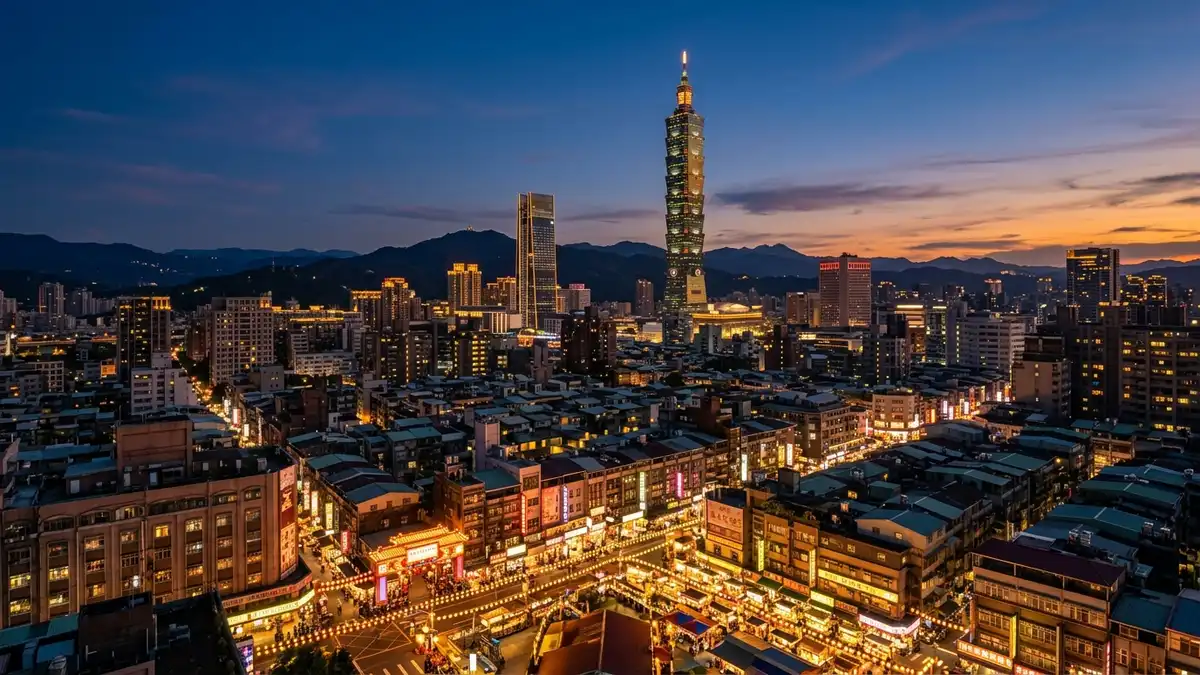
Taipei rewards the curious traveler in ways that feel almost unfair. The city is compact enough to navigate confidently within a day or two, yet layered enough to keep you discovering things for a week. Taipei 101 is the obvious landmark — the tower dominated the world's tallest building rankings for years and still anchors the city's skyline beautifully — but the real soul of Taipei lives at street level. The night markets are legendary for good reason. Shilin Night Market is the most famous, drawing crowds every evening with an overwhelming spread of local snacks, from stinky tofu to scallion pancakes to the kind of bubble tea that makes every other version you've had feel like a rehearsal. Raohe Street Night Market is slightly smaller and arguably more atmospheric for first-timers.
Beyond the food, Taipei sits in a geographically dramatic setting. The Beitou district offers natural hot spring baths that feel genuinely restorative after a long flight, and the surrounding mountains mean you're never far from hiking trails with sweeping city views. The Jiufen old town, a short trip outside the city, is one of those places that earns every photograph taken of it.
Getting from Taiwan Taoyuan International Airport into the city is straightforward — the Airport MRT connects directly to Taipei Main Station and is fast, affordable, and easy to navigate even with luggage. It's the kind of arrival experience that immediately sets a good tone for the trip.
Timing matters here. July and August are peak season, bringing summer crowds and higher fares. Chinese New Year in January or February is equally busy and sees prices climb sharply. If your schedule has any flexibility, traveling mid-week outside those windows can save you meaningfully — we're talking 20 to 30 percent off standard fares. Spring and autumn tend to offer pleasant temperatures and thinner crowds, making them the sweet spot for this route.
One tip worth taking seriously: get an EasyCard on arrival. This rechargeable transit card works across the MRT, buses, and even some convenience store purchases, and it makes moving around the city genuinely effortless. Taipei is already one of Asia's most visitor-friendly cities — the EasyCard just removes the last remaining friction.