


Route Briefing: Dublin to Budapest
Just over three hours from Dublin and you're stepping off the plane into one of Europe's most underrated capital cities — Budapest is the kind of destination that makes you wonder why you didn't go sooner. With Ryanair and Aer Lingus both serving this route year-round, competition keeps fares honest, and if you catch a promotional window you can snag a roundtrip for under $120. That's genuinely remarkable value for a city this spectacular. Booking six to ten weeks ahead tends to hit the sweet spot on pricing, and signing up for Ryanair fare alerts is one of the smartest moves you can make — their flash sales on this route are real and worth jumping on.
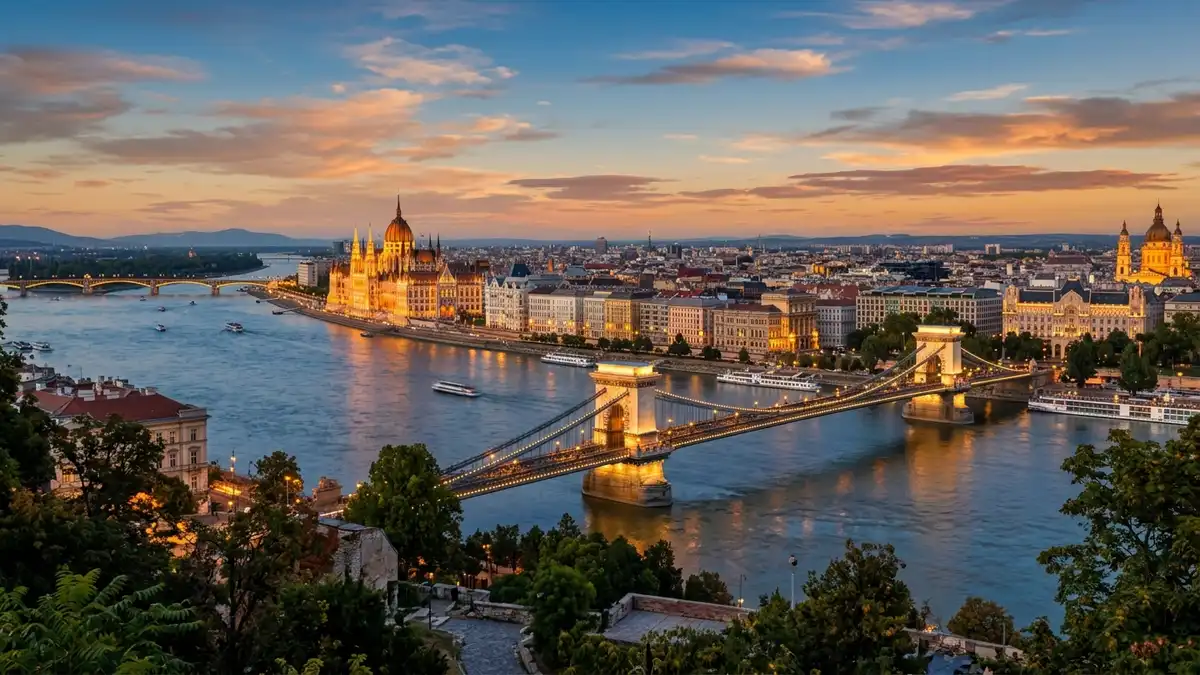
Budapest rewards you immediately. The city is split by the Danube into hilly, historic Buda on one side and flat, buzzing Pest on the other, and the view from the Buda Castle district across to the illuminated Parliament building at night is one of those sights that genuinely stops you in your tracks. The Parliament itself is among the largest and most beautiful legislative buildings in the world — worth seeing from the river and, if you plan ahead, worth touring inside too.
Then there are the thermal baths, which aren't a tourist gimmick but a genuine part of daily Budapest life. The city sits on a network of natural hot springs, and soaking in a grand, century-old bathhouse is one of those experiences that feels both indulgent and completely affordable. Pair that with an evening in one of the famous ruin bars — sprawling, eclectic venues built inside crumbling courtyards and abandoned buildings in the Jewish Quarter — and you have a city that operates on its own wonderfully strange frequency.
Budapest is also extraordinarily good value once you're on the ground. Eating, drinking, and getting around costs a fraction of what you'd spend in Dublin, Paris, or Amsterdam, which makes it a particularly satisfying trip if you're travelling on a budget.
From Budapest Ferenc Liszt International Airport, the city centre is easily reachable by public bus, which connects to the metro network and is a reliable, inexpensive option. It's a straightforward journey that most travellers navigate without any trouble.
Timing-wise, June through August is peak season when the city is lively and the outdoor festival scene is in full swing, but shoulder season — particularly late spring and early autumn — offers pleasant weather, thinner crowds, and even softer prices. Winter has its own charm, with Christmas markets and a moody, atmospheric quality to the old streets. Honestly, this route earns its place on the year-round calendar.