


Route Briefing: New York to Budapest
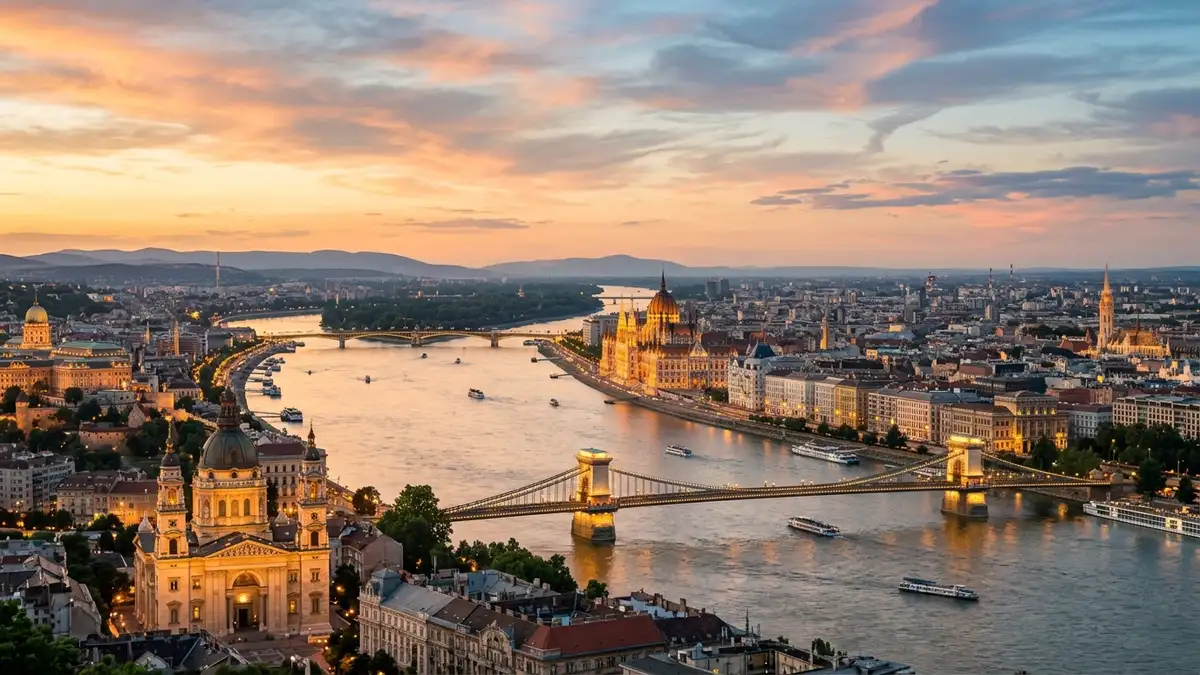
Budapest has a way of making you feel like you've discovered something the rest of the world hasn't fully caught onto yet — even though it absolutely has. The Hungarian capital sits straddling the Danube with a confidence that comes from centuries of history, and the moment you cross one of its grand bridges and see the Parliament building glowing at night, you'll understand exactly why they call it the Pearl of the Danube.
Getting there from New York takes around nine and a half hours with a connection, and the good news is that routing through Central Europe actually works in your favor. Lufthansa, Swiss, and Austrian Airlines all serve this route well, connecting through Frankfurt, Zurich, and Vienna respectively — and those hubs tend to offer the most competitive pricing. A genuinely good deal lands under $600 roundtrip, while standard fares push past $900, so the spread is significant enough to make timing your purchase worthwhile. Book two to four months out and you'll be in the sweet spot; leave it to the last minute and you'll pay for the privilege.
Once you land at Budapest Ferenc Liszt International Airport, the city center is straightforward to reach by public transport — the airport bus connects to the metro system, which will carry you into the heart of Pest efficiently and cheaply. It's one of those arrivals where you don't need to overthink logistics.
Peak season runs June through August when the city fills with festivals and outdoor life along the riverbanks, but Budapest genuinely rewards visits in the shoulder months too. Spring brings the city to life with mild temperatures and thinner crowds, while autumn has a golden, unhurried quality that suits the café culture perfectly. Even winter has its charm — the thermal baths feel especially indulgent when it's cold outside, and the Christmas markets around Vörösmarty Square are legitimately lovely.
Speaking of the baths: don't skip them. Soaking in a grand 19th-century thermal bathhouse is one of those experiences that sounds touristy until you're actually floating in warm mineral water beneath a vaulted ceiling, wondering why you don't live here. The ruin bars of the Jewish Quarter offer a completely different energy — sprawling, eccentric spaces built inside crumbling courtyards that somehow became one of Europe's most distinctive nightlife scenes.
The practical tip that makes the biggest difference? Budapest remains one of the most affordable capital cities in Europe for Western visitors. Your food, drink, and accommodation budget will stretch considerably further here than in Paris or Amsterdam, which means you can eat and drink very well without watching every forint. Factor that into your overall trip cost when you're deciding whether that sub-$600 fare is worth jumping on — it almost certainly is.