


Route Briefing: Seattle to Budapest
Seattle and Budapest might seem like an unlikely pairing, but this route connects two cities that share a quietly rebellious creative spirit — and the journey, while long at around 13 and a half hours with a stop, is absolutely worth it. Lufthansa, Austrian Airlines, and KLM are your most reliable carriers here, routing you through Frankfurt, Vienna, or Amsterdam respectively. Those European hub connections aren't just convenient — they're where the competitive pricing lives. Snag a roundtrip under $700 and you've done very well. Standard fares creep up to $1,000–$1,400 or more, so booking three to six months ahead is the move, especially if you're eyeing a summer trip.
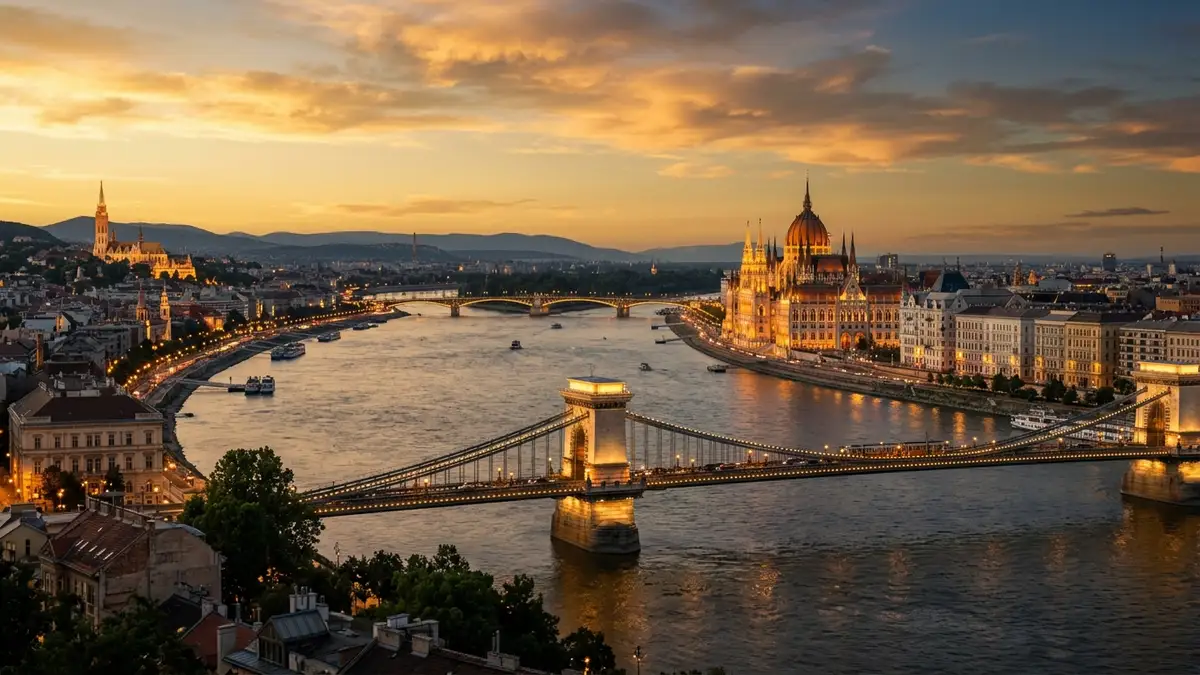
Budapest rewards the traveler who pays attention. Straddling the Danube with Buda's castle-crowned hills on one side and Pest's grand boulevards on the other, the city earns its nickname — the Pearl of the Danube — every single day. The Hungarian Parliament building, one of the most beautiful legislative buildings on earth, glows gold along the riverbank at dusk in a way that genuinely stops you in your tracks. Spend a morning soaking in one of the city's famous thermal baths — Széchenyi and Gellért are the most celebrated — and you'll understand why bathing culture is woven into daily life here rather than treated as a tourist novelty.
Come evening, Budapest's ruin bar scene takes over. These sprawling, deliberately ramshackle bars built inside abandoned buildings in the Jewish Quarter have a character unlike anything in Western Europe. Szimpla Kert is the original and still worth visiting, but the whole neighborhood has a magnetic, lived-in energy that keeps people lingering far longer than planned.
The city is also genuinely excellent value by European standards. Excellent food, quality accommodation, and local transport all come in noticeably cheaper than Paris, Amsterdam, or Prague, which makes stretching your budget here very satisfying.
Peak season runs June through August when the city is buzzing and the outdoor terraces are packed, but shoulder seasons — particularly April through May and September through October — offer mild weather, thinner crowds, and often softer prices on flights and hotels. Winters are cold but atmospheric, and Budapest's Christmas markets are lovely if you can handle the chill.
From Budapest Ferenc Liszt International Airport, the city center is easily reachable by public bus, which is an affordable and straightforward option. Taxis and rideshares are also widely available if you're arriving late or with heavy luggage.
One tip worth keeping close: pick up a Budapest Card if you plan to visit multiple museums and use public transport frequently — it bundles access and unlimited transit into a single purchase that tends to pay for itself quickly.