


Route Briefing: Dublin to Langkawi
There are long-haul routes, and then there are routes that feel genuinely transformative — Dublin to Langkawi is firmly in the second category. You're trading Atlantic drizzle for the warm, salt-tinged air of a duty-free Malaysian archipelago sitting at the edge of the Andaman Sea, and every hour of that roughly eighteen-and-a-half-hour journey starts to feel like a worthwhile investment the moment you land.
The route typically involves two stops, with Malaysia Airlines routing through Kuala Lumpur being the standout choice for both price and practicality. KUL is a well-organised hub, the connection to Langkawi International Airport is smooth, and Malaysia Airlines tends to offer the most competitive fares on this corridor. Qatar Airways and Emirates are solid alternatives if you prefer routing through Doha or Dubai, both of which are excellent transit airports for stretching your legs on such a long journey. For roundtrip fares, anything under $900 is genuinely good value — standard pricing sits above $1,300, so the savings are real. Book three to five months ahead; this route has limited seat availability and prices climb quickly as departure approaches.
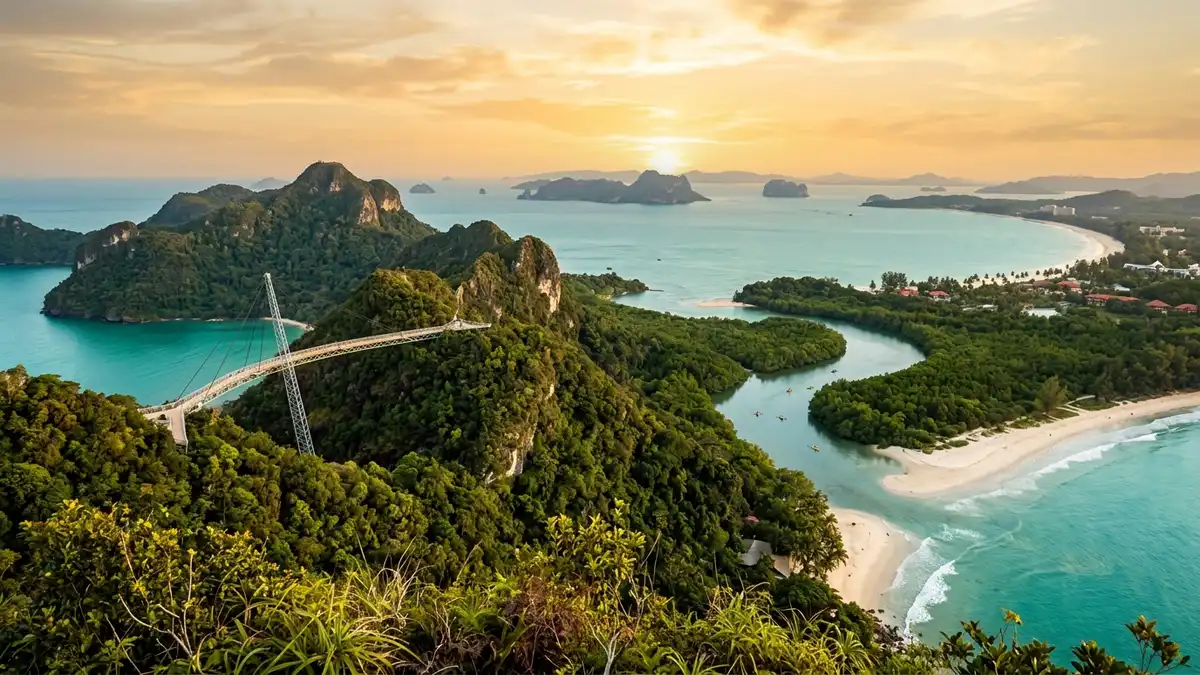
Langkawi itself is one of Southeast Asia's best-kept secrets among travellers who haven't yet discovered it. The archipelago's duty-free status means alcohol, chocolate, and electronics are noticeably cheaper than elsewhere in Malaysia, which is a pleasant bonus. But the real draw is the landscape — ancient rainforest, mangrove ecosystems that you can explore by kayak, and beaches along the Andaman coast that genuinely rival anything in Thailand without the crowds. The Langkawi SkyBridge, a curved cable-stayed pedestrian bridge suspended in the jungle canopy, offers views that are difficult to describe without sounding like you're exaggerating.
Langkawi International Airport is compact and easy to navigate, sitting close to the main tourist areas on the island. Taxis and ride-hailing services are available outside arrivals, and the distances to most beach resorts are manageable.
Timing matters here. December through January is peak season — the weather is at its most reliable and the island is lively, but accommodation prices reflect that. If you can travel in the shoulder months either side of peak, you'll find quieter beaches and better room rates while still enjoying good conditions. The southwest monsoon affects the island roughly between May and September, so that period is worth researching before you commit to dates.
One tip worth taking seriously: Langkawi rewards slow travel. Build in at least a week. The island has a pace that's genuinely restorative, and rushing it would be a shame after flying this far.