


Route Briefing: Dublin to Quito
Flying from Dublin to Quito is genuinely one of the more adventurous routes you can book from Ireland, and the journey itself sets the tone perfectly — you're crossing the Atlantic, threading through either Madrid or a US hub, and eventually touching down at one of the highest commercial airports in the world, sitting at around 2,800 metres above sea level. That altitude is your first practical consideration: take it easy on arrival day, drink plenty of water, and let your body adjust before diving into the city.
The journey clocks in at around 17 hours and 30 minutes across two stops, so look at it as part of the adventure rather than a chore. Iberia, American Airlines, and KLM are the main carriers serving this route, and routing through Madrid with Iberia often makes geographic and cultural sense — you're essentially island-hopping between two Spanish-speaking worlds. A good roundtrip fare comes in under $700, while standard pricing sits above $1,000, so booking three to six months ahead is genuinely worth the effort here. Being flexible about which hub city you connect through can make a real difference to the final price.
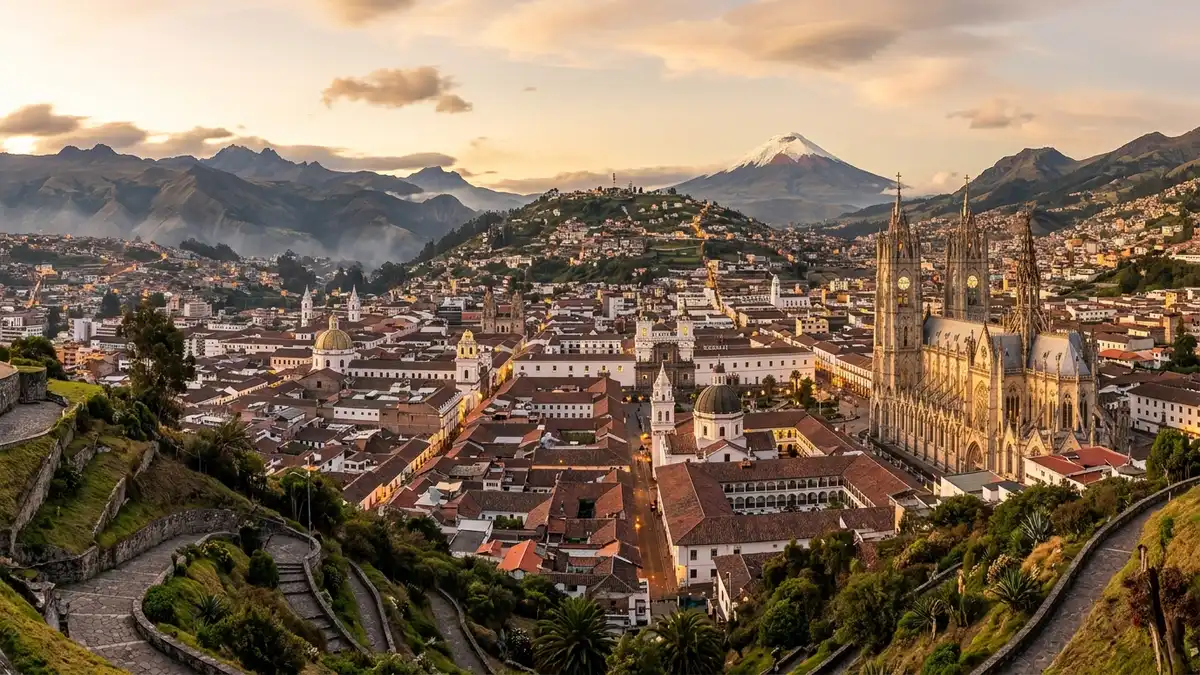
Quito itself is extraordinary. As a UNESCO World Heritage city, its historic centre is one of the best-preserved colonial old towns in Latin America — the churches alone are worth the flight. The Basílica del Voto Nacional is a Gothic masterpiece you can actually climb for sweeping views over the city and the surrounding Andean peaks. The old town's plazas, markets, and street food scene give you an immediate sense of how deeply rooted the culture is here.
Beyond the city, Quito is the classic jumping-off point for the Galápagos Islands, making it a natural first stop on a longer Ecuador itinerary. The Avenue of the Volcanoes stretching south is equally compelling for anyone drawn to dramatic landscapes.
For getting into the city from Mariscal Sucre International Airport, authorised taxis and pre-booked transfers are the straightforward options — agree on a fare or use a metered cab from official ranks rather than accepting unsolicited offers outside arrivals.
Timing-wise, June through August and December through January are peak seasons, coinciding with school holidays and the driest weather in the highlands. If you want a quieter, more affordable experience, the shoulder months either side of these windows offer a good balance of decent weather and thinner crowds. Quito sits on the equator, so temperatures stay relatively mild and consistent year-round — it's the rain, not the heat, that varies most.