


Route Briefing: Dublin to Riga
Dublin to Riga is one of those quietly brilliant European routes that rewards curious travellers willing to look beyond the obvious city-break destinations. At around four and a half hours with a connection, you're not exactly hopping next door, but when roundtrip fares dip under $250 — which they genuinely do if you book six to ten weeks ahead — the Baltic capital suddenly feels like an absolute steal. Ryanair, Wizz Air, and Latvia's own airBaltic all serve this corridor, so it's worth comparing across all three before committing. Connecting through Warsaw or Vilnius can occasionally unlock better pricing too, so keep an eye on those routing options.
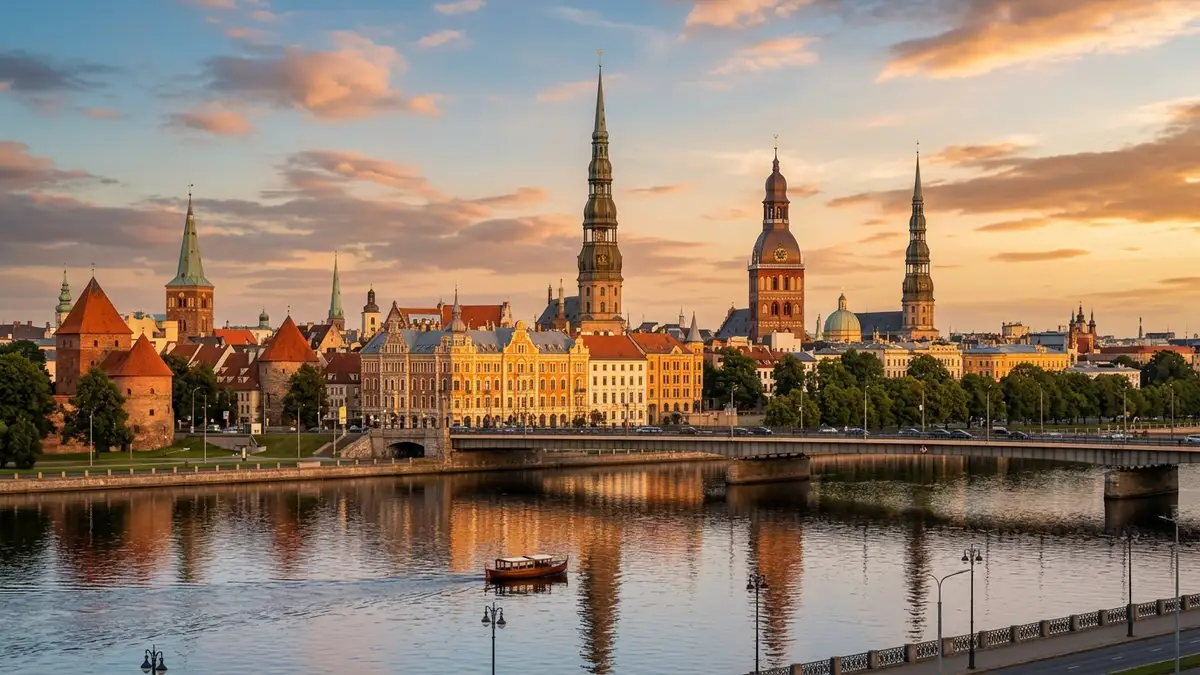
Riga itself is one of Europe's most underrated capitals, full stop. The Old Town is a UNESCO World Heritage Site, a dense medieval maze of cobbled lanes, amber shops, and church spires that somehow feels genuinely lived-in rather than preserved for tourists. But what really sets Riga apart is its extraordinary collection of Art Nouveau architecture — the city has one of the highest concentrations of Art Nouveau buildings anywhere in the world, and simply wandering the streets of the quiet residential neighbourhoods north of the centre is an architectural education in itself. The facades are extraordinary, ornate and theatrical in a way that stops you mid-stride.
Latvian cuisine is hearty and honest — think rye bread, smoked fish, grey peas with bacon, and warming soups that make complete sense once you've felt a Baltic autumn chill. The Central Market, housed in enormous former zeppelin hangars near the train station, is one of the great food markets of Europe and an essential first morning stop.
For getting into the city from Riga International Airport, public buses connect the airport to the city centre reliably and cheaply, making it easy to skip the taxi queue entirely on arrival.
Timing matters here. June through August is peak season, when the long Baltic summer days are genuinely magical — Riga comes alive with outdoor terraces, festivals, and a warmth that surprises first-timers. That said, visiting in late autumn or winter brings a completely different atmosphere: candlelit Old Town streets, Christmas markets, and far thinner crowds. Shoulder season travellers often get the best of both worlds on price and experience.
The one tip worth burning into your memory: don't rush straight to the Old Town on arrival. Give yourself a slow morning walk through the Art Nouveau district first, with no agenda. It reframes everything you see afterwards.