


Route Briefing: Frankfurt to Bruges
Frankfurt to Bruges is one of those routes that rewards the traveller who pays attention. At just over two hours in the air, you're barely settled into your seat before you're touching down at Brussels Airport, and from there a direct train whisks you westward to one of Europe's most perfectly preserved medieval cities in about an hour. Lufthansa, Brussels Airlines, and Eurowings all serve this corridor regularly, keeping competition healthy and fares reasonable. If you can snag a roundtrip under $250, you're doing well — standard fares creep toward $400 to $600, so booking six to ten weeks ahead and flying mid-week rather than on weekends can make a genuine difference to your wallet.
One thing worth knowing before you travel: Bruges has no airport of its own. Brussels Airport is your gateway, and the train connection from the airport to Bruges is straightforward and well-signposted. Bruges train station sits just a short walk or taxi ride from the historic centre, so you'll be standing beside a canal with a warm stroopwafel in hand before the jet lag even registers.
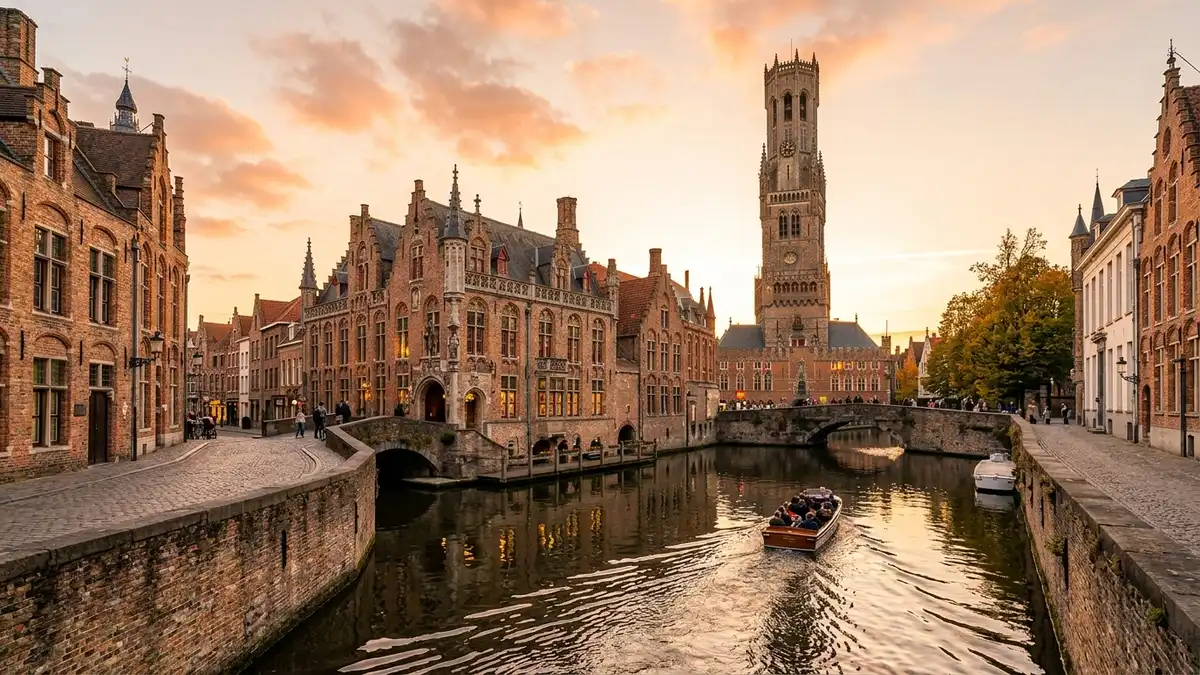
And what a city to arrive in. Bruges feels genuinely untouched by the modern world in a way that few European destinations can honestly claim. The medieval street plan is intact, the canals reflect centuries-old guild houses and church spires, and the whole place moves at a pace that actively encourages you to slow down. The Markt square, the Belfry tower, the Basilica of the Holy Blood — these aren't just postcard images, they're living parts of a city that takes its heritage seriously without feeling like a museum piece.
Belgian chocolate here is the real thing, made by small artisan producers who have been perfecting their craft for generations. Belgian beer culture is equally serious — Bruges has a thriving local brewing scene, and a glass of something dark and complex in a candlelit brown café is essentially mandatory. The cuisine leans hearty and satisfying: mussels, frites, stews slow-cooked with local ale.
Timing matters. June through August brings the warmest weather and the liveliest atmosphere, but also the thickest crowds and the highest prices. Spring and early autumn offer a sweet spot — mild temperatures, fewer tourists, and a softer, more atmospheric light that makes the canals look almost painterly. Winter has its own quiet magic, particularly around the Christmas market season when the city leans fully into its fairy-tale aesthetic.
The single best tip for this route: book your Brussels to Bruges train ticket in advance through Belgian rail. It's inexpensive, reliable, and removes any stress from the connection entirely, leaving you free to focus on the important business of finding the perfect box of pralines.