


Route Briefing: Frankfurt to Riga
Frankfurt to Riga is one of those quietly rewarding European routes that doesn't get nearly enough attention. While everyone else is queuing for flights to Barcelona or Amsterdam, you're slipping away to one of the continent's most architecturally stunning capitals — and potentially doing it for under $250 roundtrip if you time things right.
The flight itself runs around three and a half hours with a connection, typically routing through Helsinki or Munich depending on whether you're flying airBaltic, Finnair, or Lufthansa. That Helsinki connection in particular is worth keeping an eye on, as it can occasionally unlock lower fares than more obvious routing options. Book six to eight weeks out and you'll be in the best position to snag those sub-$250 deals before they evaporate.
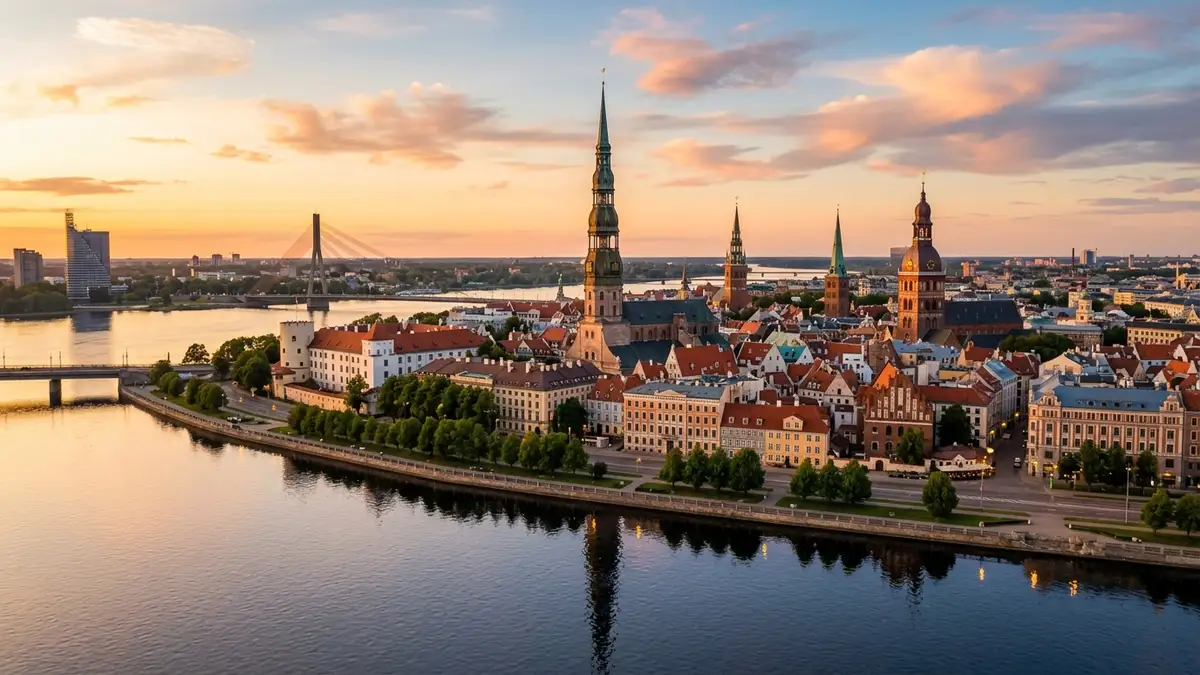
Now, about Riga itself — this city genuinely earns its reputation. It holds one of the largest collections of Art Nouveau architecture in the world, and walking through the quiet streets of the Quiet Centre neighbourhood feels like stepping into a living museum of ornate facades, twisted ironwork, and expressive stone faces staring down from above. The Old Town, a UNESCO World Heritage Site, layers medieval cobblestones with Gothic spires and merchant-era warehouses that have been transformed into cafes, bars, and galleries. It's compact enough to explore on foot, which is exactly how you should do it.
Latvian cuisine is hearty and honest — think rye bread, smoked fish, grey peas with bacon, and warming soups that make complete sense once you've felt a Baltic autumn wind. The Central Market, housed in enormous former zeppelin hangars near the train station, is one of the best food markets in Northern Europe and an essential first stop.
Getting from Riga International Airport into the city centre is straightforward — public buses connect the airport to the city, and the journey is short and inexpensive. Taxis and ride-hailing apps are also readily available.
Timing matters here. June through August is peak season, when the days are extraordinarily long, the outdoor terraces are buzzing, and the city feels genuinely festive. But shoulder season — particularly May and September — offers mild weather, thinner crowds, and noticeably better value on accommodation. If you're drawn to atmospheric, moody cities, a late autumn visit has its own quiet magic.
The one tip worth burning into your memory: don't rush through the Art Nouveau district with your camera and leave. Slow down, look up, and consider picking up a local walking map dedicated specifically to the architecture. Riga rewards the curious traveller far more than the hurried one.