


Route Briefing: Frankfurt to Sofia
Just three and a half hours from Frankfurt and you're stepping into one of Europe's most underrated capitals — a city where Roman ruins sit beneath Orthodox churches, thermal springs bubble up in the city centre, and a hearty dinner with wine rarely dents your wallet. Sofia has been quietly accumulating seven thousand years of history while the rest of Europe looks the other way, and that's precisely what makes this route so rewarding.
Lufthansa, Bulgaria Air, and Ryanair all serve the Frankfurt–Sofia corridor year-round, which keeps competition healthy and prices honest. A savvy traveller can snag a roundtrip for under two hundred dollars, though standard fares tend to hover above three-fifty. The trick is timing: book four to eight weeks out, and shift your departure to a Tuesday or Wednesday if you can. Weekend flights on this route carry a noticeable premium, so a little calendar flexibility goes a long way.
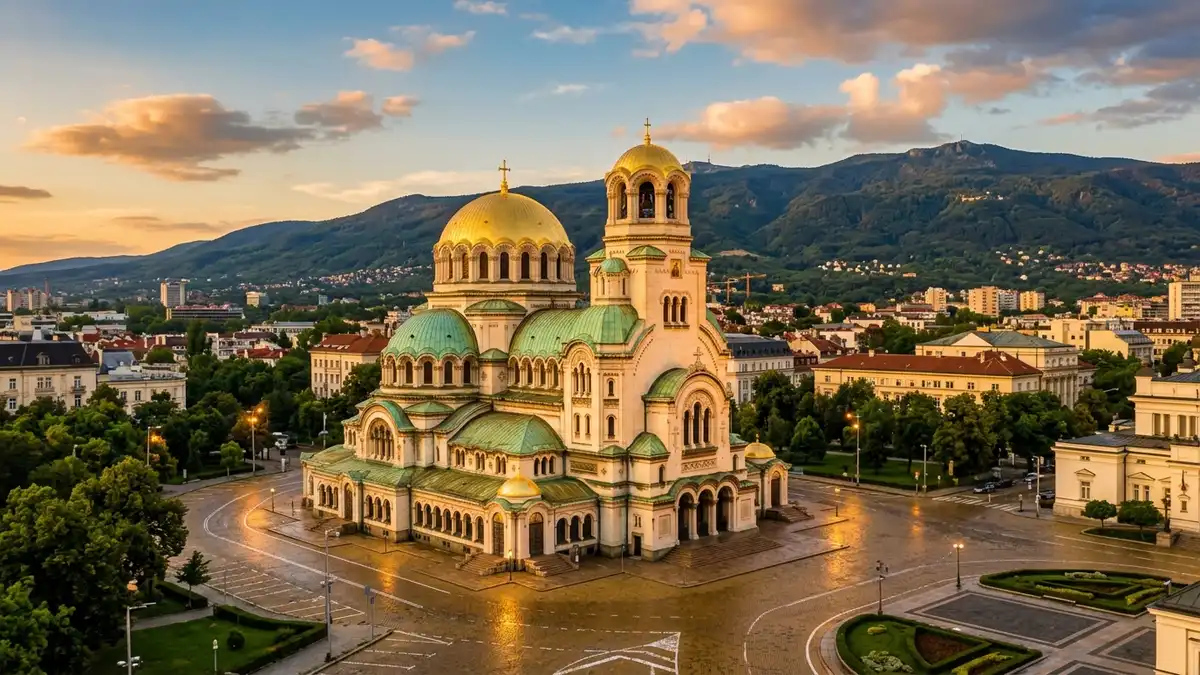
Sofia rewards the curious rather than the checklist tourist. Vitosha Mountain looms dramatically over the southern edge of the city — you can be hiking through pine forest within thirty minutes of the city centre, which is genuinely remarkable for a European capital. Downtown, the Alexander Nevsky Cathedral is one of the great Orthodox basilicas on the continent, its gold domes catching the light in a way that stops you mid-stride. The ancient Serdica ruins are embedded right into the metro system, visible through glass panels as you wait for your train — a quietly extraordinary detail that tells you everything about how casually Sofia wears its age.
From Sofia Airport, the metro is your best friend. Line 1 connects the airport directly to the city centre quickly and cheaply, making it one of the more straightforward airport arrivals in the Balkans. Skip the taxi queue and you'll be at your accommodation before travellers from other flights have finished arguing over fares.
Peak season runs June through August when the weather is warm and the city's outdoor café culture is in full swing, but Sofia in shoulder season — particularly spring and early autumn — offers something special: comfortable temperatures, thinner crowds, and the same low prices that make Bulgaria such good value year-round. Winter visitors get a bonus too, as Vitosha and the nearby Vitosha Nature Park transform into a legitimate skiing and snowshoeing destination within easy reach of the city.
The one tip worth burning into your memory: eat and drink locally. Bulgarian cuisine — grilled meats, fresh salads, rich stews — is deeply satisfying, and the local wine and rakia traditions are worth exploring properly. Your euros stretch remarkably far here, which means you can afford to linger, eat well, and still come home with money left over.