


Route Briefing: Frankfurt to Taipei
Frankfurt to Taipei is one of those routes that rewards the patient traveller — not just because of what waits at the other end, but because getting there smartly can save you a serious chunk of money. At around eleven and a half hours with a stop, you're looking at a comfortable long-haul journey, and EVA Air and China Airlines both operate this route with strong reputations for service and comfort in economy. Lufthansa is another solid option, and connecting through hubs like Bangkok, Hong Kong, or Doha can sometimes bring the fare well below the standard thousand-euro-plus price point. If you can snag a roundtrip under €700, you're doing very well — book two to four months ahead and keep an eye on those connecting itineraries.
Taipei itself is one of Asia's most underrated city destinations, and the moment you land at Taiwan Taoyuan International Airport, the efficiency of the place becomes immediately obvious. The Airport MRT connects the terminal directly to central Taipei in under forty minutes, making it one of the smoothest airport-to-city transfers in the region — no taxi haggling, no confusion, just a clean and affordable train ride straight into the heart of the city.
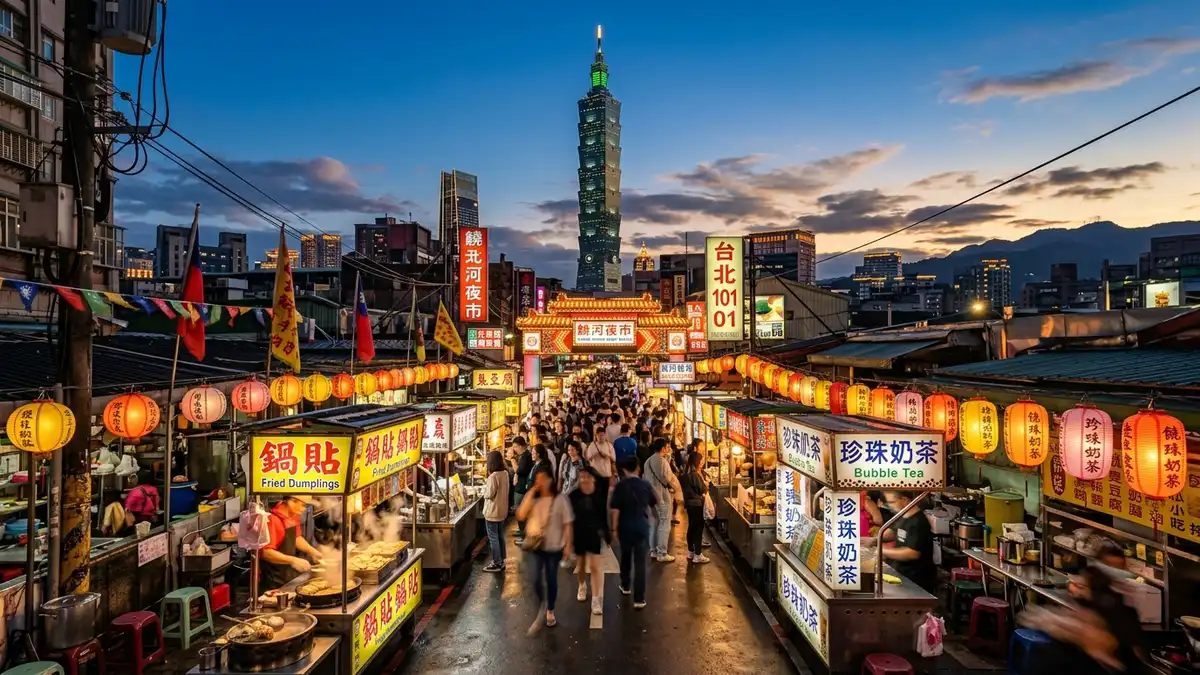
What makes Taipei so compelling is the sheer density of experiences packed into a relatively compact urban space. Taipei 101 remains one of the most recognisable skylines in Asia, and the views from the observation deck on a clear day are genuinely spectacular. But the soul of the city lives at street level, particularly after dark. The night markets — Shilin being the most famous — are sensory overloads in the best possible way, offering everything from stinky tofu and oyster omelettes to freshly made scallion pancakes and, of course, the original bubble tea. Taiwan takes its food culture seriously, and even a quick wander through a local market will leave you eating better than most restaurant meals elsewhere.
For something more restorative, the hot spring district of Beitou sits just a short MRT ride from the city centre and offers a genuinely relaxing half-day escape — particularly welcome after a long-haul flight. The surrounding mountains and temples add a quieter, more contemplative dimension to what can otherwise feel like a relentlessly energetic city.
Timing matters here. July and August bring heat, humidity, and peak crowds, and Chinese New Year in January or February sees prices spike and some businesses close. The sweet spot is spring or autumn, when temperatures are pleasant and the city hums along without the tourist surge. Taipei is a year-round destination, but those shoulder months are when it really sings.